Upright
- pause
- surrender
- perspective
- sacrifice
- suspension
You may be here because this card stayed with you after a draw. Start with the central message, then move deeper into the symbolism, upright and reversed meaning, and the next step it may be asking of you.
This card is one of the strongest search anchors in the deck. If you landed here from a one-card reading, treat it as the main lens first, then read the love, career, money, feelings, actions, and reversed sections as supporting layers.
Use these as a quick scan before the full reading—not as a substitute for the image.
In the Rider-Waite-Smith deck, The Hanged Man is not meant to be read as a floating keyword. Waite's scene and Pamela Colman Smith's composition usually pull the eye toward halo, living tree, crossed legs first. Those details tell you what kind of emotional weather you are standing in before you decide whether the card feels hopeful, tense, protective, exposed, or transitional.
The card belongs to sacrifice, surrender, and altered perspective in both occult and practical reading traditions.
This is one of the cards most likely to show up in a one-card reading when a question is already emotionally active. Use it as a lens for the present situation, then connect it back to the page's love, career, and money sections.
The halo is what stops the card from reading as simple defeat. It suggests insight, altered perception, and a strange form of illumination inside stillness.
The living tree matters because this suspension is not dead or empty. Something is still growing, just not in the direction the ego first wanted.
The crossed leg gives the image its paradoxical calm. The card is paused, but not destroyed; held, but not abandoned.
You are tired of waiting, and also not ready to force it. Sit in the pause on purpose—ask what angle you have refused to see—then take one smaller action once the frame shifts, not before.
This pause is not without meaning, even if it feels uncomfortable. Something important will become clearer when you stop forcing movement and allow a new perspective to form on its own terms.
Use this pause. Let perspective shift, then decide what this standstill is teaching you.
The Willing Surrenderer. This is the quickest way to remember the card's center of gravity without flattening the whole page into a single label.
XII (12). 12 suspends forward motion so perception can be restructured before the path continues.
When The Hanged Man is the only card on the table, read the core climate first—then open the one-card interpretation below for the full next-step framing.
Water and Mem correspondences belong to the Waite and Golden Dawn study line. They can deepen the card, but the main reading still begins with the image and the situation in front of you.
The Hanged Man usually points to a pause, a shift in perspective, or surrender that changes understanding. In a one-card reading, treat waiting as the lesson—not as wasted time—and look for the angle you have been refusing to see.
In a one-card draw, stay with the core message first, then use love, career, feelings, or actions only if they sharpen the next step—not to collect more meanings. If the card came up reversed, jump to the The Hanged Man reversed meaning.
The Hanged Man usually leans Wait or Reframe. Upright, the answer is often not ready until perspective shifts. Reversed, it more often leans no—stalling has stopped teaching and movement needs a different choice.
Upright The Hanged Man usually leans mixed or timing-sensitive. Read the scene and your question before you lock the verdict.
Reversed The Hanged Man usually leans blocked, delayed, or misaligned. Let the card meaning and timing outrank a rigid flip from orientation alone.
These are applications of the same card, not separate meanings pasted together. Read them after the general meaning—and compare with the reversed meaning when the draw came upside down.
In love, it asks for patience, reframing, and the humility to see the relationship from another angle before forcing conclusions.
In work, it may show delays, strategic pauses, or the need to release one approach so a better one becomes visible.
In money, The Hanged Man often suggests delay, waiting, or needing to look at resources from a different angle before acting. It can be useful for rethinking value, but weak for forcing quick results.
Reversed Hanged Man can mean the pause has stopped being illuminating and has started becoming a holding pattern. You may be stuck in delay, indecision, or a sacrifice that is no longer producing wisdom. In the Rider-Waite reading style, movement is being blocked less by circumstances and more by attachment to an old perspective that no longer fits.
If waiting has quietly become a way of avoiding change, it is not helping. Once you release the old framework and acknowledge what the situation is already asking you to let go of, the standstill may break. Compare with the upright meaning when you need the same card without the dimmer switch.
In love, it can reflect limbo, waiting without real learning, or repeating sacrifice patterns that do not create mutual growth.
In work, it warns against stalling caused by indecision, stale frameworks, or attachment to an approach that has stopped working.
Reversed, The Hanged Man in money may show stagnation that has gone on too long, reluctance to let go of a losing position, or frustration with a pause that is no longer teaching enough.
Avoid forcing progress on the old timeline when the card is asking for a perspective shift. Also avoid using suspension as a permanent escape from a real decision. Reversed cards usually read best as blocked, delayed, internalized, excessive, or misdirected forms of the same core pattern.
The Hanged Man usually points to a pause, a shift in perspective, or surrender that changes understanding. In a one-card reading, treat waiting as the lesson—not as wasted time—and look for the angle you have been refusing to see.
The Hanged Man usually leans Wait or Reframe. Upright, the answer is often not ready until perspective shifts. Reversed, it more often leans no—stalling has stopped teaching and movement needs a different choice.
Reversed, The Hanged Man usually points to stagnation that has gone on too long, reluctance to release an old view, or calling avoidance “patience.” Once the pause stops illuminating, the next step is to move.
Avoid forcing progress on the old timeline when the card is asking for a perspective shift. Also avoid using suspension as a permanent escape from a real decision.
In love, The Hanged Man supports patience, reframing, and seeing the bond from another angle before forcing conclusions. In career, it supports strategic pauses, releasing a stale method, and letting a better approach become visible.
The easiest mistake with The Hanged Man is to rush to the takeaway and miss the feeling of the scene. The image usually tells you whether the card is opening, warning, steadying, or softening the situation before the keywords ever do.
Love, career, and money help you ground the card in real life. They should deepen the main message, not replace it.
This card is one of the clearest anchors for one-card tarot search intent. If it appears in a reading, use its meaning as the main lens, then move into the practical next step you need most.
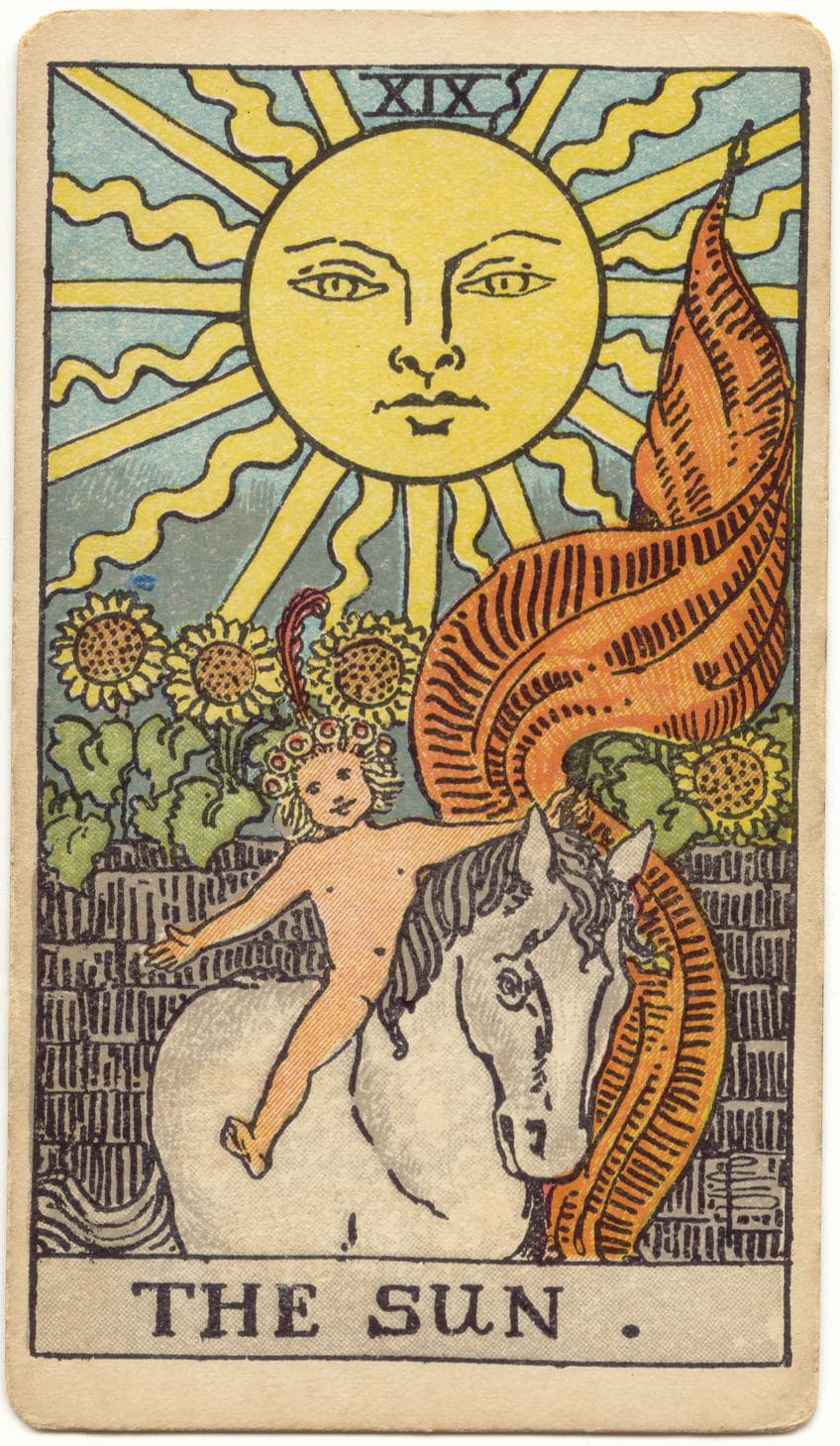
For a clearer contrast with delayed or self-dimmed joy, compare this card with The Sun and its reversed meaning.