Tarot card meanings
Browse Major Arcana, Cups, Swords, and Pentacles meaning pages—upright and reversed, feelings and actions, yes/no lean, and one next step. The free on-site shuffle still draws from the 22 Major Arcana; these pages are the meaning library. Prefer dedicated hubs for Major Arcana or Minor Arcana.
If you have a question, draw first. Then come back to the meaning page.
Card meanings land best when they have a real situation to attach to. A one-card draw gives you that anchor, then the card page helps you slow down and get specific.
If you get stuck in interpretation, keep it simple again.
These guides help you understand reversed cards, read one card without spiraling, and turn meaning into one next step.
How to Read One Card Tarot Without Overcomplicating It
A one-card reading feels clearest when you read for the message first, the details second, and the next step last.
Tarot Upright vs Reversed Meaning: What Actually Changes?
A reversed card usually changes the condition of the energy rather than replacing the meaning with a total opposite.
One Card Tarot With Reversals — What Reversed Cards Mean
In a one-card reading, reversals often explain why the energy feels slower, blocked, or harder to trust at first.
Minor arcana by suit
Cups and Swords are live (14 each). Pentacles and Wands ship in later batches—2–3 weeks apart—so each suit stays a clear parent hub. Full structure guide: Minor Arcana hub.
Pentacles
Work, money, material roots
Pages coming in batch rollout
Wands
Drive, action, creative heat
Pages coming in batch rollout
Major Arcana
All 22 Majors—also the pool used by the free one-card shuffle on this site. Overview and Fool’s Journey framing: Major Arcana hub.
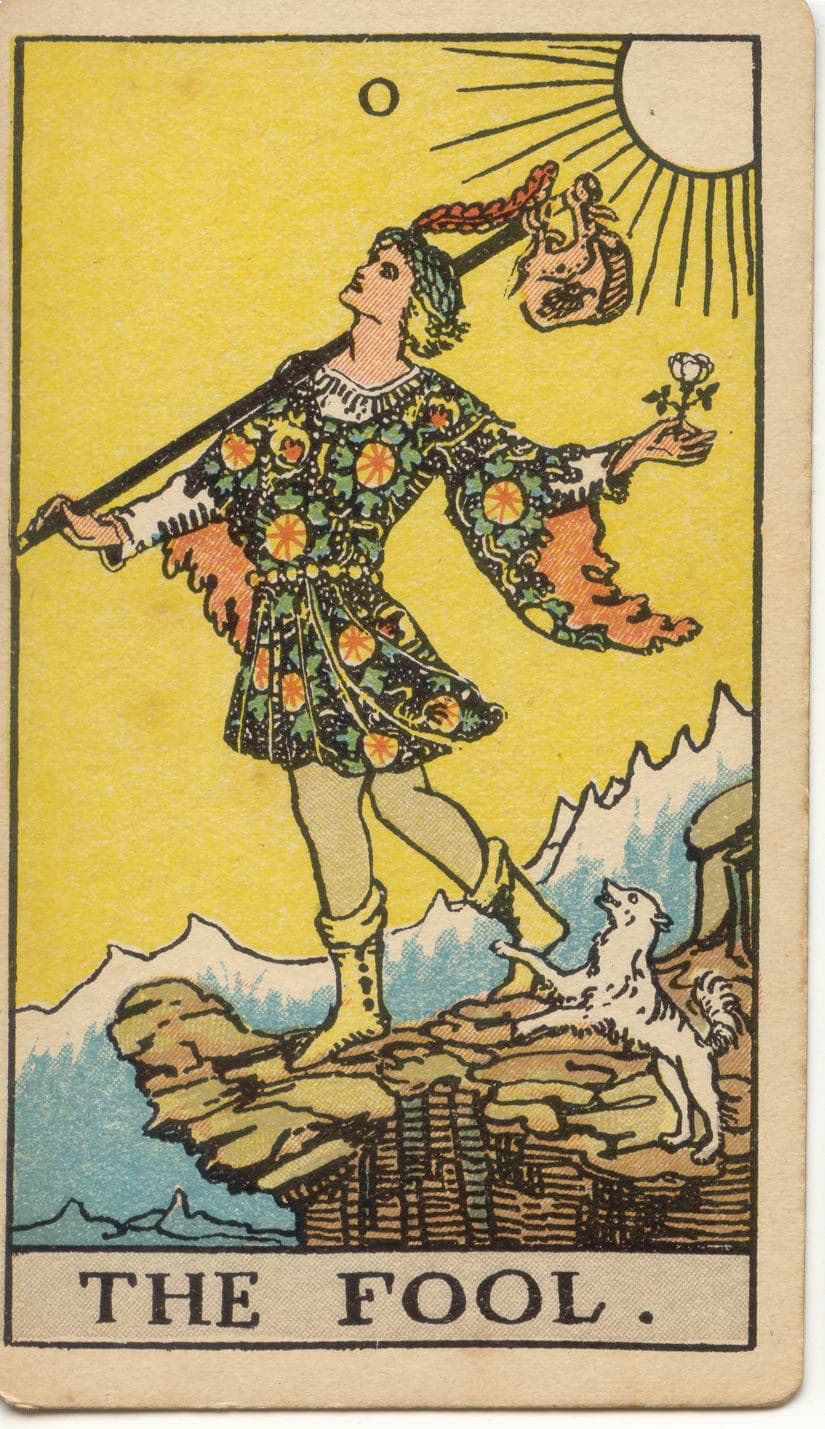
The Fool
The Innocent Traveler
You are standing at an edge you can already feel—curious, a little scared, not fully ready. That is not a problem; it is the starting place. In a one-card reading, The Fool asks for one honest step today while you stay awake to the cliff.
Reversed: Reversed The Fool suggests fear and impulse are mixing together, making it hard to tell whether you are ready to act or simply eager to escape discomfort. In a yes-or-no tarot question, it often reads as not yet, slow down, or ask differently because the desire to leap is stronger than the plan beneath it. The new beginning may still be real, but it needs clearer timing, better judgment, and more responsibility than is currently present.
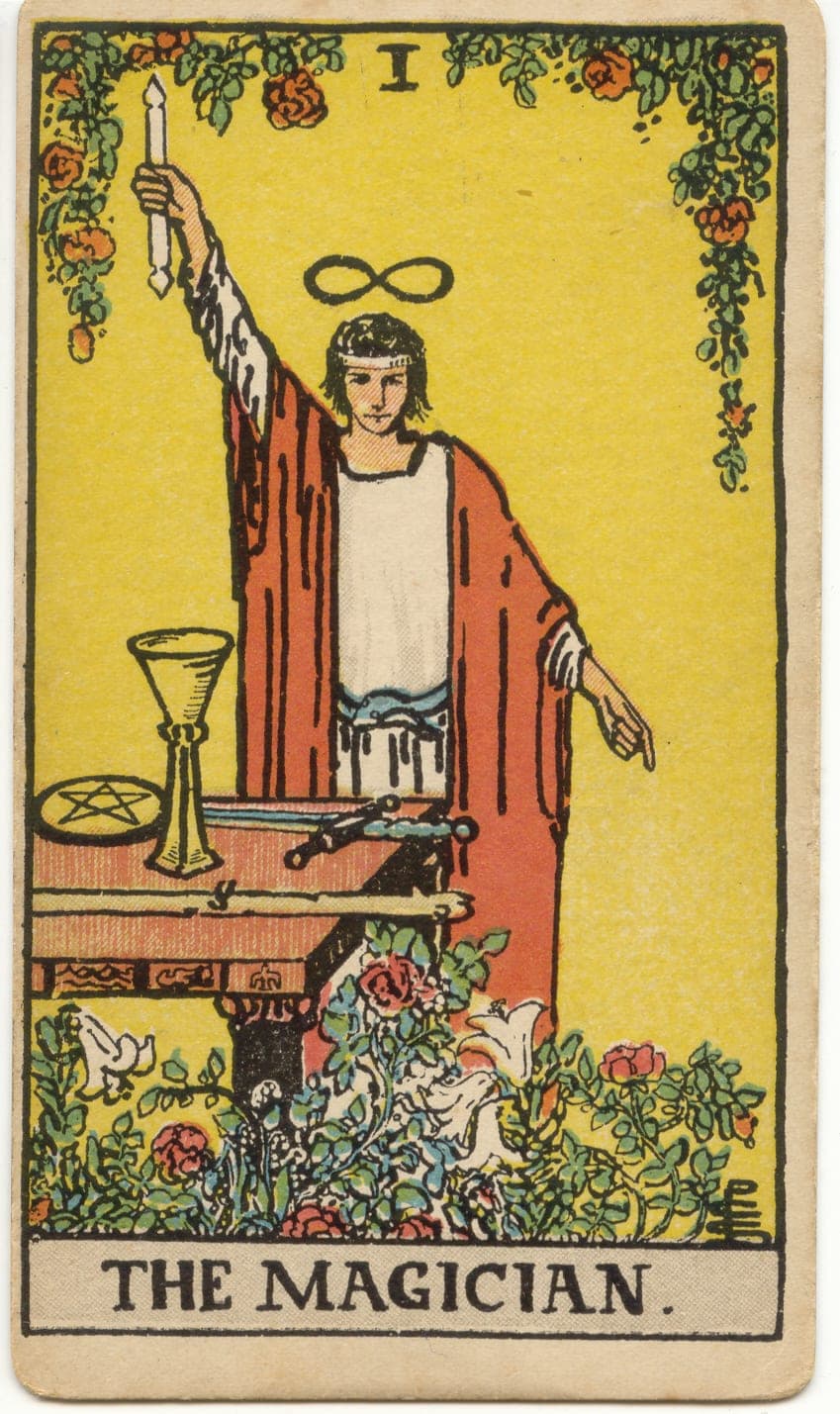
The Magician
The Focused Creator
You already have more to work with than you admit—you are just waiting for it to feel ready. Pick one aim and make one concrete move that proves you are using what is on the table, not only thinking about it.
Reversed: Reversed Magician points to misalignment between intention and execution. There may be strong desire, clever ideas, polished words, or persuasive energy, but the real issue is that focus is slipping, preparation is thin, or influence is being used without enough integrity. In a one-card reading, it asks you to return to proof rather than performance. If the question is yes or no, reversed Magician often says not until the plan, skill, or honesty catches up with the promise.
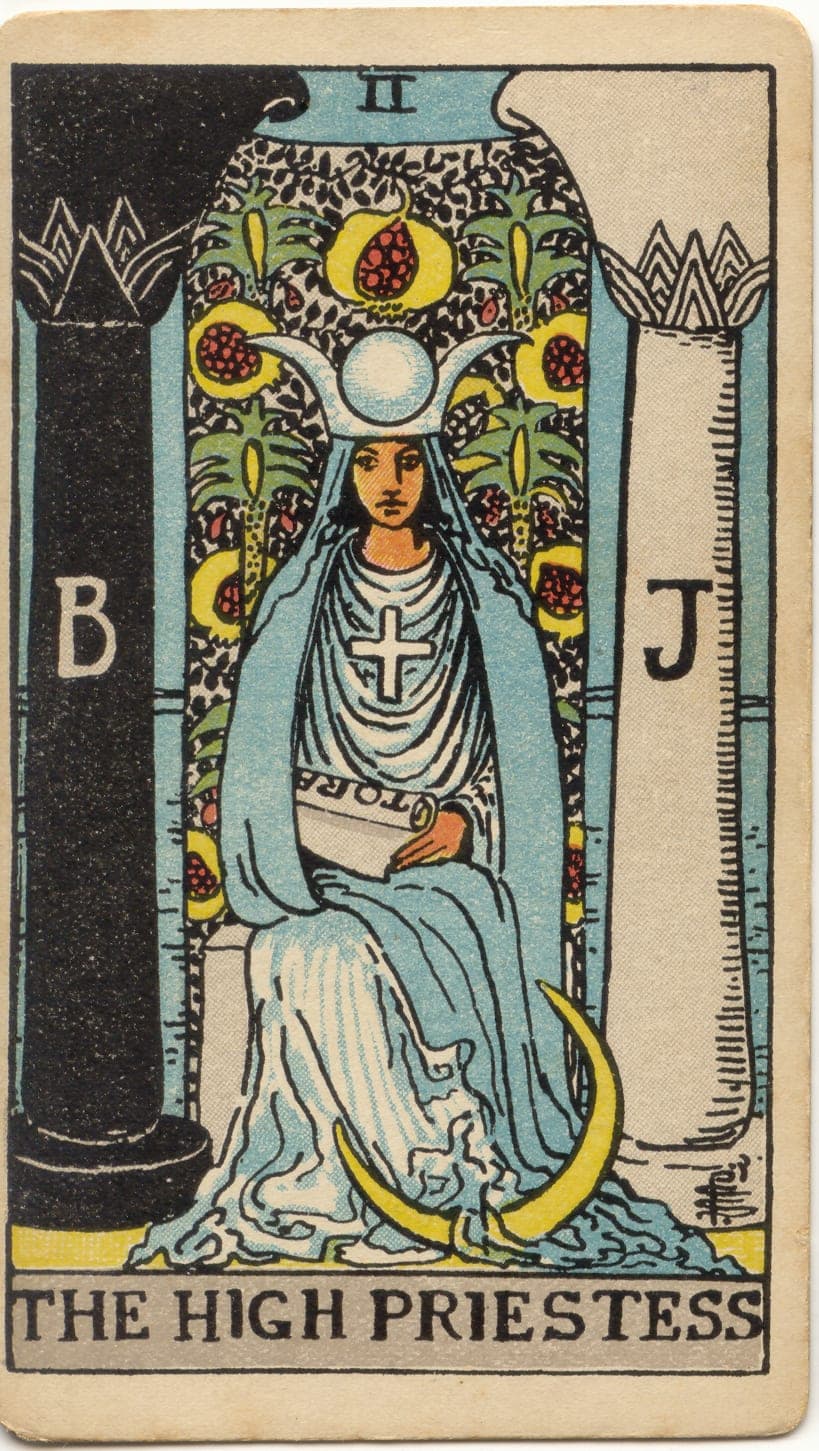
The High Priestess
The Keeper of Hidden Knowledge
The High Priestess is the card of inner knowing, silence, and hidden layers. In the Rider-Waite tradition, she appears when the surface story is incomplete and the deeper truth is already moving beneath it. This is not a card of instant answers; it is a card of timing, receptivity, and trusting that what matters most may be felt before it can be fully explained.
Reversed: Reversed High Priestess suggests intuition is being blocked, drowned out, or repeatedly questioned. There may be too much projection, too much ambiguity, or hidden information making the situation feel slippery and hard to read clearly. In the Rider-Waite reading style, this often means the issue is not lack of insight, but that insight is being overwhelmed by noise, anxiety, or the demand for immediate certainty.
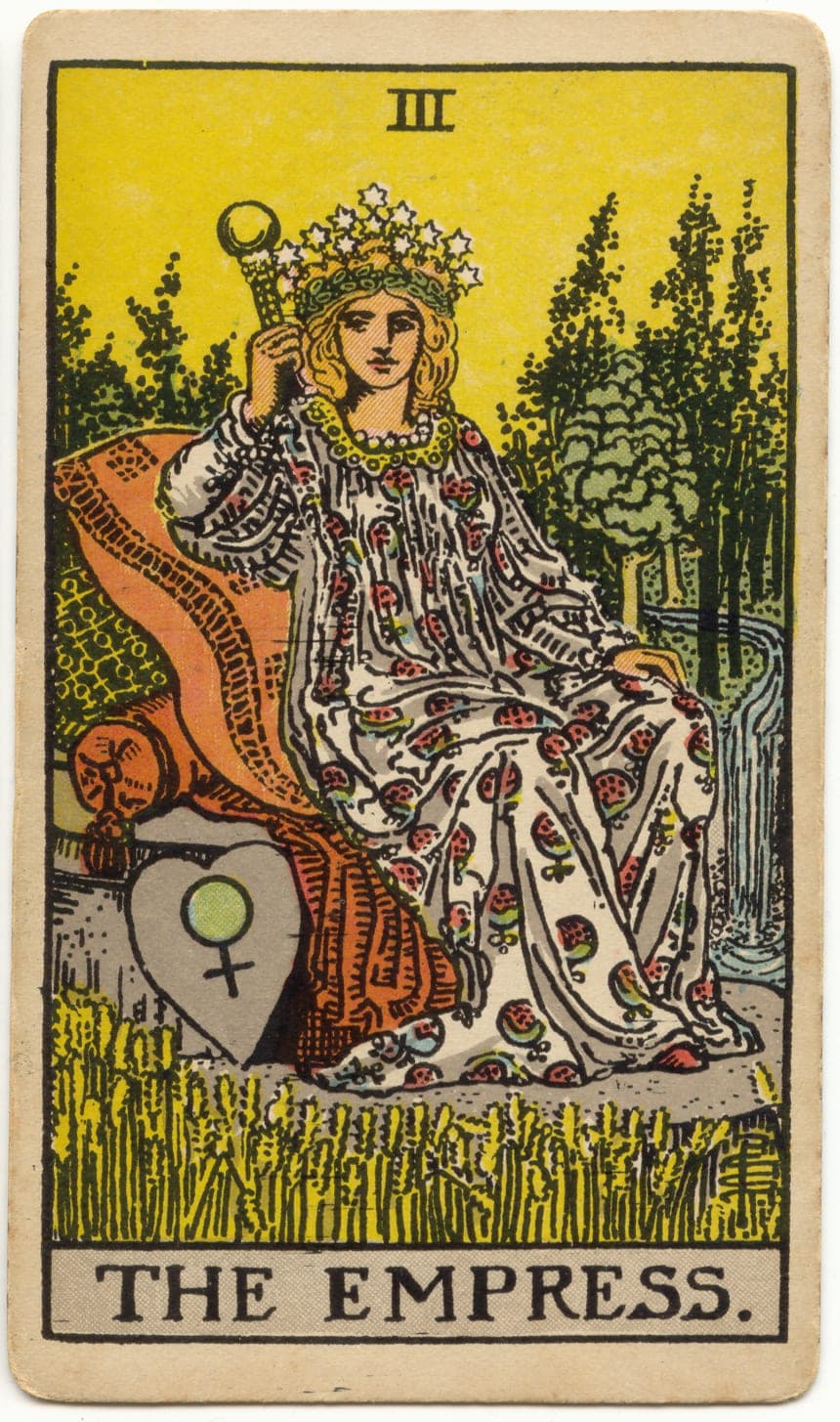
The Empress
The Source of Nurturing
Part of you wants to push this into bloom before it has enough care. Soften the conditions instead—rest, pace, real support—and give one living thing your attention today rather than forcing the whole harvest.
Reversed: Reversed Empress points to imbalance in the cycle of giving and receiving. You may be overextending, neglecting your own needs, or trying to replace real nourishment with comfort, dependency, or overcontrol. In a one-card reading, it often says growth is still possible, but the environment, pace, or emotional supply has become unsustainable. The answer is not more forcing; it is restoration, better boundaries, and support that can actually hold the thing you want to grow.
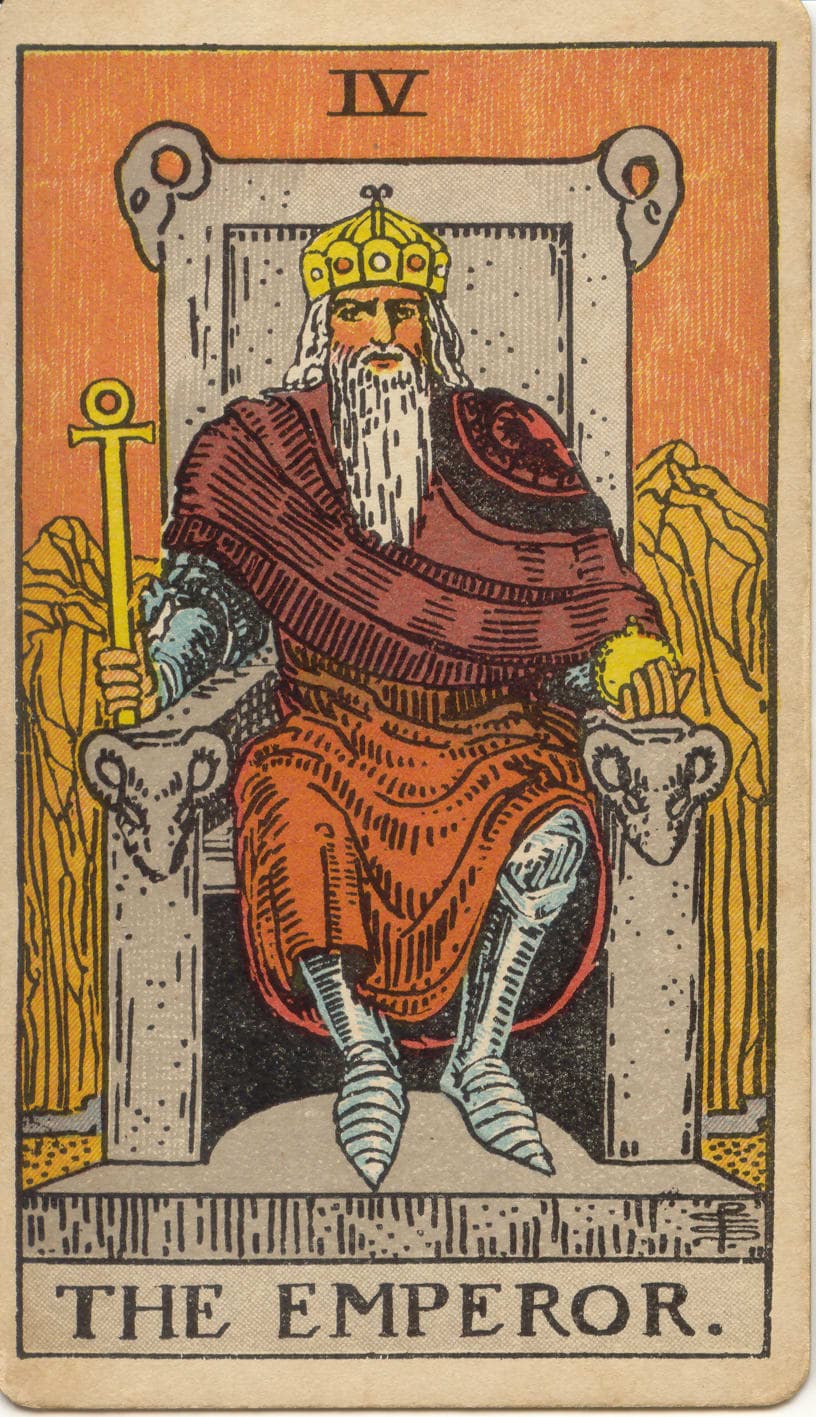
The Emperor
Steady Authority
The Emperor is the card of structure, authority, and dependable order. In the Rider-Waite tradition, it shows that a situation becomes more workable when it has clear boundaries, a stable framework, and leadership that can hold steady under pressure. This is not control for its own sake; it is the ability to create a container strong enough for real life to function inside it.
Reversed: Reversed Emperor often shows that control has become too rigid, too defensive, or too dependent on fear. The structure around the situation may be brittle, over-managed, or no longer responsive to what is truly needed now. In the Rider-Waite reading style, this means maturity is still required, but it must come from calm leadership rather than force, stubbornness, or anxiety about losing control.
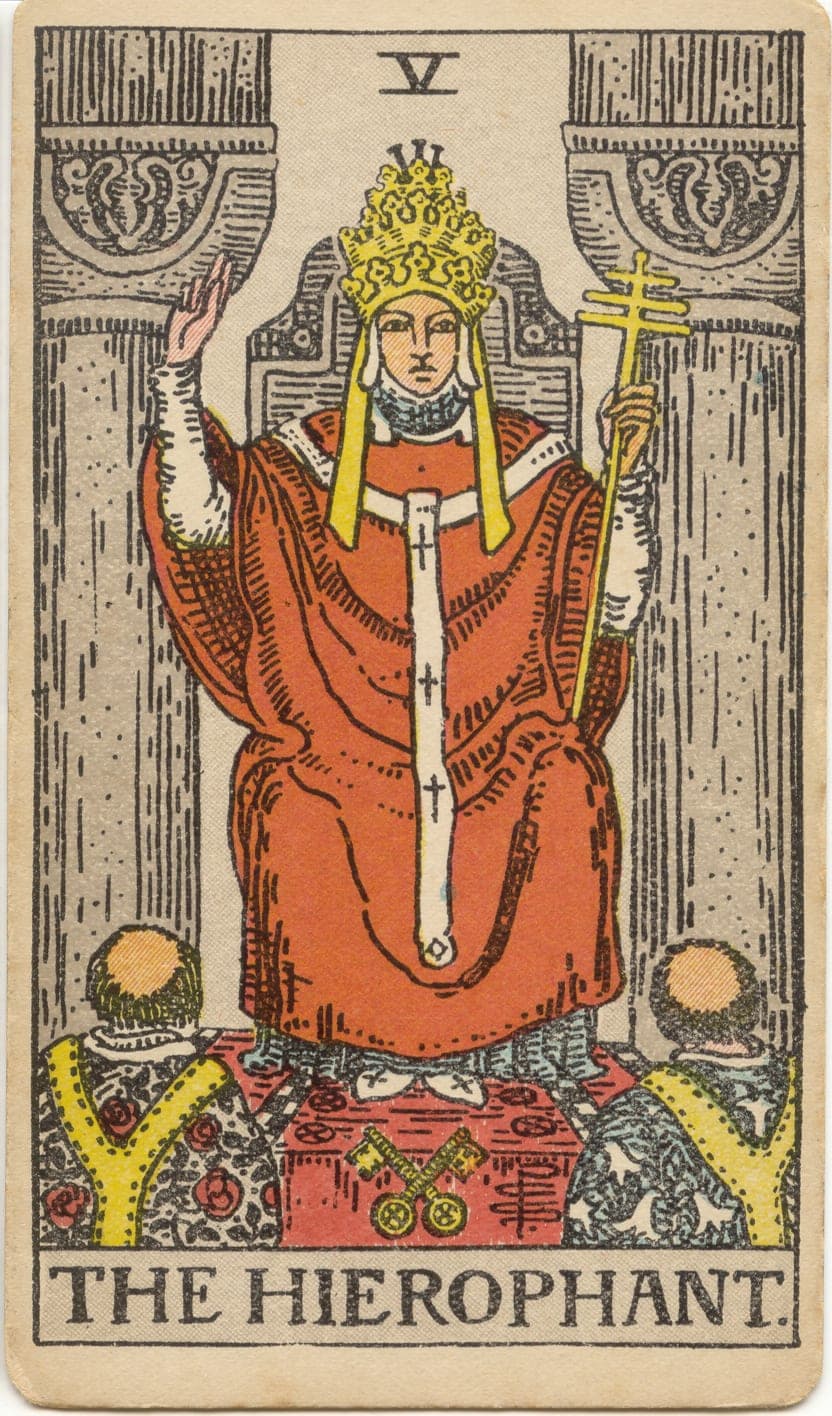
The Hierophant
The Keeper of Doctrine
The Hierophant is the card of guidance, tradition, and shared values. In the Rider-Waite tradition, it appears when established wisdom, formal teaching, ritual, or a trusted framework can help you understand what comes next. The lesson is not to invent everything alone, but to learn what has already been tested and decide what is still true for you.
Reversed: Reversed Hierophant suggests that a rule, tradition, or authority structure no longer fits the truth of the situation. You may be following something blindly without conviction, or rejecting it without understanding the wisdom it still carries. In the Rider-Waite reading style, growth here comes from a more thoughtful relationship with guidance: neither blind obedience nor shallow rebellion.
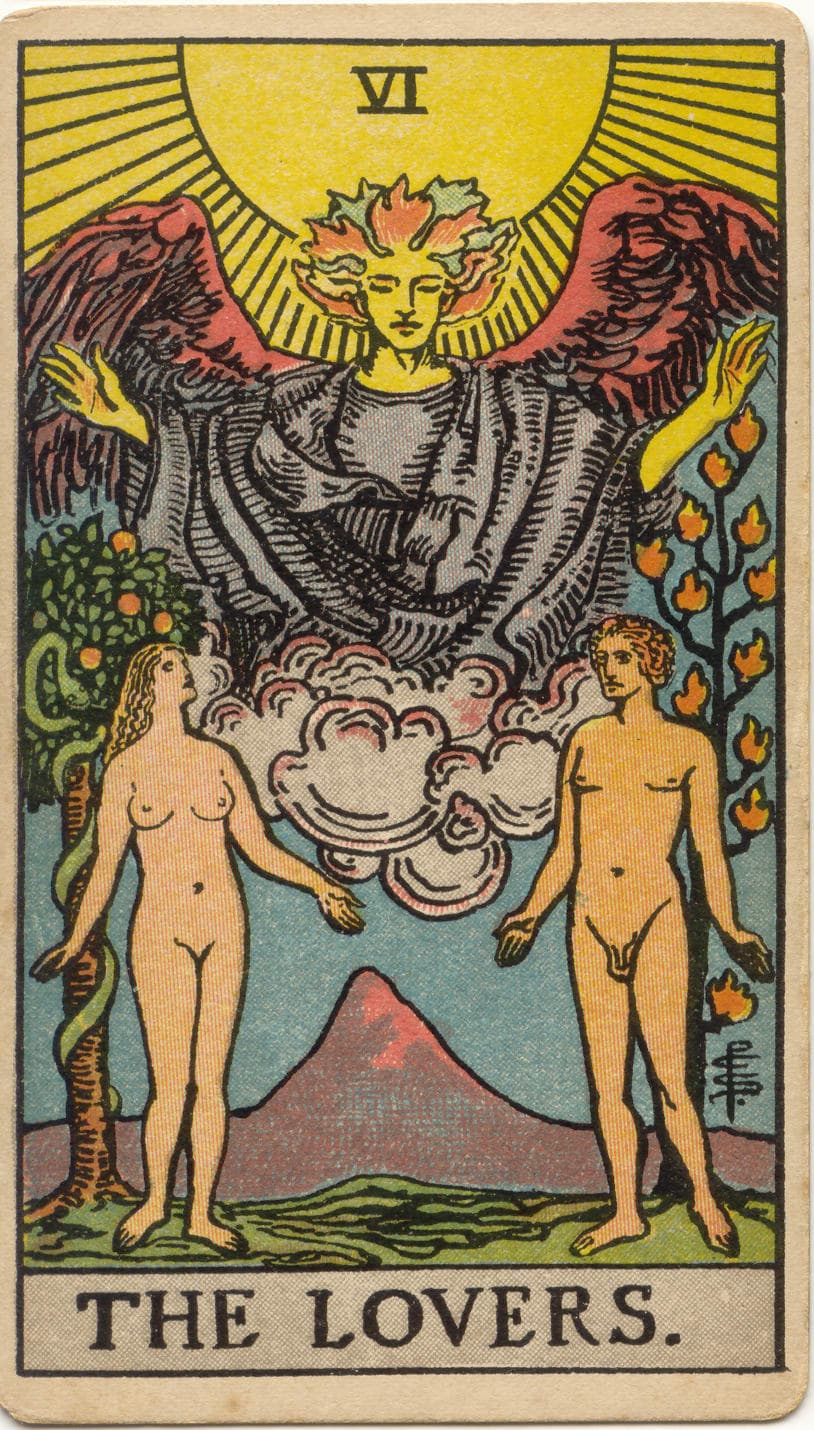
The Lovers
The Card of Aligned Choice
The Lovers is the card of alignment, choice, and meaningful union. In the Rider-Waite system, it is not only about romance but about deciding what you truly stand for when heart, desire, and values are all in the room at once. This card often appears when the real issue is not whether something looks good, but whether it can be fully and honestly chosen.
Reversed: Reversed Lovers points to division, mixed motives, or tension that comes from acting against your deeper knowing. The outer issue may look like a relationship problem or a difficult decision, but the deeper tension usually comes from internal misalignment. In the Rider-Waite reading style, this card asks where honesty, boundaries, or values have been pushed aside to avoid discomfort.
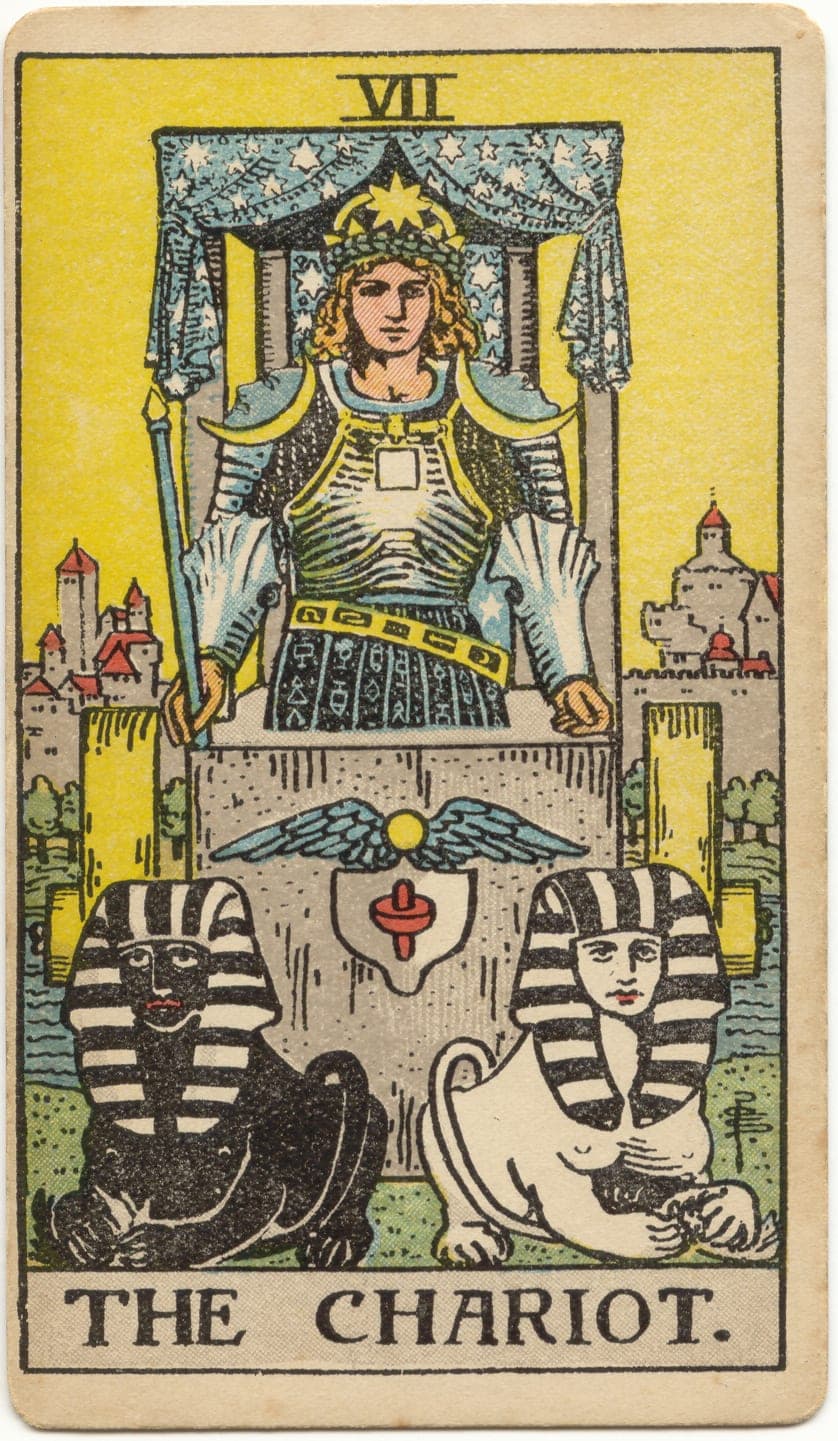
The Chariot
The Self-Disciplined Victor
The Chariot is the card of directed momentum and disciplined will. In the Rider-Waite tradition, it shows that progress becomes possible when competing forces are brought under one chosen direction. This card often appears when you are ready to stop scattering effort and start steering with intent, self-control, and a clear objective.
Reversed: Reversed Chariot shows action without alignment, or pressure without a true direction. You may be working hard, pushing fast, or wanting a decisive result, but the deeper issue is that your energy is not fully integrated. In the Rider-Waite reading style, this often means speed is being used to compensate for confusion, internal conflict, or weak strategy.
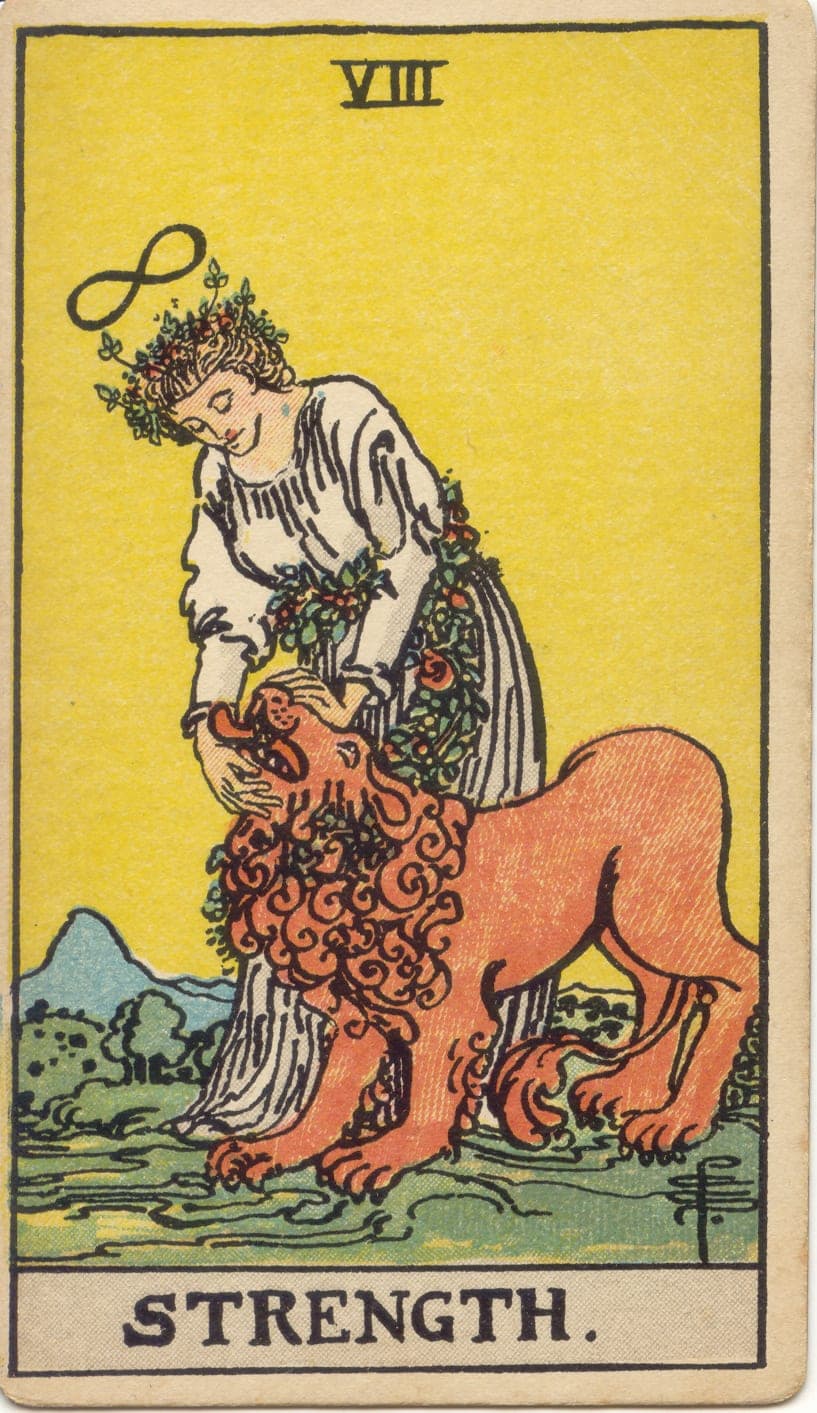
Strength
The Gentle Tamer
You are tempted to push harder because the feeling is loud. Soften your grip instead—hold the boundary, keep your voice kind, and answer the intensity with one steady response rather than a fight.
Reversed: Reversed Strength points to internal depletion, self-doubt, or exhaustion from carrying too much tension for too long. The challenge here is often less about external obstacles and more about fear, fatigue, or frustration eroding confidence from within. In the Rider-Waite reading style, the real work is to recover inner stability before trying to dominate the situation itself.
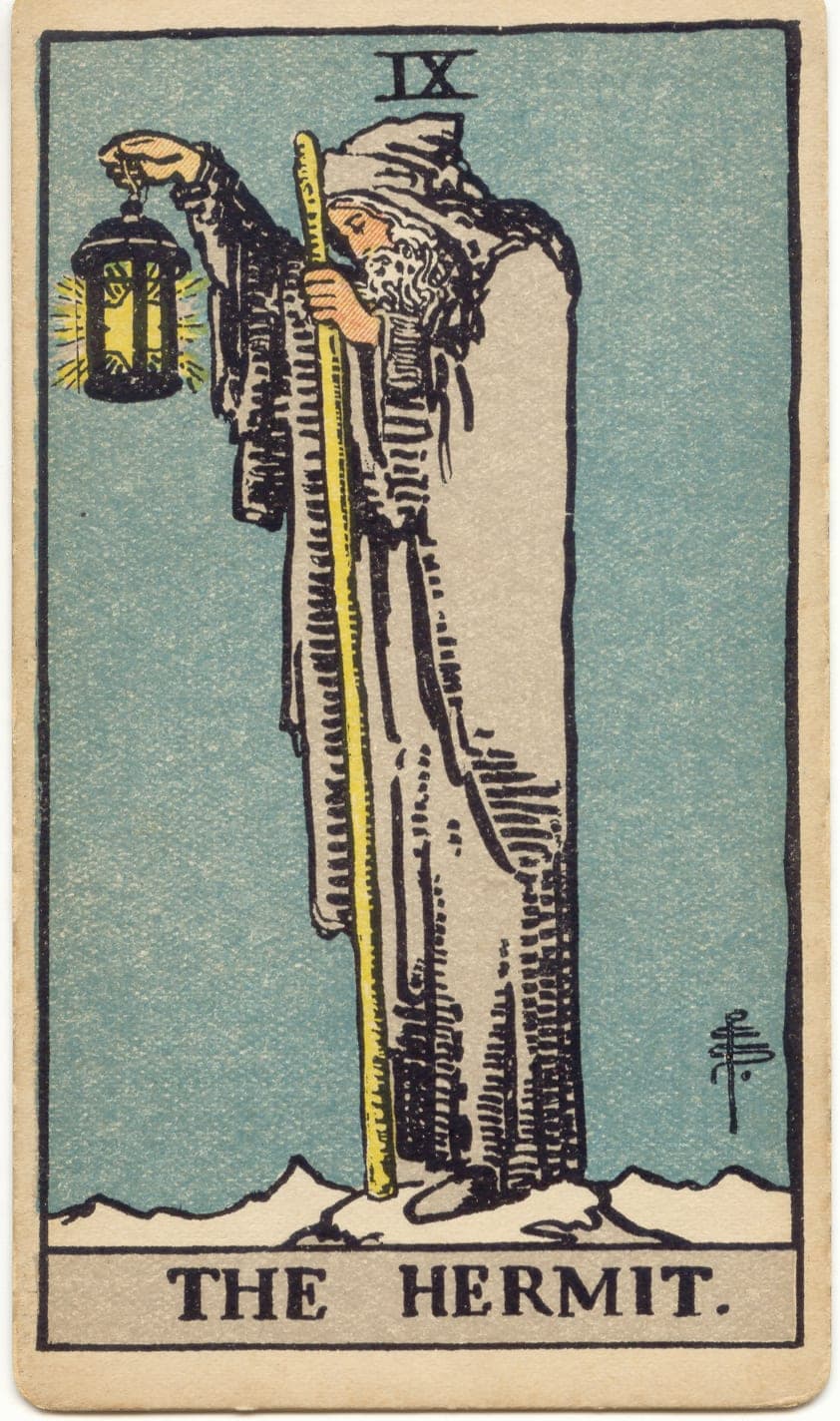
The Hermit
The Lone Guide
The Hermit is the card of solitude, inner guidance, and deep reflection. In the Rider-Waite tradition, it appears when the answer is unlikely to come from more noise, more opinions, or more speed. Distance, simplicity, and honest thought can reveal a truer understanding of what is happening than immediate reaction ever could.
Reversed: Reversed Hermit suggests that retreat may have gone too far or stopped being useful. Reflection can become avoidance, distance can become isolation, and analysis can quietly replace action. In the Rider-Waite reading style, insight is present, but it has not yet been integrated into actual choices, engagement, or movement.
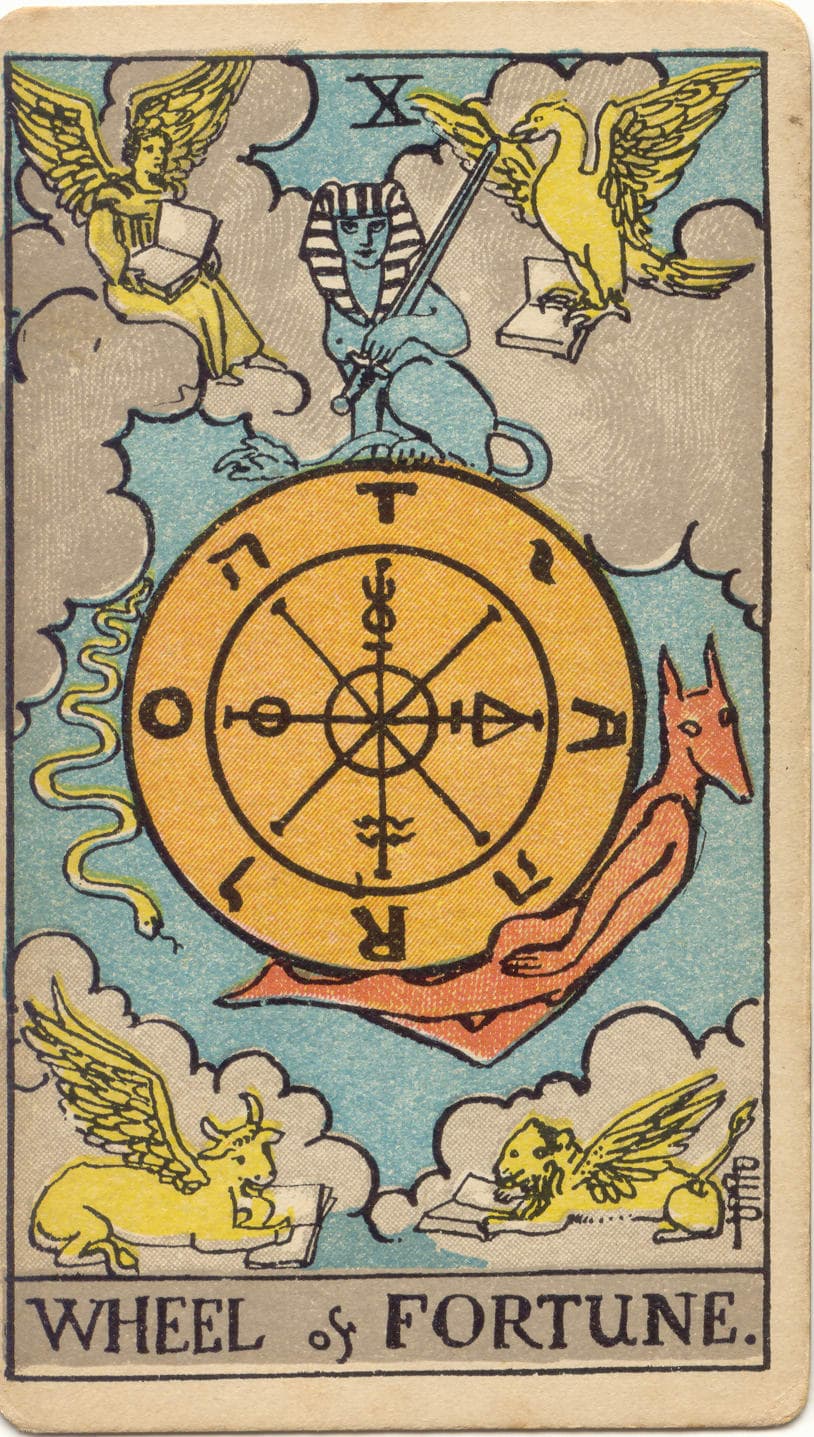
Wheel of Fortune
The Turning Cycle
Wheel of Fortune is the card of changing cycles and turning timing. In the Rider-Waite tradition, it shows that life is already in motion and that the tone of the situation is shifting whether or not you feel ready. This card asks you to respond skillfully to change instead of trying to freeze a phase that has already started moving on.
Reversed: Reversed Wheel of Fortune points to resistance, delay, or friction with changes that are already underway. You may feel stuck in repetition, frustrated with timing, or caught in patterns that keep returning. In the Rider-Waite reading style, this often means control is being overestimated and adaptability is being underestimated, even though flexibility is what would help now.
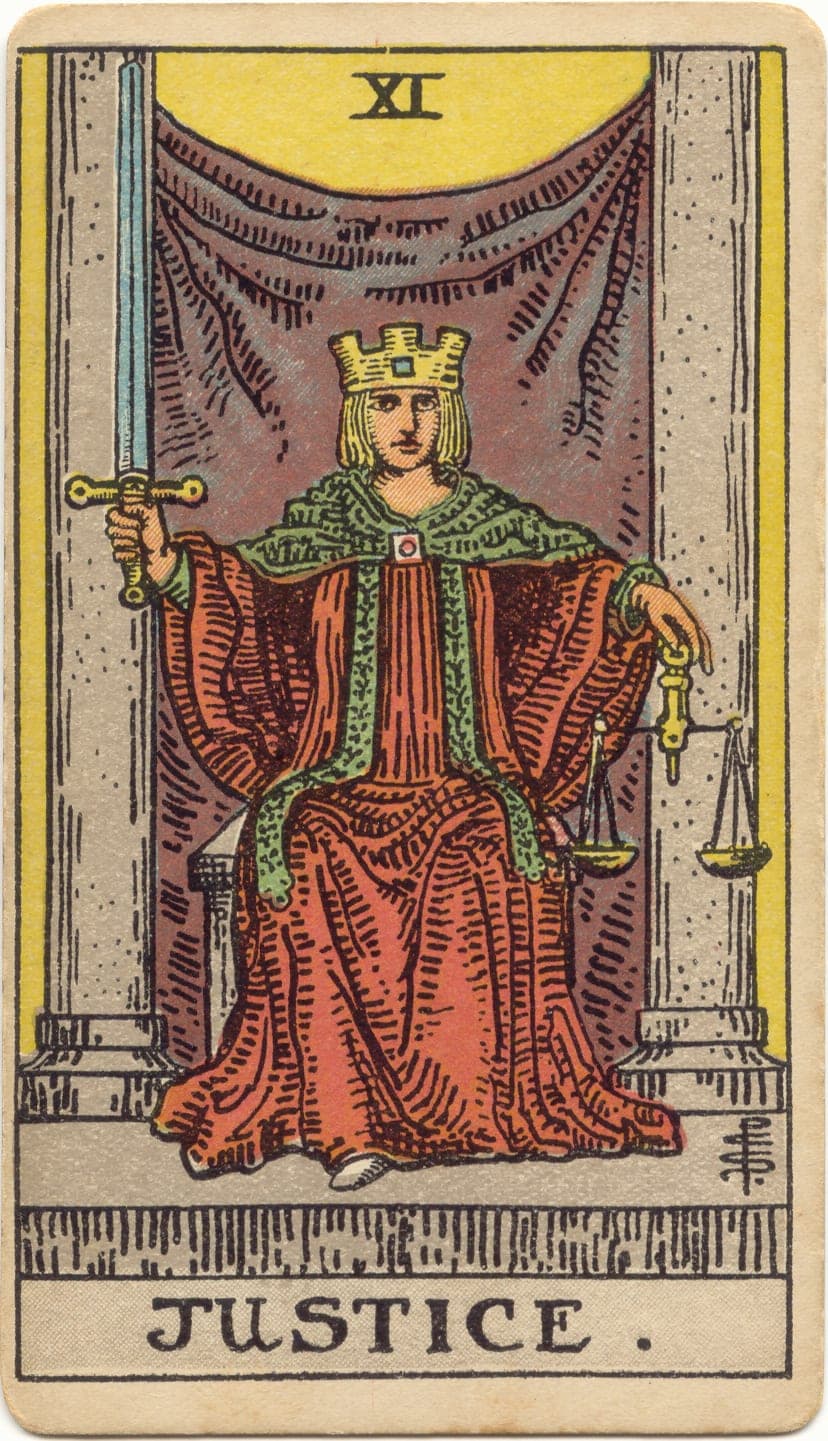
Justice
The Clear Calculator
You are protecting a softer story than the facts support. Write down what actually happened without defending yourself, then make one decision that still looks fair once the emotion settles.
Reversed: Reversed Justice points to distortion in reading the situation. There may be defensiveness, imbalance, weak accountability, or a tendency to shape the story around comfort rather than facts. In the Rider-Waite reading style, the real correction is not emotional comfort but a more precise and disciplined confrontation with what actually happened.
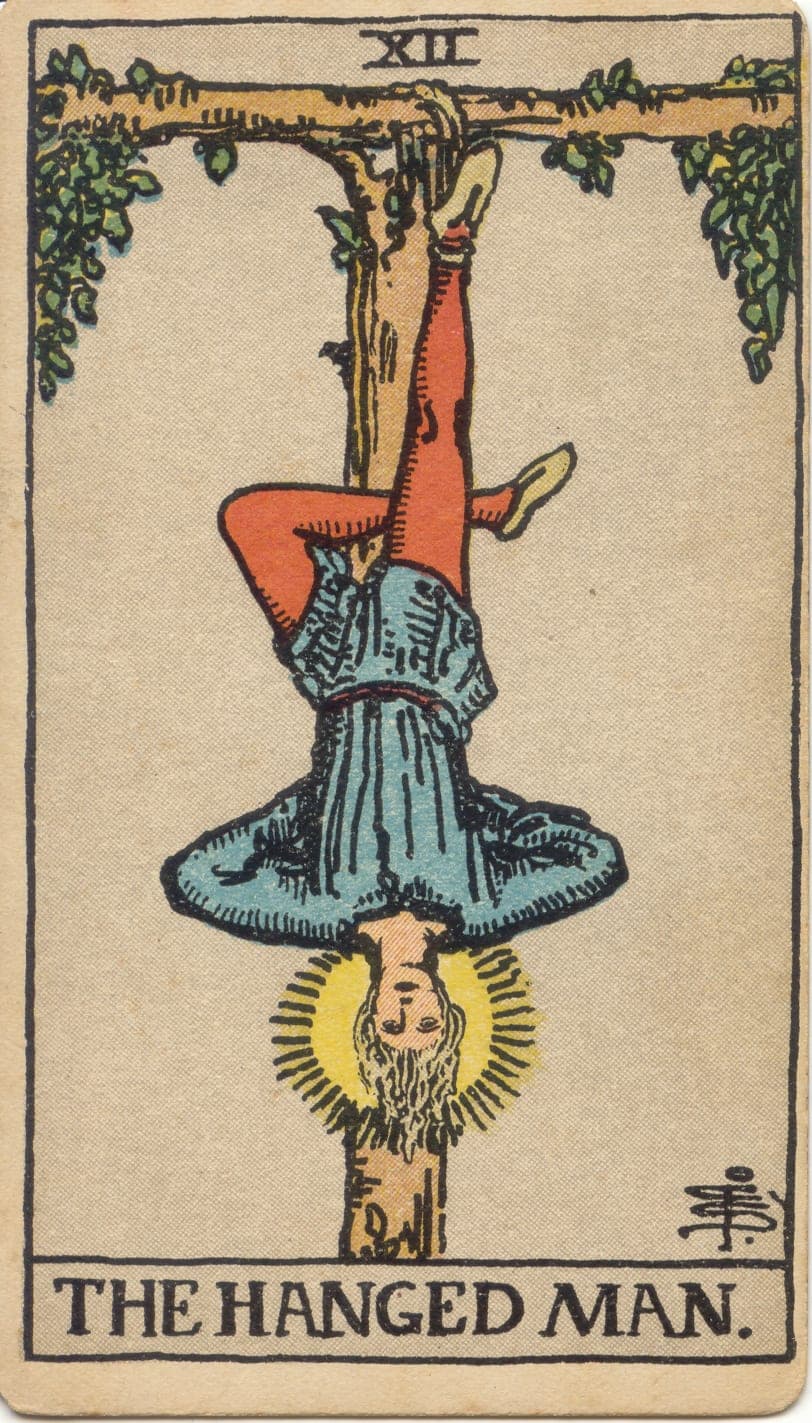
The Hanged Man
The Willing Surrenderer
You are tired of waiting, and also not ready to force it. Sit in the pause on purpose—ask what angle you have refused to see—then take one smaller action once the frame shifts, not before.
Reversed: Reversed Hanged Man can mean the pause has stopped being illuminating and has started becoming a holding pattern. You may be stuck in delay, indecision, or a sacrifice that is no longer producing wisdom. In the Rider-Waite reading style, movement is being blocked less by circumstances and more by attachment to an old perspective that no longer fits.
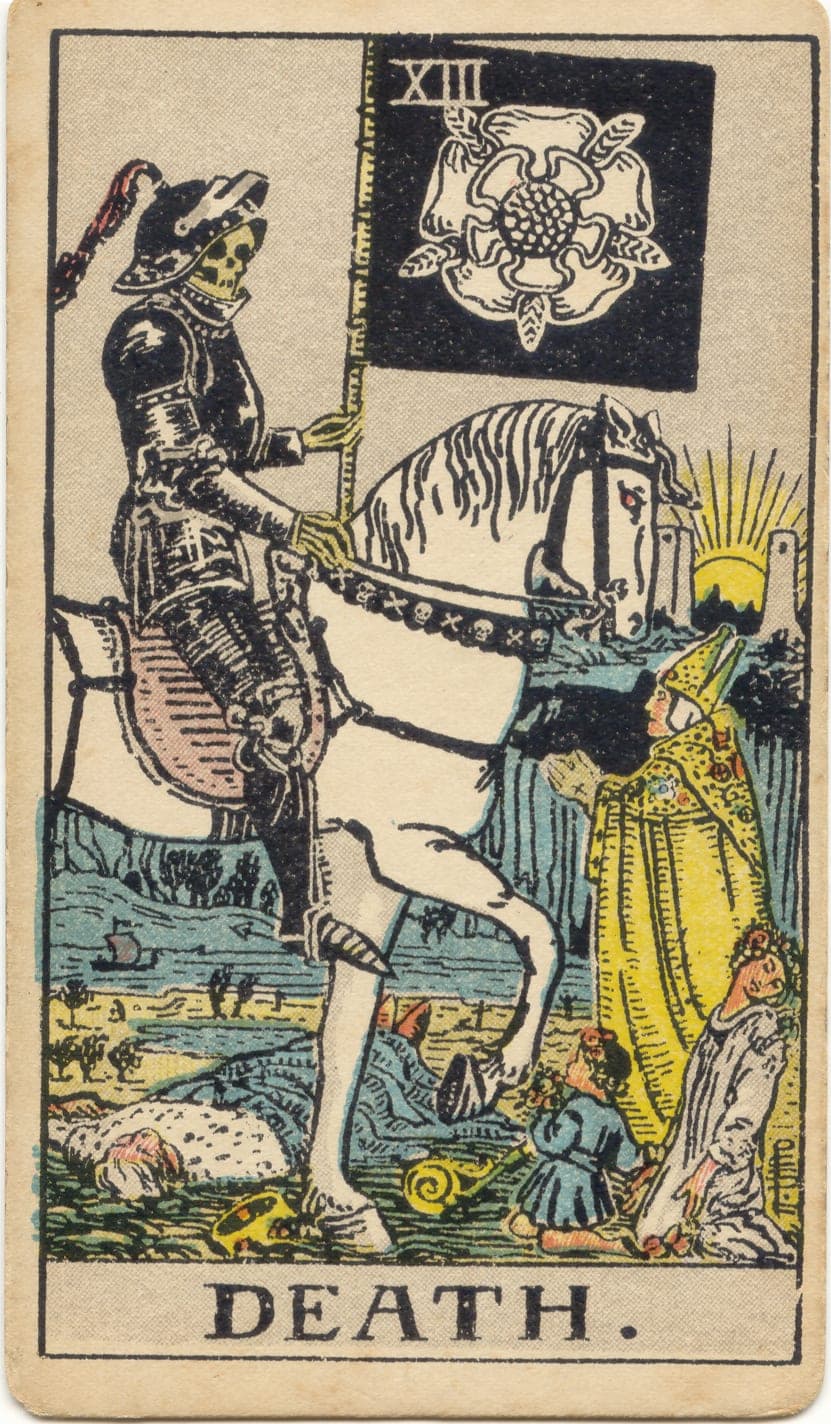
Death
The Transformer
Something has already finished, even if you are still negotiating with it. Stop animating what is done. Name one clean ending today so your energy can move toward what can actually begin.
Reversed: Reversed Death points to resistance to changes that are already in motion. There may be attachment, delay, emotional bargaining, or exhaustion from trying to keep something already ending alive. In the Rider-Waite reading style, the real suffering is no longer the change itself but the effort spent postponing what must ultimately be faced.
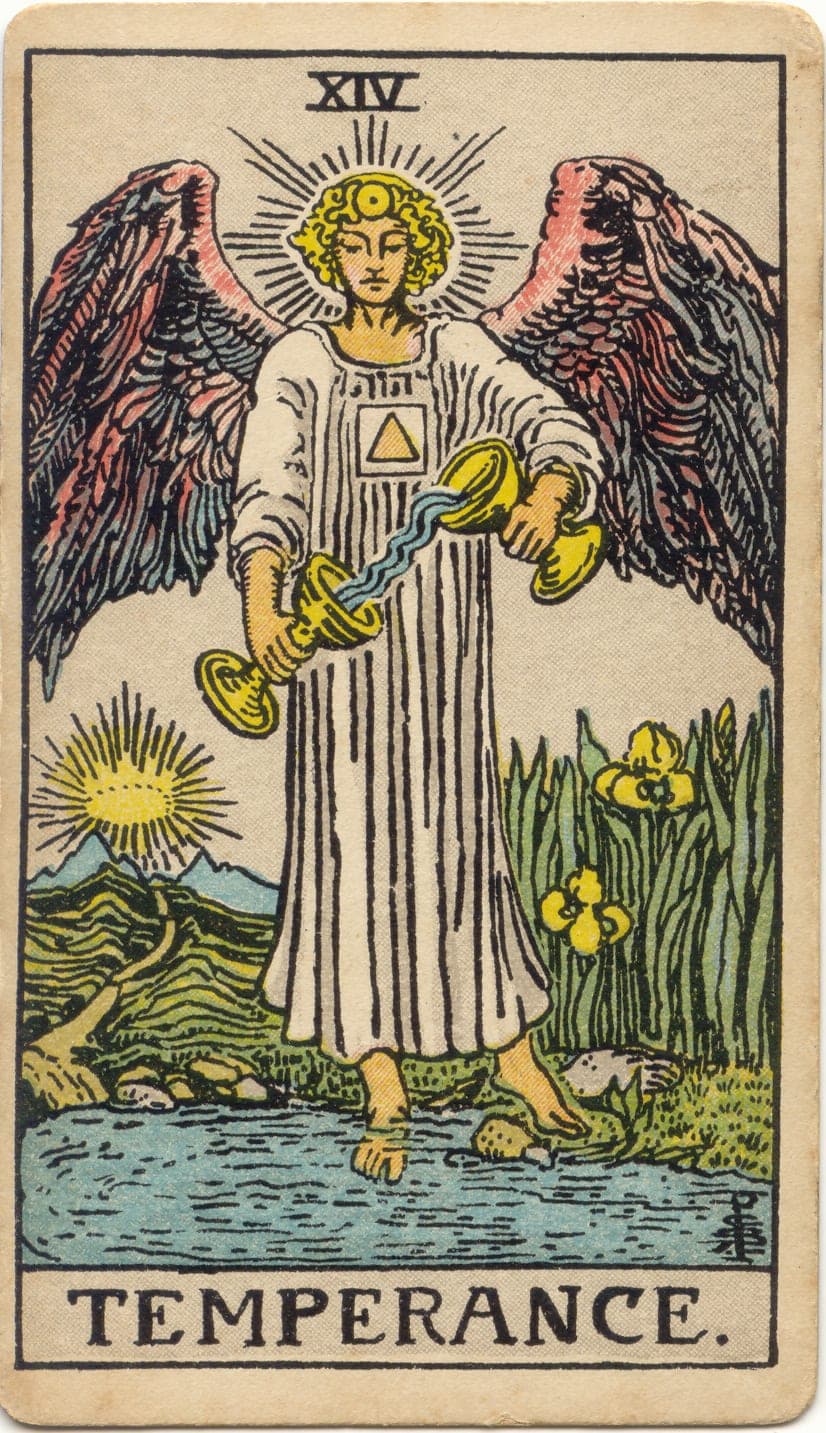
Temperance
The Divine Mixer
Temperance is the card of balance, blending, and healing through proportion. In the Rider-Waite tradition, it appears when progress depends on rhythm, moderation, and careful integration rather than intensity. This is a card of patient adjustment, where the right mixture matters more than dramatic force.
Reversed: Reversed Temperance shows balance has been lost somewhere in the process. There may be too much urgency, too much fluctuation, or an attempt to make incompatible energies work without enough care or order. In the Rider-Waite reading style, the situation is not asking for more effort but for better rhythm, clearer boundaries, and a return to proportion.
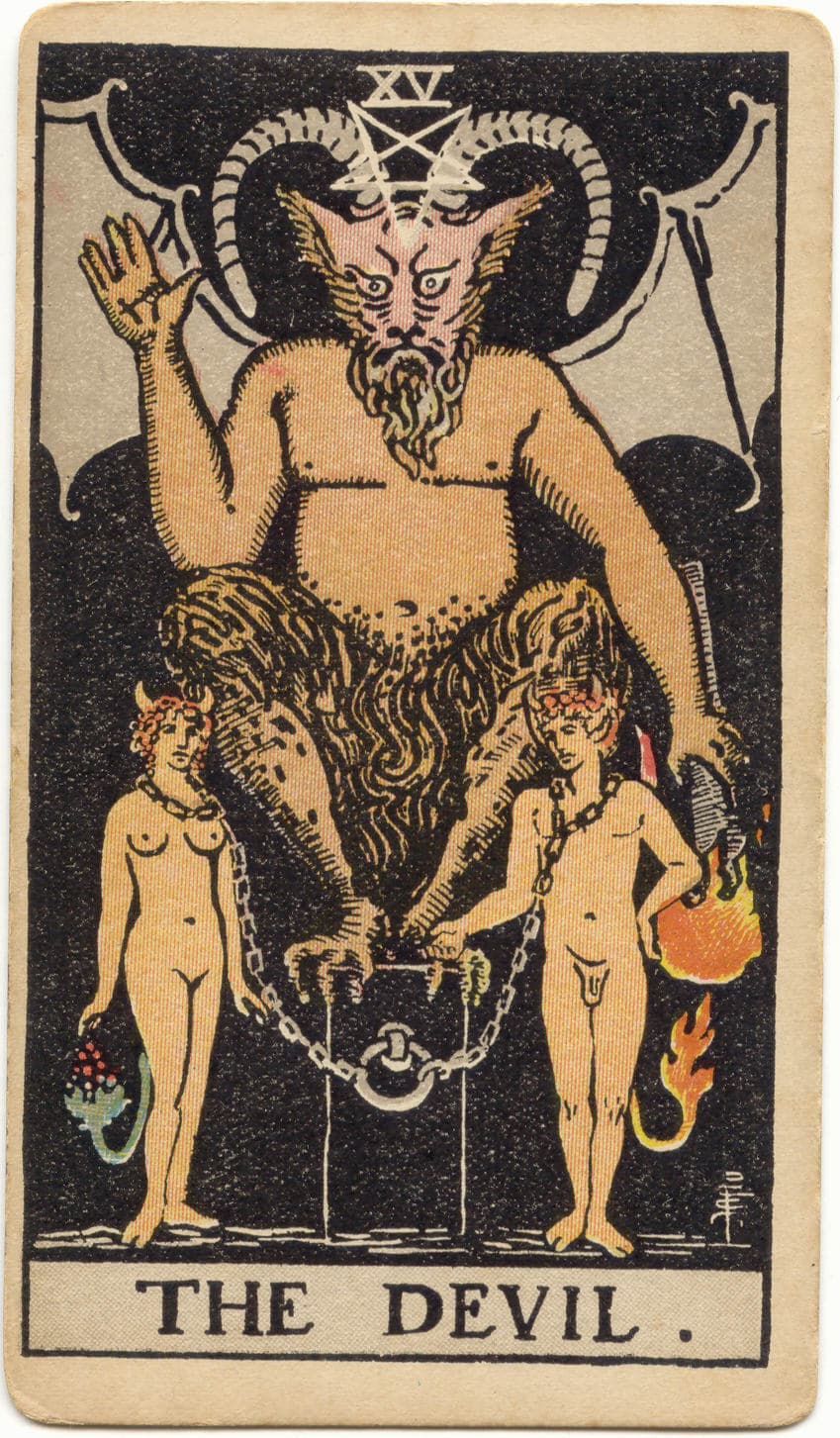
The Devil
The Shadow Binder
The Devil reveals a pattern has more control than you are willing to admit. Desire, fear, attachment, avoidance, or self-deception may be shaping the situation at the base level, often because the cost of the pattern has been normalized. When this card appears, clarity starts by honestly naming the bonds, especially when something simultaneously feels attractive, familiar, and quietly draining.
Reversed: Reversed Devil often marks the beginning of release. The pattern may not be fully gone, but now you can see it more clearly, and that shift in awareness matters. When this card appears, freedom becomes possible through truth, boundaries, and action, especially if you stop acting as if the old chains are still stronger than they actually are.
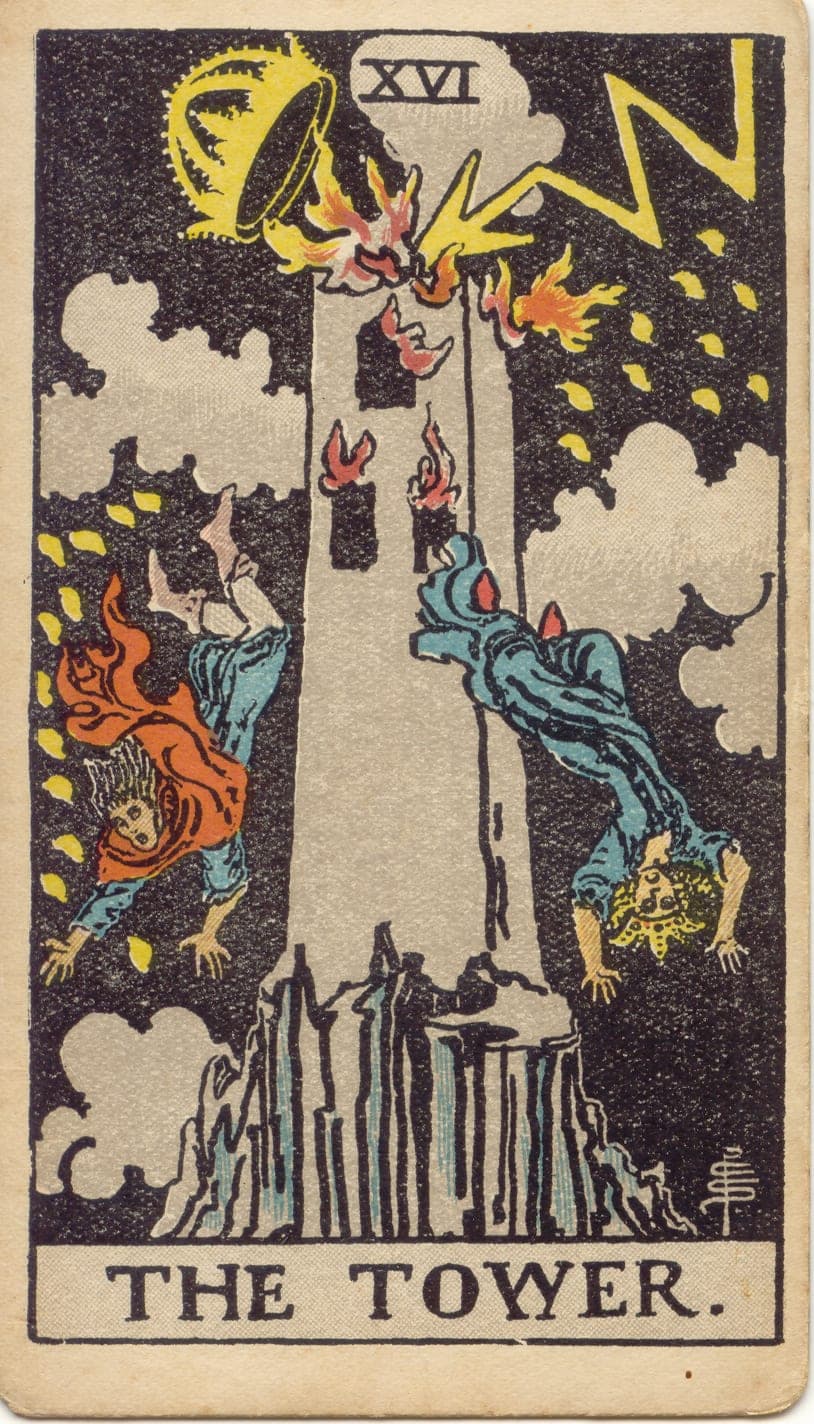
The Tower
The Breaker of False Structures
You can feel the crack—the story you have been holding is not holding you back. Do not waste the afternoon taping it together. Face the one truth you already know, then rebuild from what is still real.
Reversed: Reversed Tower suggests the cracks have formed even if the full collapse is not yet visible. There may be tension, concealment, or desperate attempts to keep something already unstable together. When this card appears, controlled honesty is far kinder than continuing to preserve what everyone can feel is no longer sound.
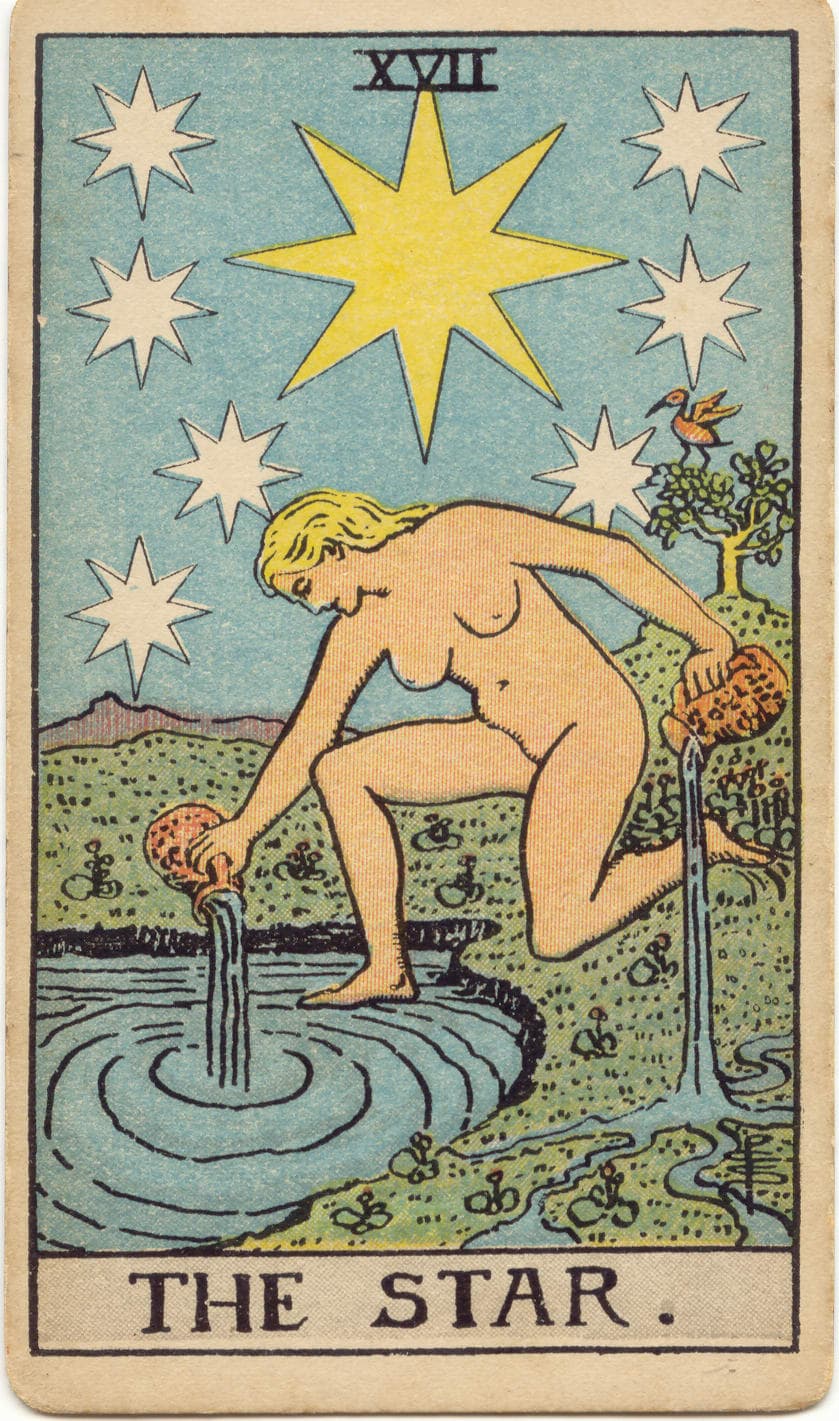
The Star
The Restorer of Hope
The Star is the card of renewal, healing, and quiet hope. In the Rider-Waite tradition, it appears after disruption when the future starts to feel imaginable again. This is not a loud victory card; it is a restoring card. It says that clarity, trust, and a gentler direction are returning, and that what is steady can now begin to matter more than what is dramatic.
Reversed: Reversed Star points to a stage where hope has dimmed, trust feels fragile, or encouragement is hard to fully receive. In the Rider-Waite reading style, the light is not absent, but your relationship with it may be strained by disappointment, fatigue, or caution. Recovery is still possible, but it will come through gentle steadiness rather than sudden inspiration.
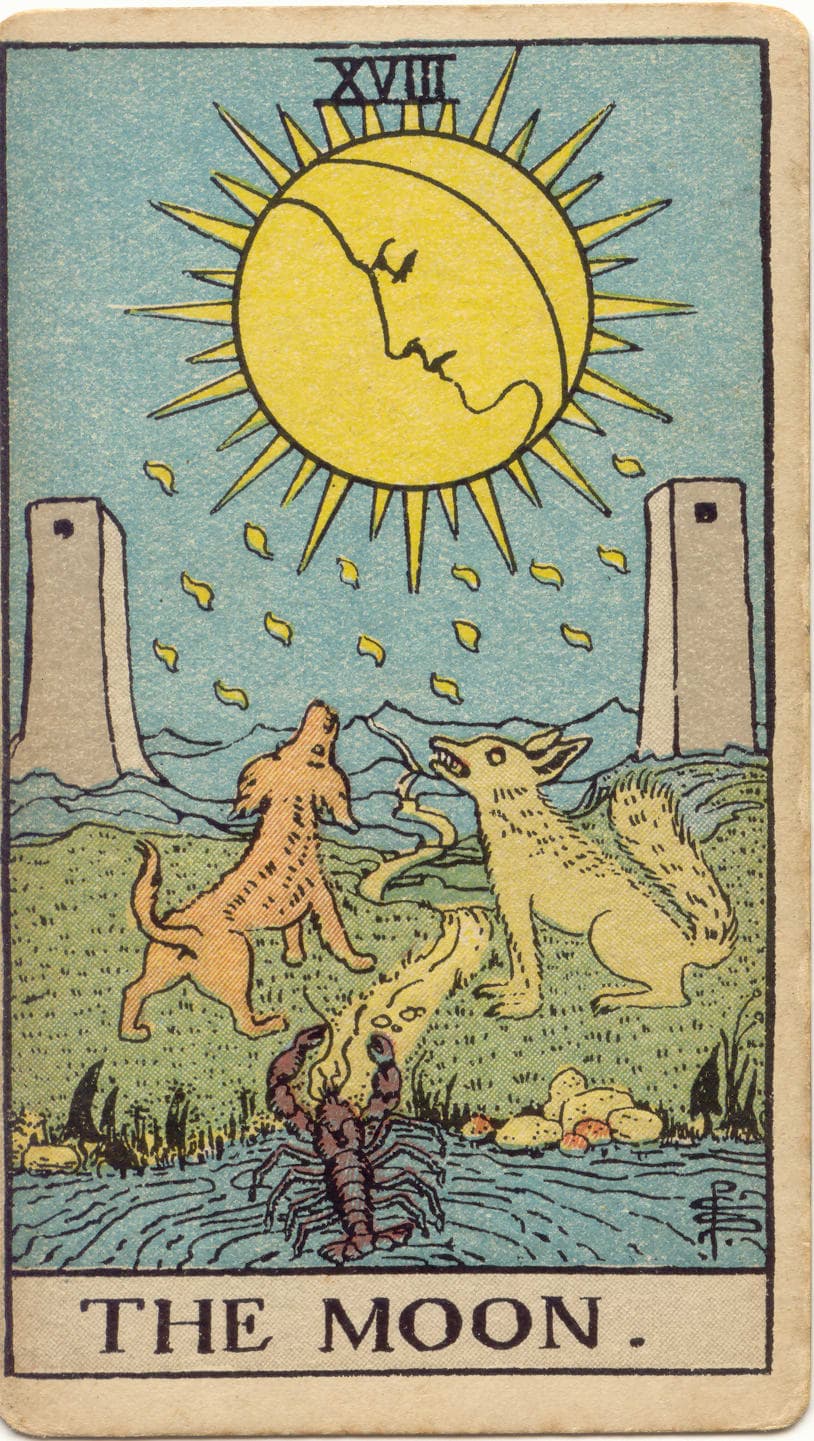
The Moon
The Guide Through Uncertainty
The Moon is the card of uncertainty, intuition, and hidden emotional layers. In the Rider-Waite tradition, it appears when the situation is not fully visible and fear, projection, or incomplete information can easily blur what is real. This card does not mean everything is wrong; it means the path is dim, and you need patience, observation, and careful verification before drawing conclusions.
Reversed: Reversed Moon often means confusion is beginning to clear. What was hidden, distorted, or emotionally exaggerated may now be coming into clearer view, even if the process feels uncomfortable at first. In the Rider-Waite reading style, relief comes not from fantasy but from allowing truth to become simpler, more visible, and less filled with fear.
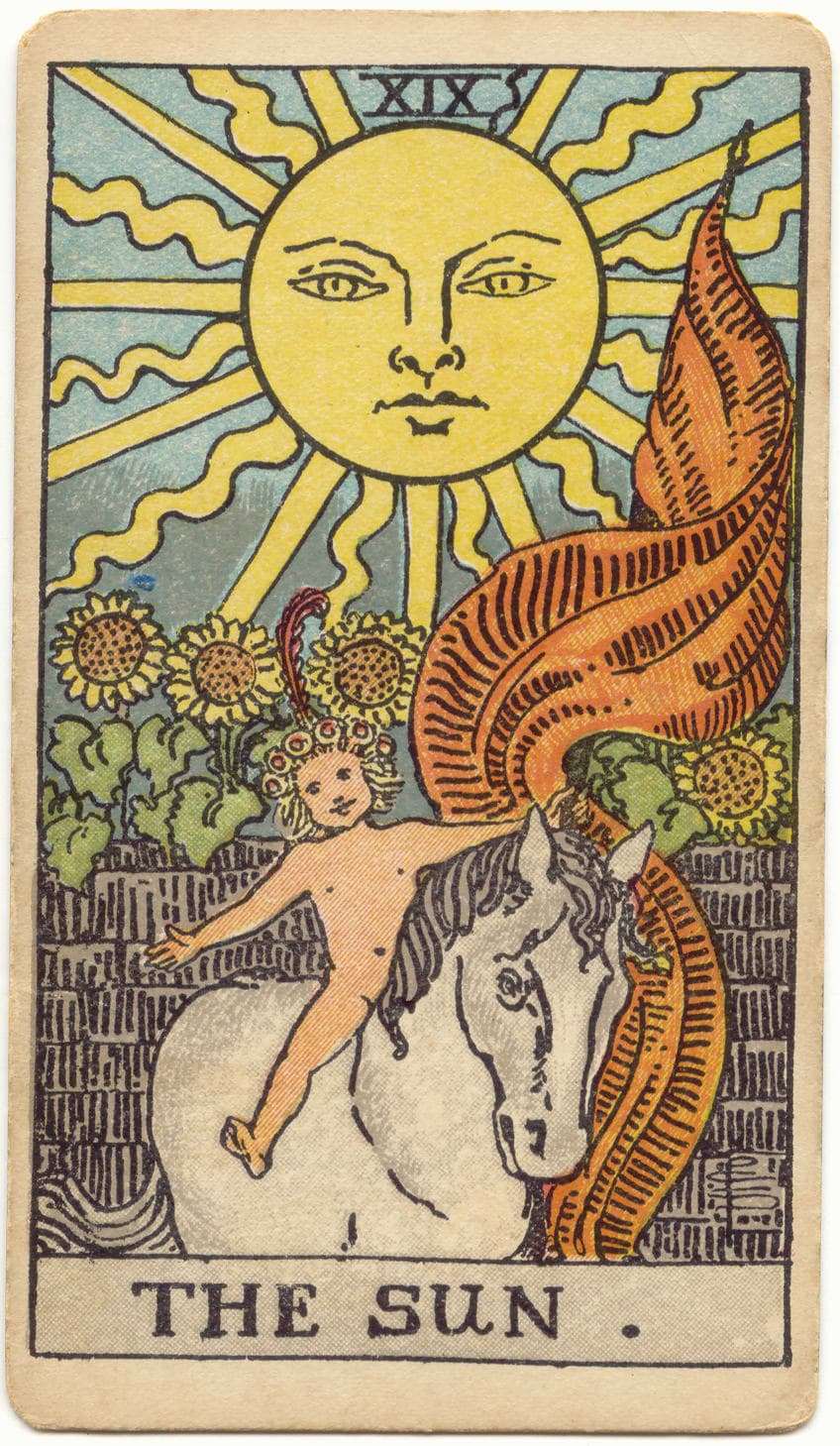
The Sun
The Illuminator of Radiance
You are bracing for a trick when the good news might already be visible. Let what is working be seen—say the warm thing out loud, or stop dimming a result you are already proud of.
Reversed: Reversed Sun suggests the light is present, but you may be blocking your own view of it through hesitation, pride, perfectionism, or fear that joy will not last. The card does not usually mean the light is gone. It means the answer may be delayed, muted, or hard to receive because confidence has become tangled with doubt. In a one-card reading, reversed Sun asks where you are refusing to let good news, simple truth, or real progress land.
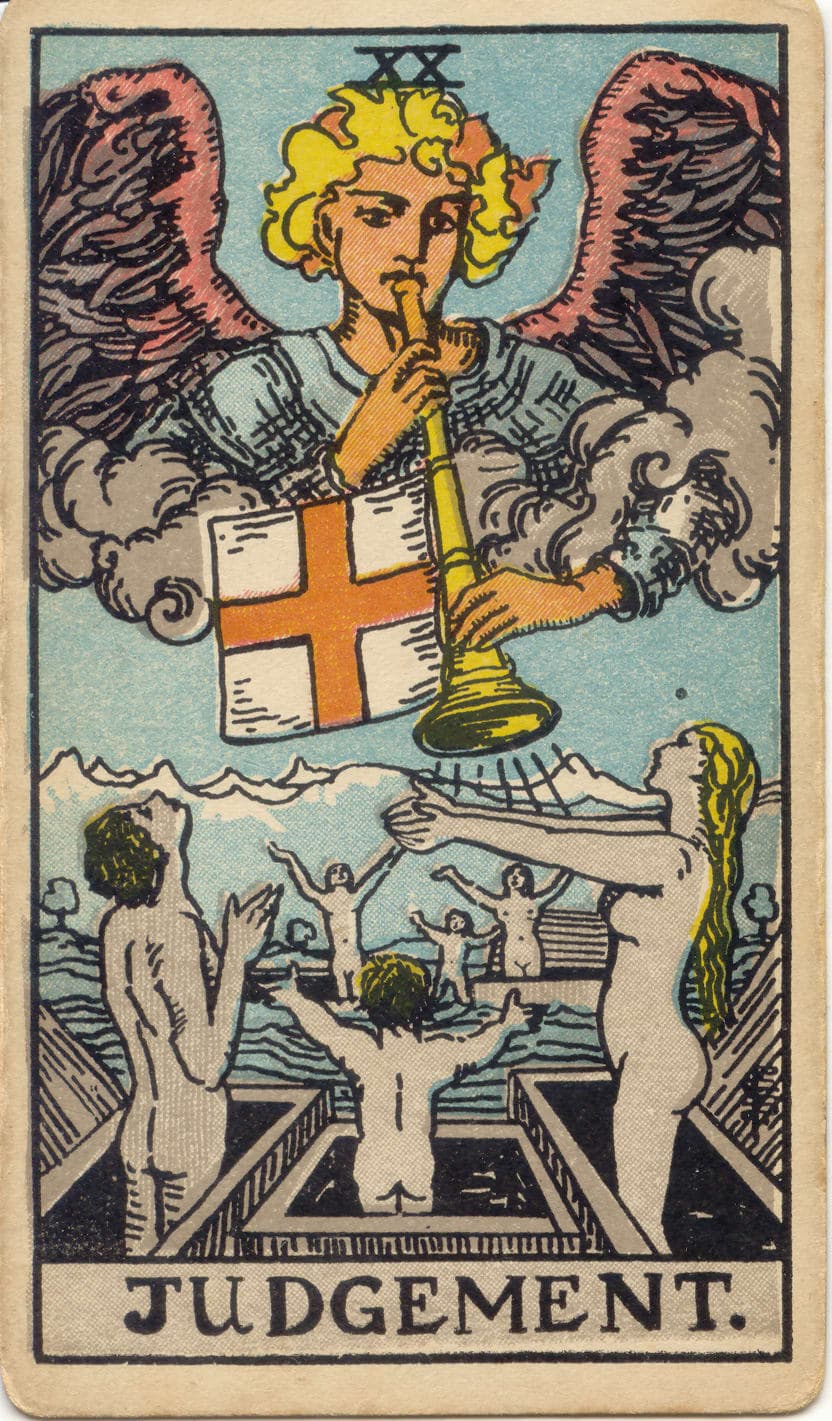
Judgement
The Call to Awakening
Judgement is the card of awakening, review, and response. In the Rider-Waite tradition, it appears when something has reached the point where you can no longer postpone an honest answer. This is a call to wake up to what is true, release what has completed its purpose, and step into the next chapter with clearer responsibility.
Reversed: Reversed Judgement suggests the call is being heard but not yet answered. There may be avoidance, harsh self-judgment, unfinished review, or decisions postponed that would bring real clarity. In the Rider-Waite reading style, growth is still possible, but shame, fear, or delay are being used to stand between insight and action.
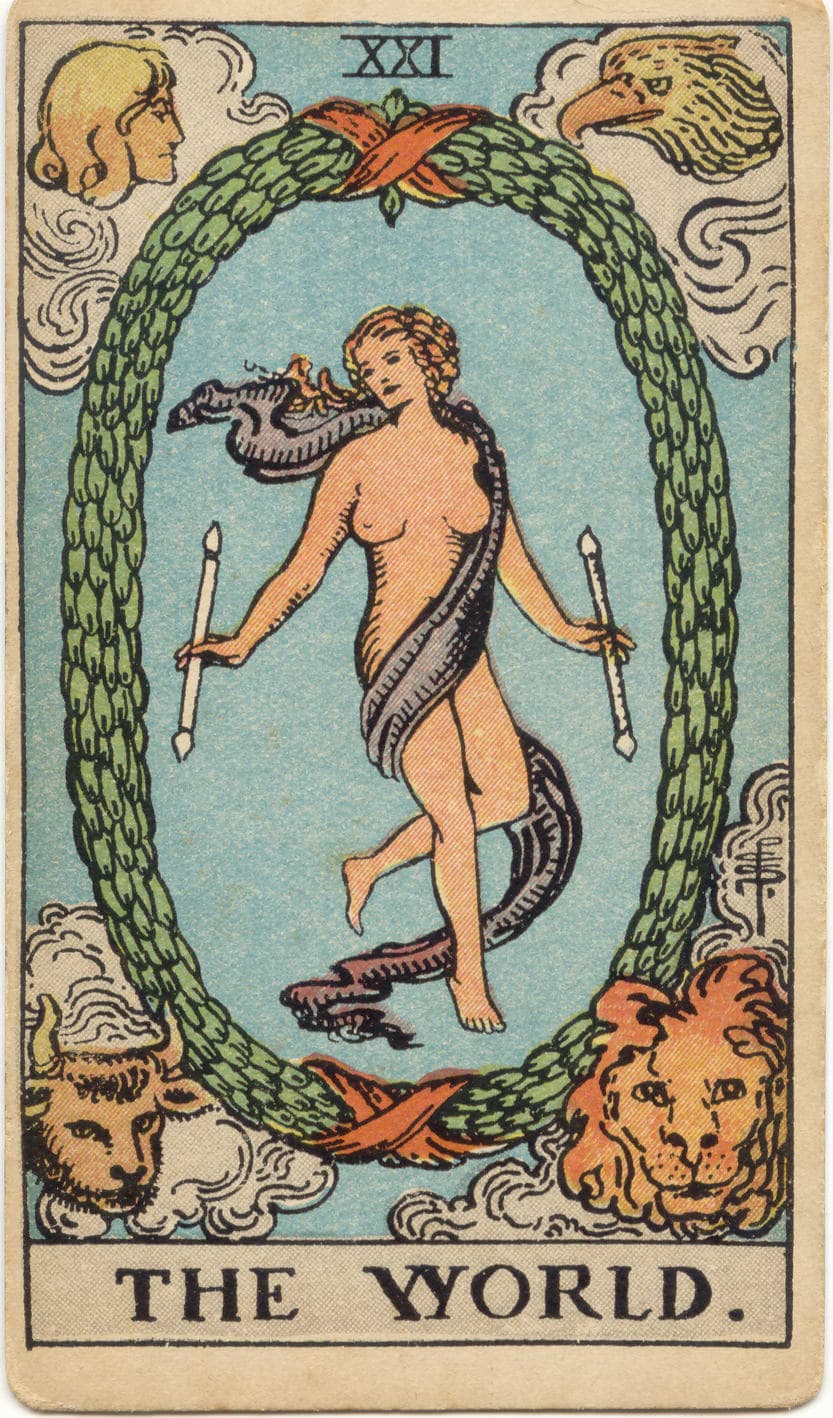
The World
The Integrated Whole
The World is the card of completion, integration, and arrival. In the Rider-Waite tradition, it appears when a cycle has been lived through enough to become whole, and the parts of the journey finally make sense together. This card points to closure, mastery, and readiness for the next chapter because this one has been properly finished.
Reversed: Reversed World points to something very close to completion but not quite closed yet. The delay may be practical, emotional, or related to comfort with who you will become after this chapter is done. In the Rider-Waite reading style, one final integration, honesty, or disciplined follow-through is needed before the cycle can truly complete.
Cups
Batch 1 — fourteen Cups meanings for feelings, bonds, and emotional weather. Meaning pages only; not dealt by the free Major shuffle.
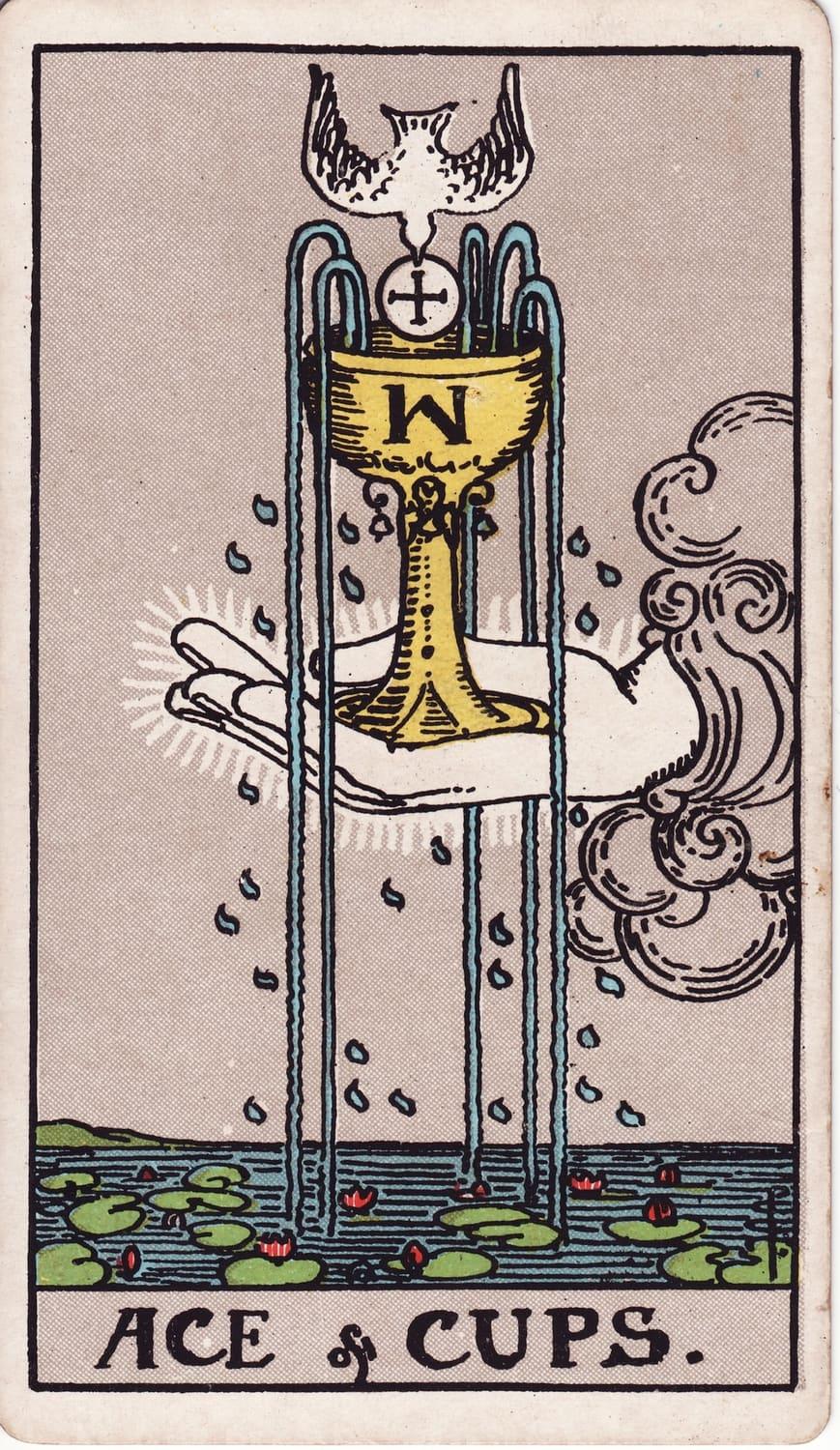
Ace of Cups
The Open Heart
Ace of Cups is a clean emotional beginning. In a one-card reading, it often means a feeling is ready to move—love, forgiveness, creative tenderness, or a sincere yes to caring again. Something soft is arriving with force. You do not need the whole story yet; you need to notice what is already rising and give it a place to land.
Reversed: Reversed Ace of Cups often means the emotional opening is blocked, delayed, or turned inward. The capacity for care is still there; the flow is not. In a one-card reading, treat it as wait rather than a hard no: something needs emptying, healing, or clearer boundaries before a clean yes can land.
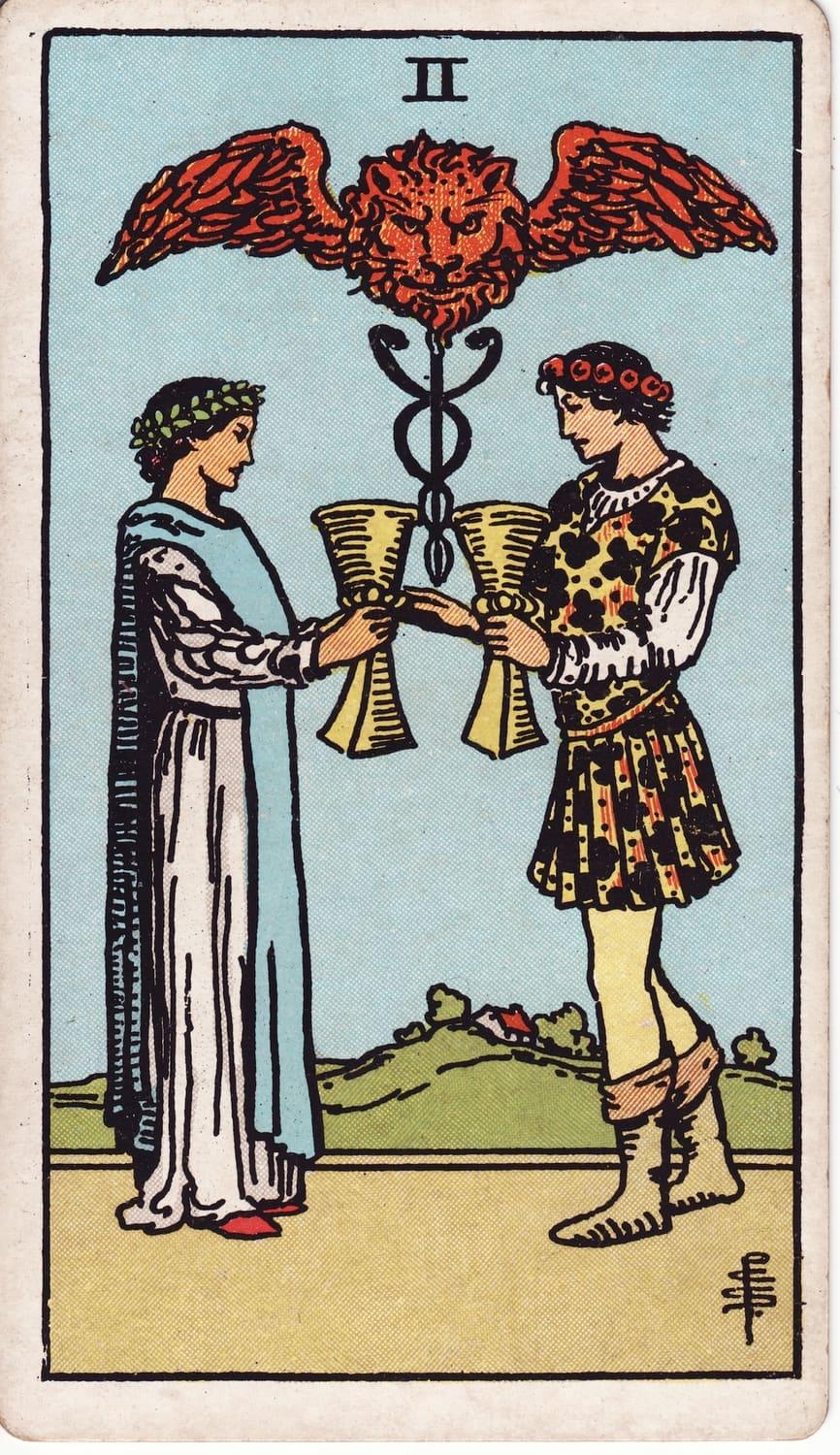
Two of Cups
The Mutual Bond
Two of Cups is mutual recognition. In a one-card reading, it often means the relationship—or offer—is two-sided: respect, attraction, or alliance that can be named without chasing. Chemistry matters here, but so does equal dignity. Look for the place where both people (or both parts of a deal) can meet cleanly.
Reversed: Reversed Two of Cups often shows imbalance: one-sided effort, broken rapport, or attraction without equal standing. In a one-card reading, it leans wait—repair the exchange or admit it is not mutual yet before you call it a partnership.
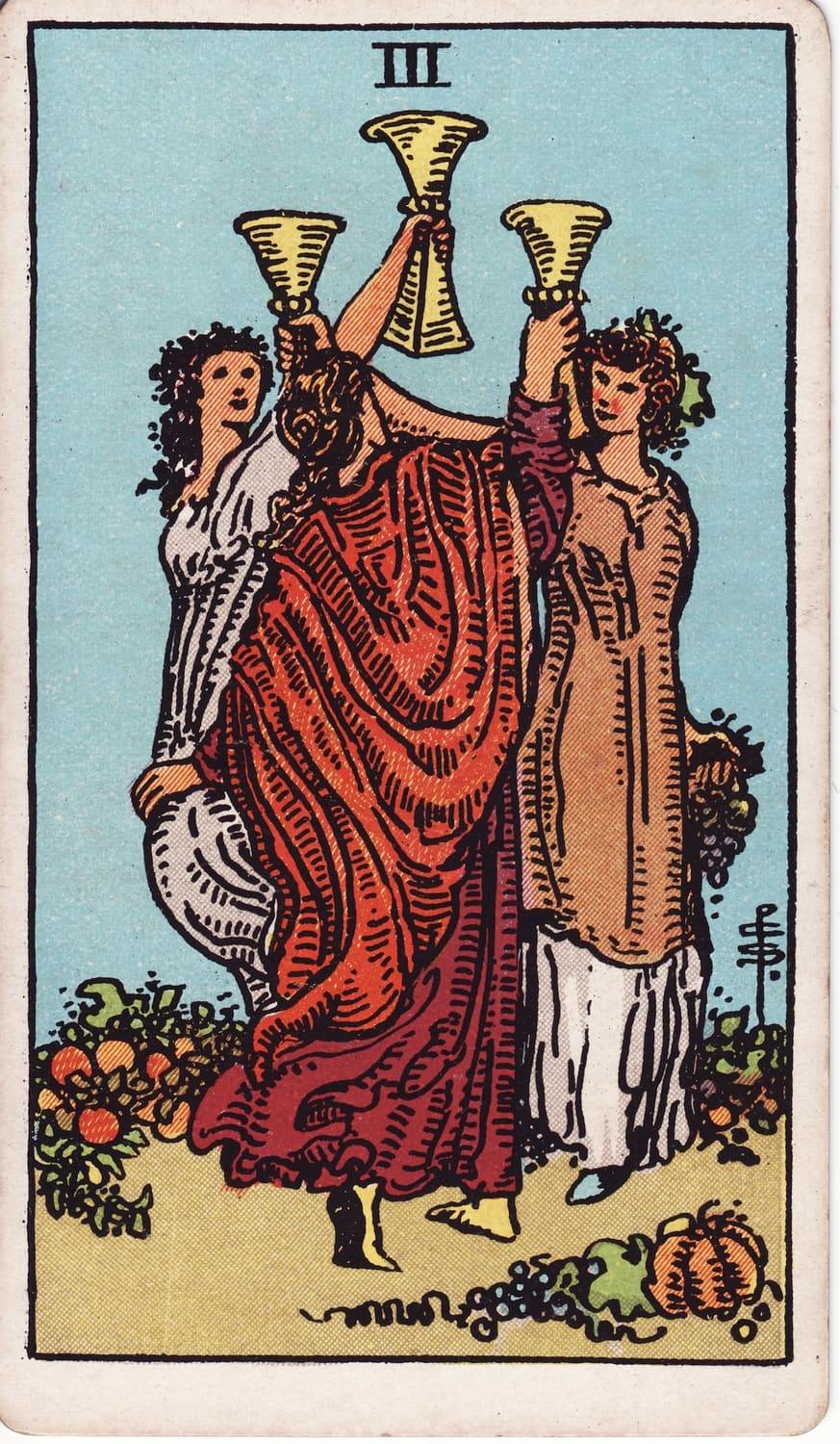
Three of Cups
The Shared Joy
Three of Cups is shared joy with witnesses. In a one-card reading, it often means friendship, celebration, or community support is the medicine—not isolation. The answer may be social: gather, toast, or let people help you carry the good news. Belonging here is active, not theoretical.
Reversed: Reversed Three of Cups often points to social strain: gossip, exclusion, overindulgence, or friendship that has gone thin. In a one-card reading, it may lean maybe—community is still relevant, but the current circle needs sorting before celebration feels clean.
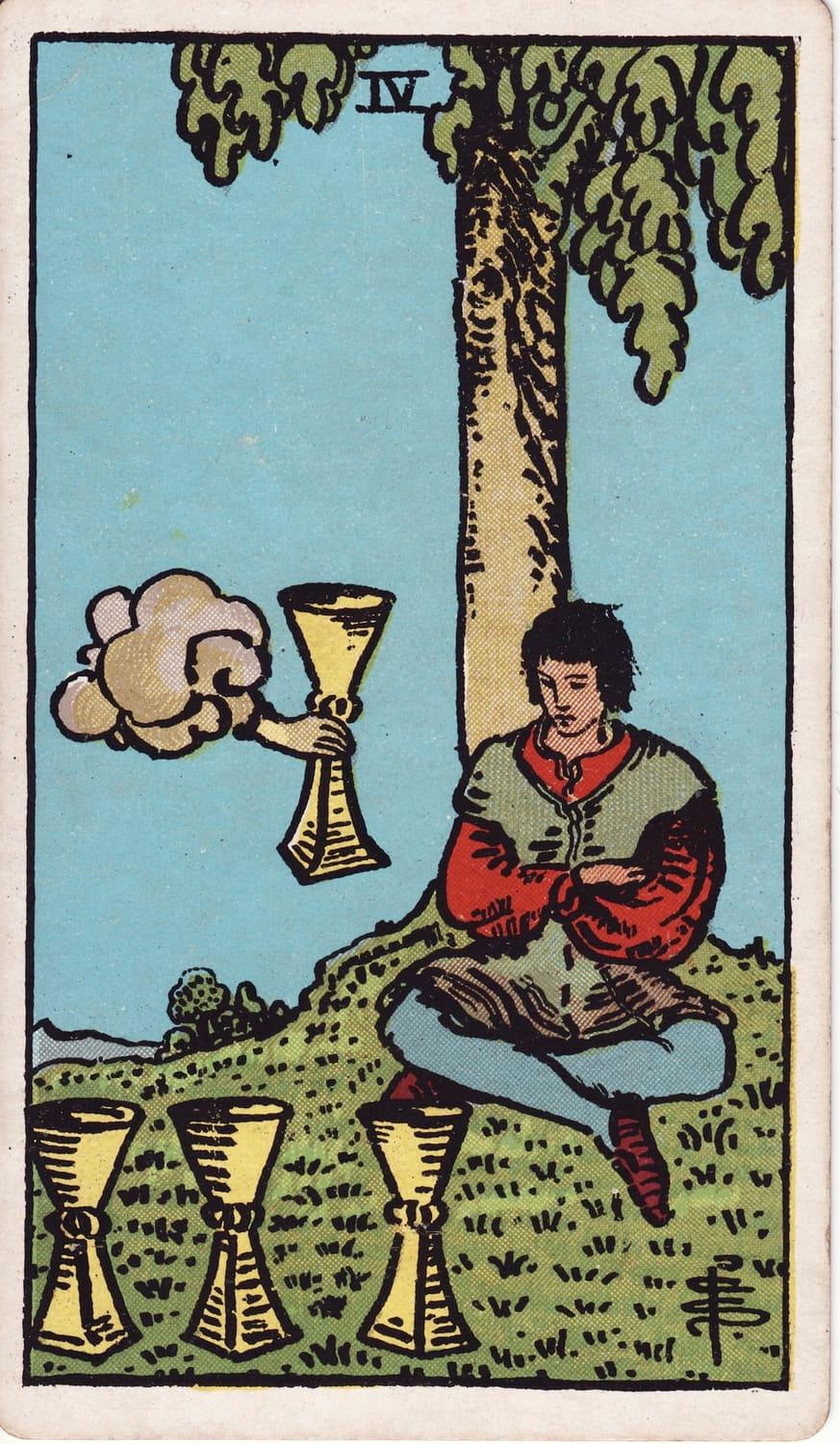
Four of Cups
The Withheld Gaze
Four of Cups is emotional pause that can tip into refusal. In a one-card reading, it often means you are so focused on what disappoints you that a real offer is being ignored. Wait is the honest lean: not forever, but until you look up and assess the fourth cup with clear eyes.
Reversed: Reversed Four of Cups often means the fog is lifting: you are ready to accept an offer, re-engage, or end the sulk. In a one-card reading, it can lean yes when the question is about receiving help, a chance, or renewed interest—provided you actually take the cup.
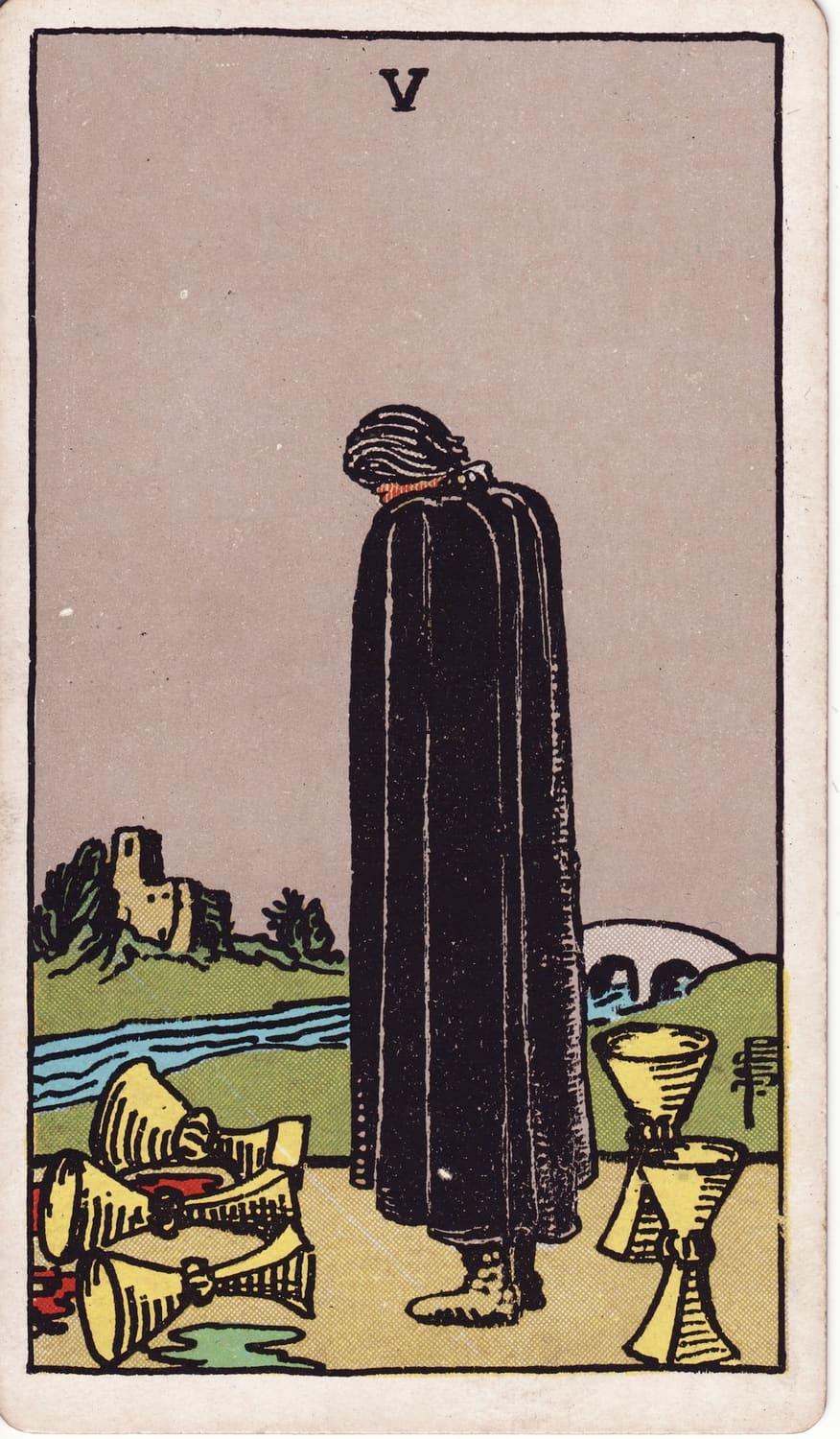
Five of Cups
The Mourning Gaze
Five of Cups names grief that still faces the spill. In a one-card reading, it often leans no or not yet for outcomes that require optimism you do not have today. Something was lost—and the card asks you to feel it without pretending the two standing cups do not exist. Mourning is allowed; tunnel vision is optional.
Reversed: Reversed Five of Cups often marks the turn from grief toward what remains. In a one-card reading, it leans wait rather than a sudden yes: healing is starting, forgiveness may be possible, and the spilled cups no longer own the whole scene. Move carefully; do not rush past the last of the feeling.
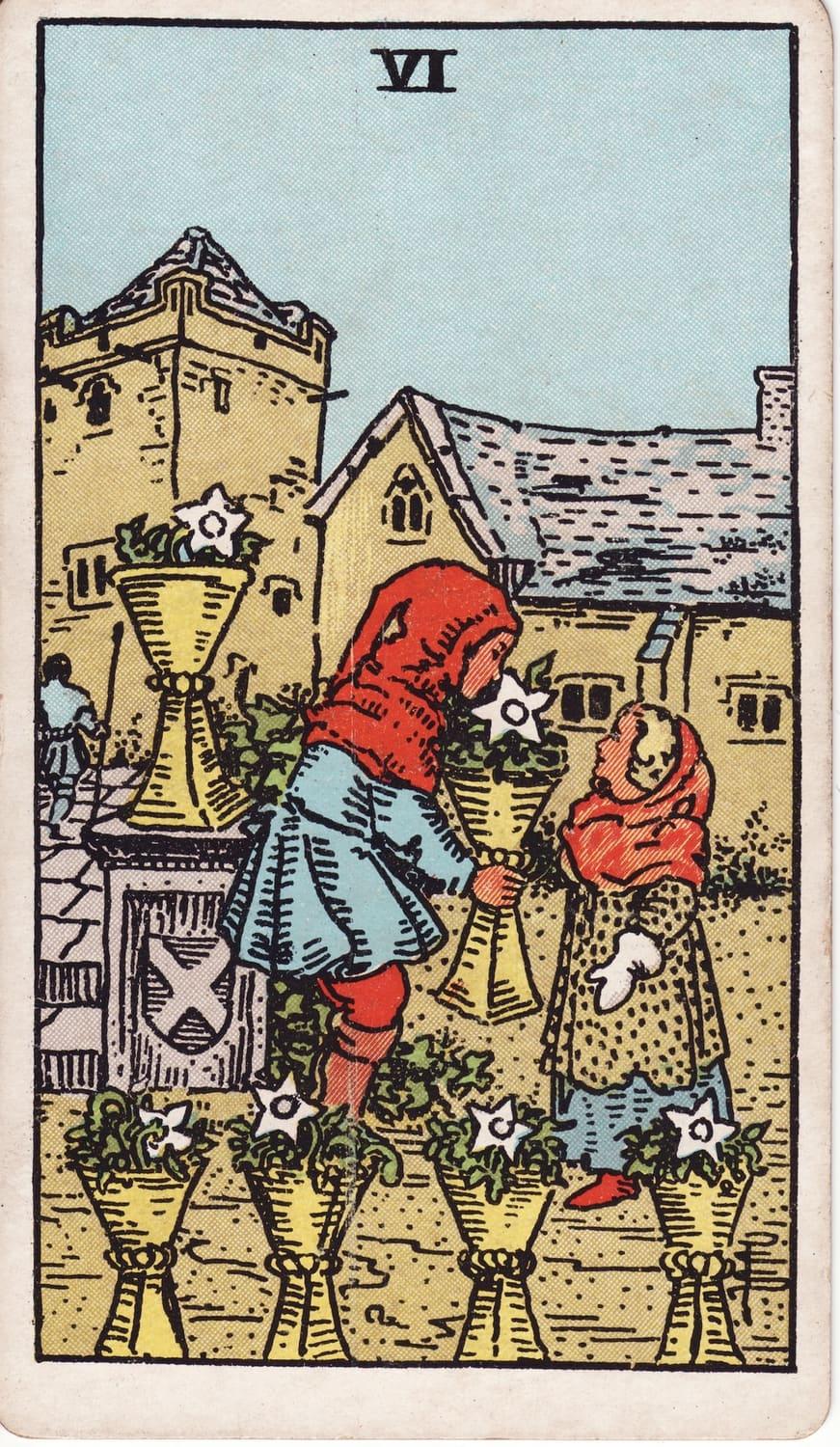
Six of Cups
The Kind Memory
Six of Cups brings kindness with a past accent. In a one-card reading, it often means nostalgia, reunion, or a soft offer rooted in shared history. The lean is maybe: sweetness is real, but the present must still be negotiated. Take the gift without living only in the old house.
Reversed: Reversed Six of Cups often means the past is sticky: idealizing old days, refusing to grow up emotionally, or being stuck in childhood patterns. In a one-card reading, lean wait—update the story before you treat nostalgia as a plan.
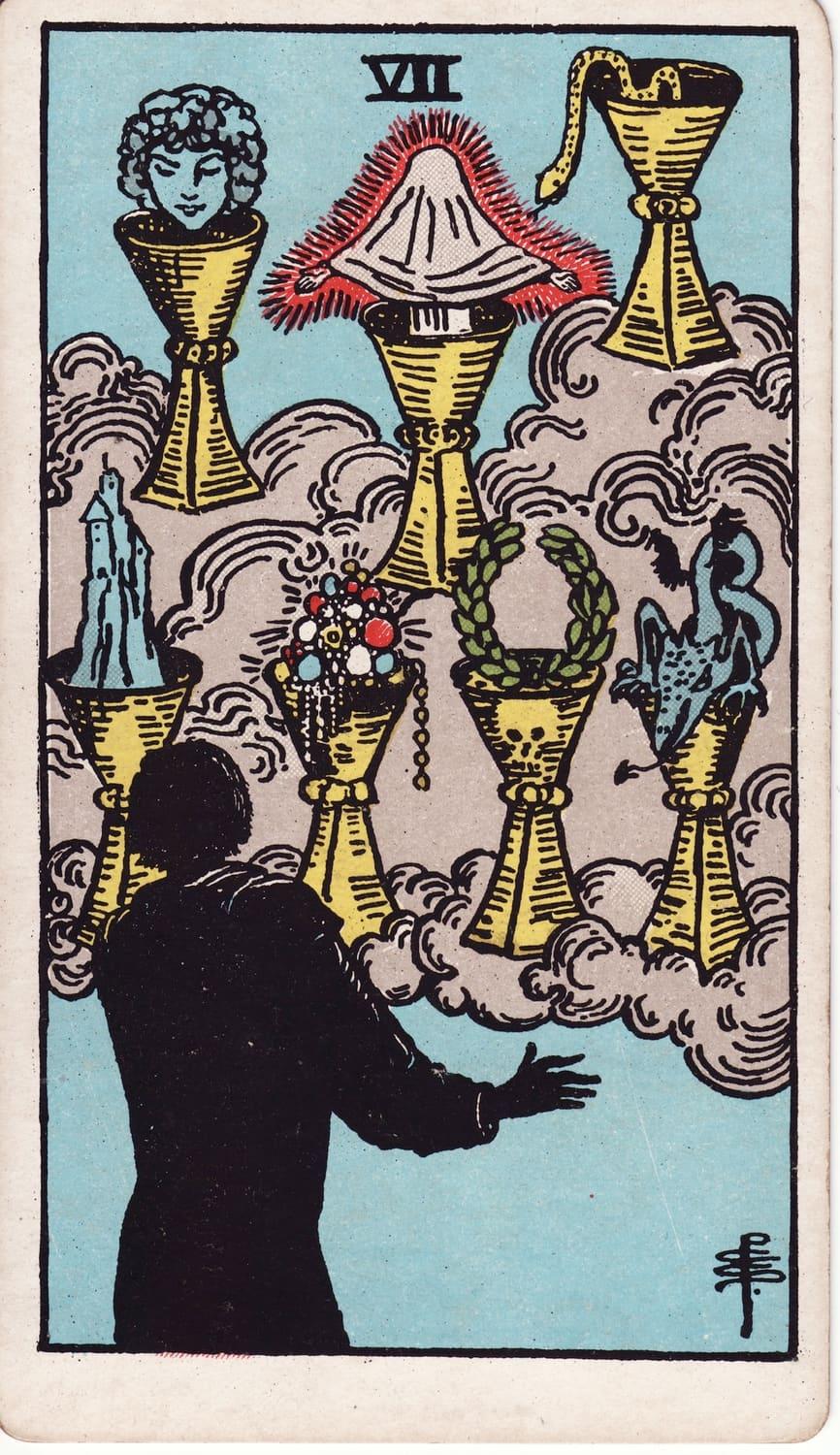
Seven of Cups
The Cloud of Choices
Seven of Cups multiplies options until clarity thins. In a one-card reading, it often leans wait: too many fantasies, shiny paths, or emotional daydreams are competing. The card is not anti-desire—it is anti-choosing from fog. Narrow before you commit.
Reversed: Reversed Seven of Cups often means the fog breaks: priorities return, illusions drop, or a clear choice finally emerges. In a one-card reading, it can lean yes—clarity after fantasy—if you act on the sober option instead of inventing a new cloud.
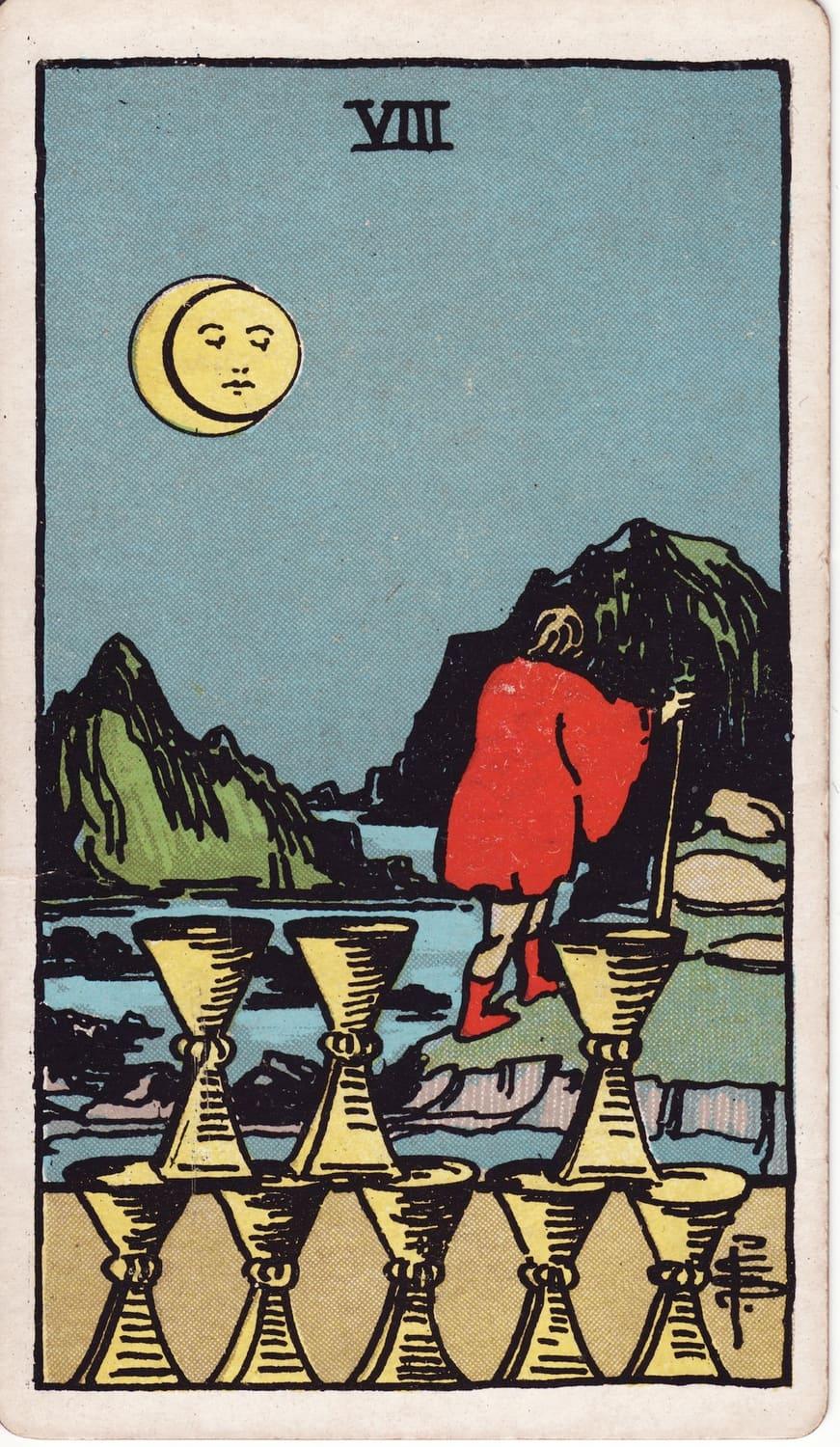
Eight of Cups
The Quiet Departure
Eight of Cups is leaving what no longer feeds you. In a one-card reading, it often leans no to staying stuck—or wait if you asked whether to force a hollow situation to work. The walk is intentional: something was tried, found incomplete, and the soul wants higher ground. Do not confuse courage with drama.
Reversed: Reversed Eight of Cups often shows stuck leaving: fear of walking away, returning to what you outgrew, or drifting without a true destination. In a one-card reading, lean wait—clarify whether you need to finish the departure or repair something worth staying for.
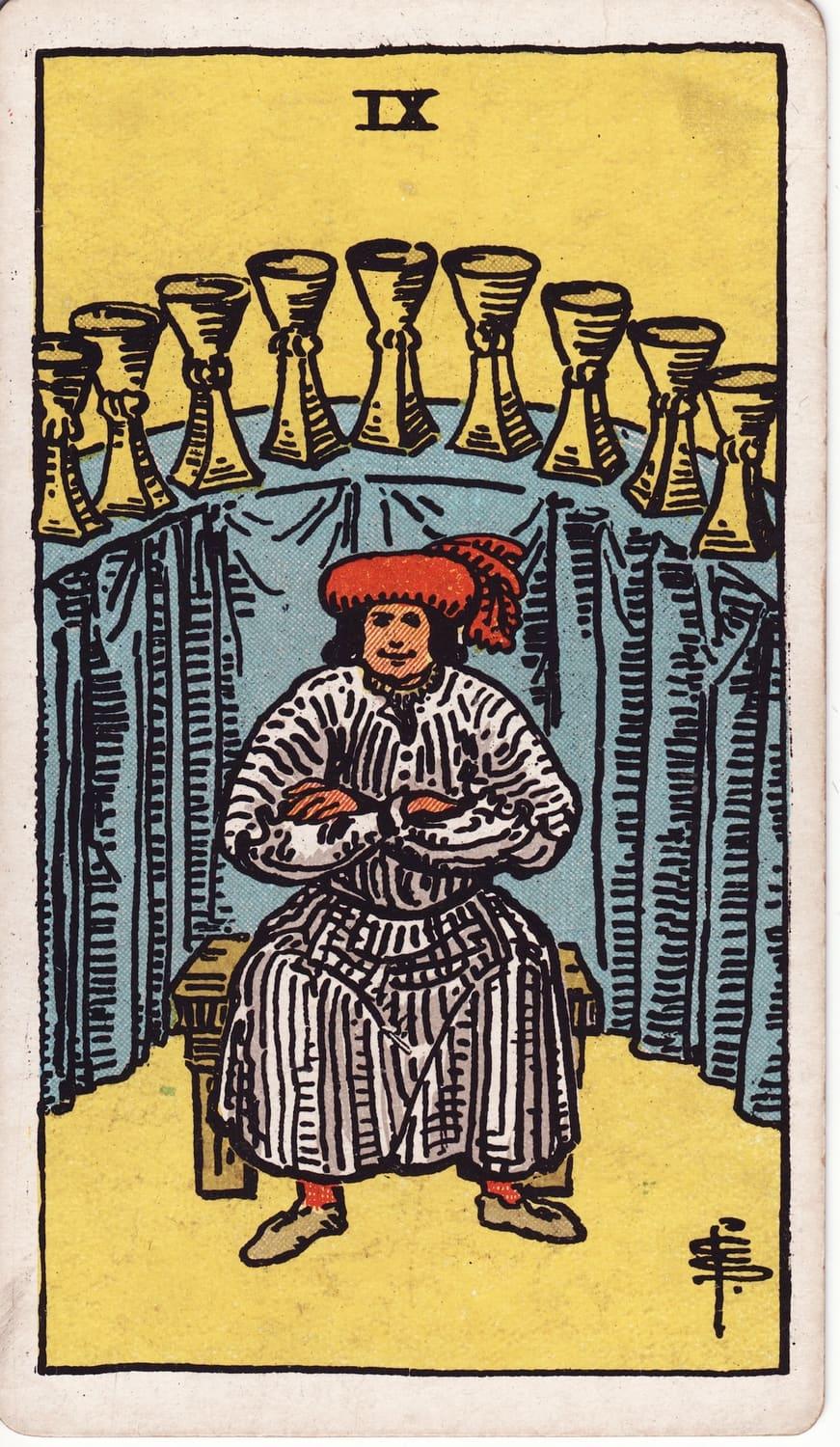
Nine of Cups
The Satisfied Host
Nine of Cups is the wish card in plain clothes: satisfaction you can feel in the body. In a one-card reading, it often leans yes—especially for desires that are already forming. Enjoy the plenty without apologizing for it. Just keep pride from becoming a closed door to growth.
Reversed: Reversed Nine of Cups often means the wish feels hollow, delayed, or spoiled by excess and smugness. In a one-card reading, lean wait—check whether you want the image of fulfillment more than the feeling itself, then adjust.
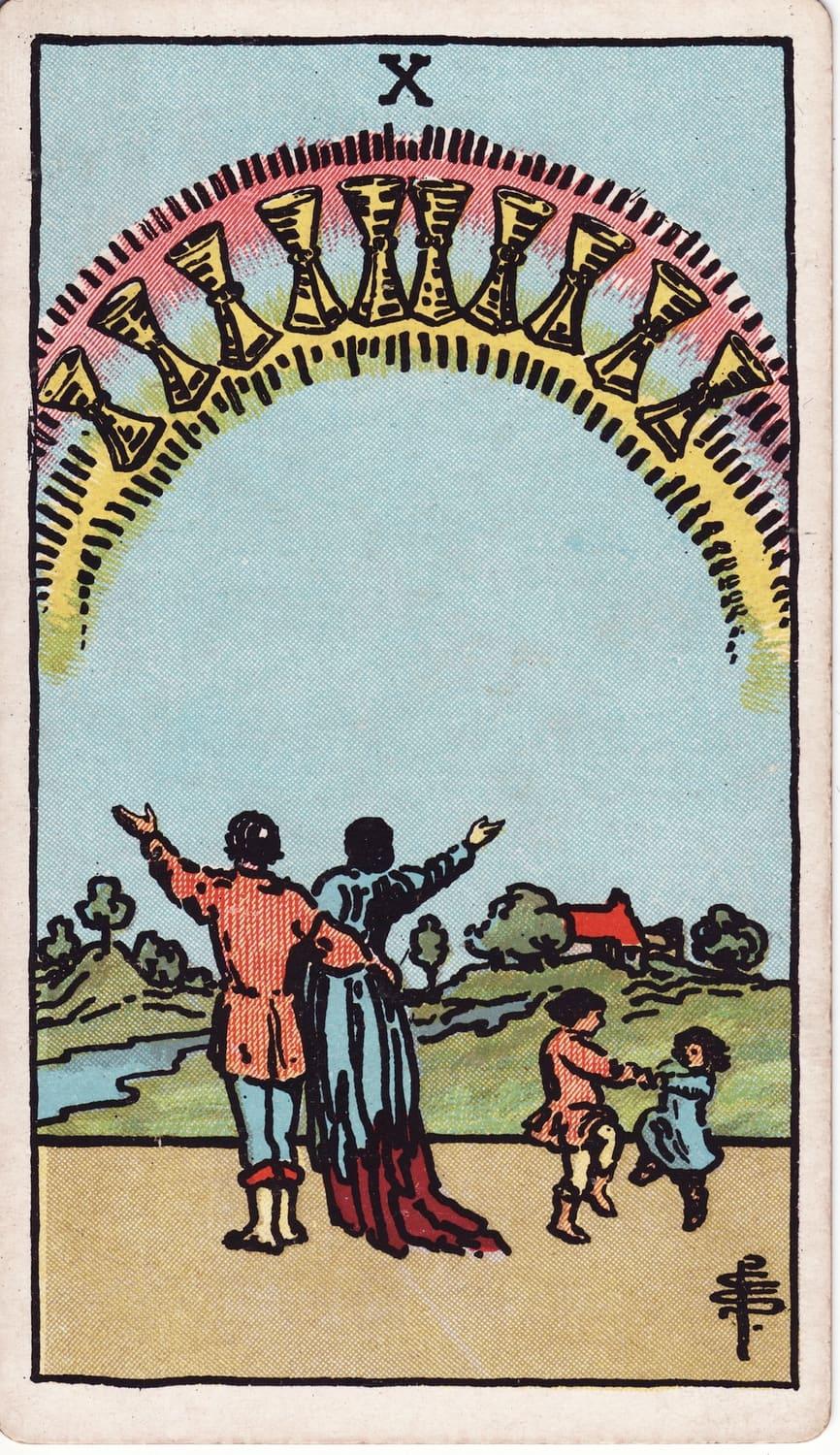
Ten of Cups
The Shared Home
Ten of Cups is harmony that can be shared out loud. In a one-card reading, it often leans yes for lasting emotional fulfillment—home, chosen family, or a bond that feels like belonging. The rainbow is public joy: not secret chemistry alone, but a life that fits together. Build it with daily kindness, not fantasy alone.
Reversed: Reversed Ten of Cups often shows cracked harmony: family tension, a picture-perfect image hiding strain, or delayed fulfillment. In a one-card reading, lean wait—repair the foundation before you call the dream complete.
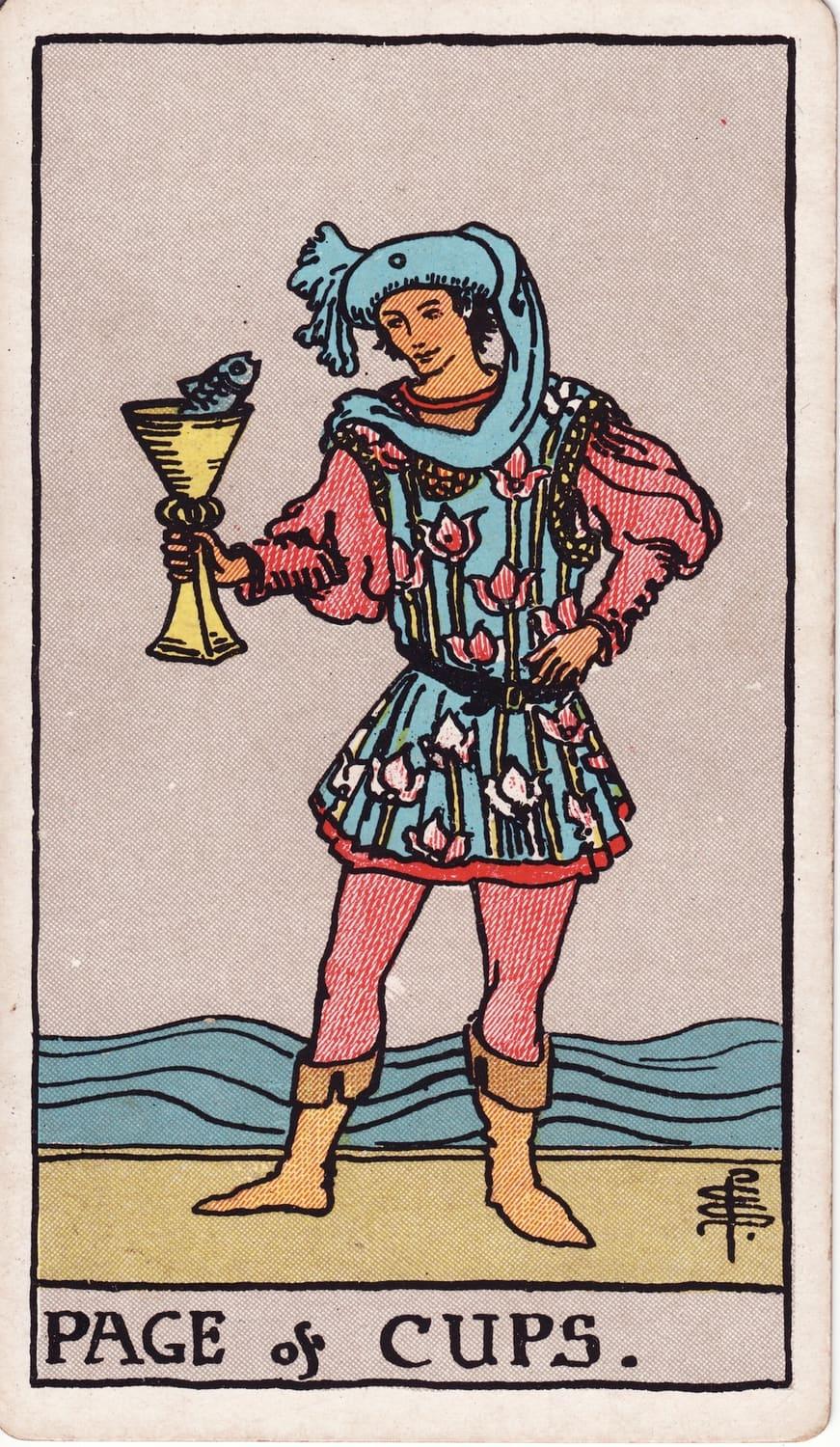
Page of Cups
The Curious Heart
Page of Cups brings a soft message from the heart. In a one-card reading, it often leans yes to curiosity, creative feeling, or a gentle emotional opening. Something unexpected may swim up—news, art, apology, crush energy. Stay open without turning every fish into a forever story.
Reversed: Reversed Page of Cups often means emotional immaturity, blocked creativity, or a message that stalls. In a one-card reading, lean wait—grow the feeling up a little, or clarify the news, before you treat it as a full yes.
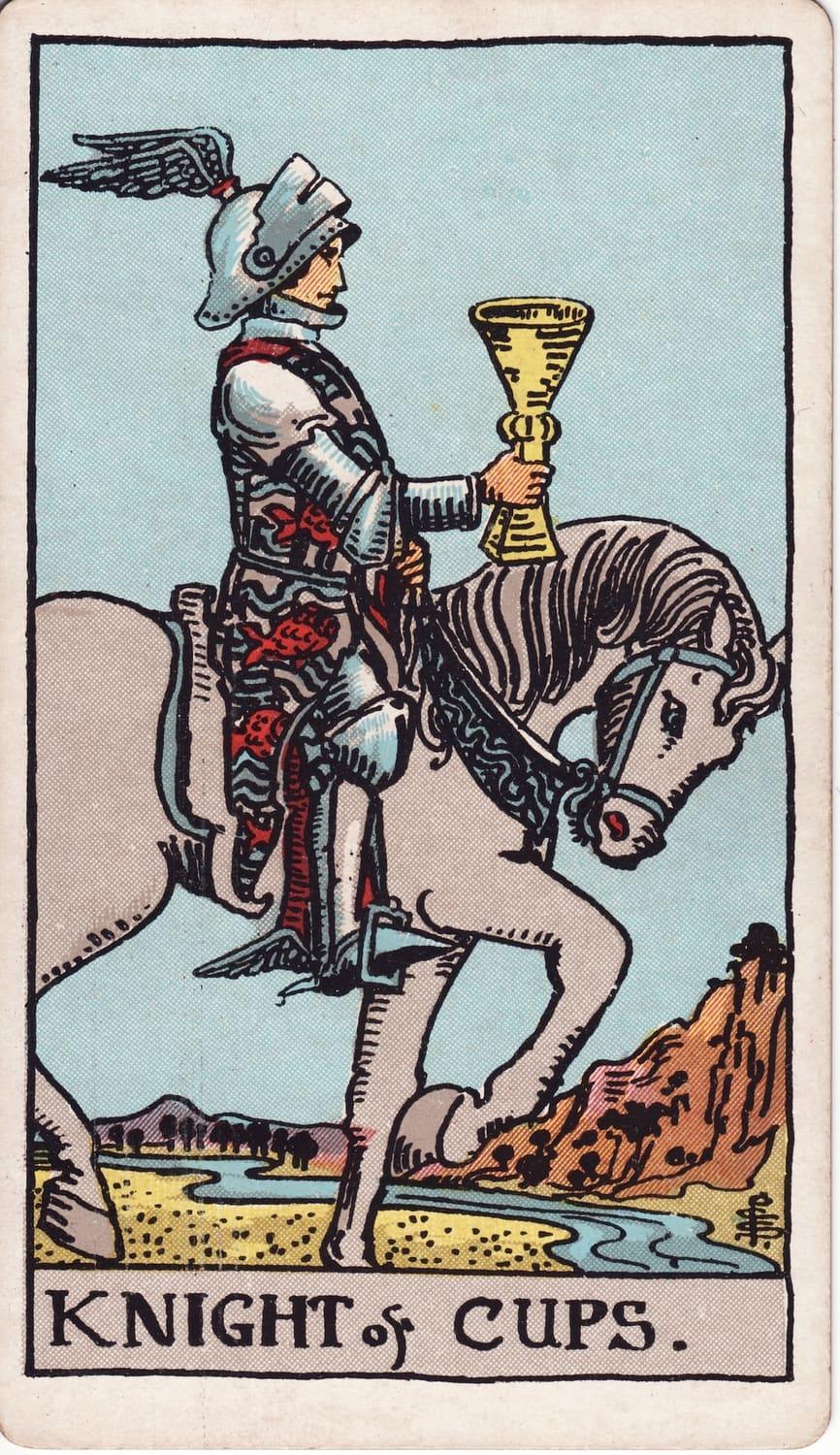
Knight of Cups
The Romantic Offer
Knight of Cups rides in with an offer of feeling. In a one-card reading, it often leans yes to romance, apology, creative pursuit, or a sincere invitation. The energy is charming and forward-moving—so check that the cup is full of substance, not only poetry. Receive the gesture; verify the follow-through.
Reversed: Reversed Knight of Cups often means empty chase: moodiness, inconsistent romantic gestures, or idealism without delivery. In a one-card reading, it can lean no to trusting the offer as-is—or wait until words match actions. Charm is not a plan.
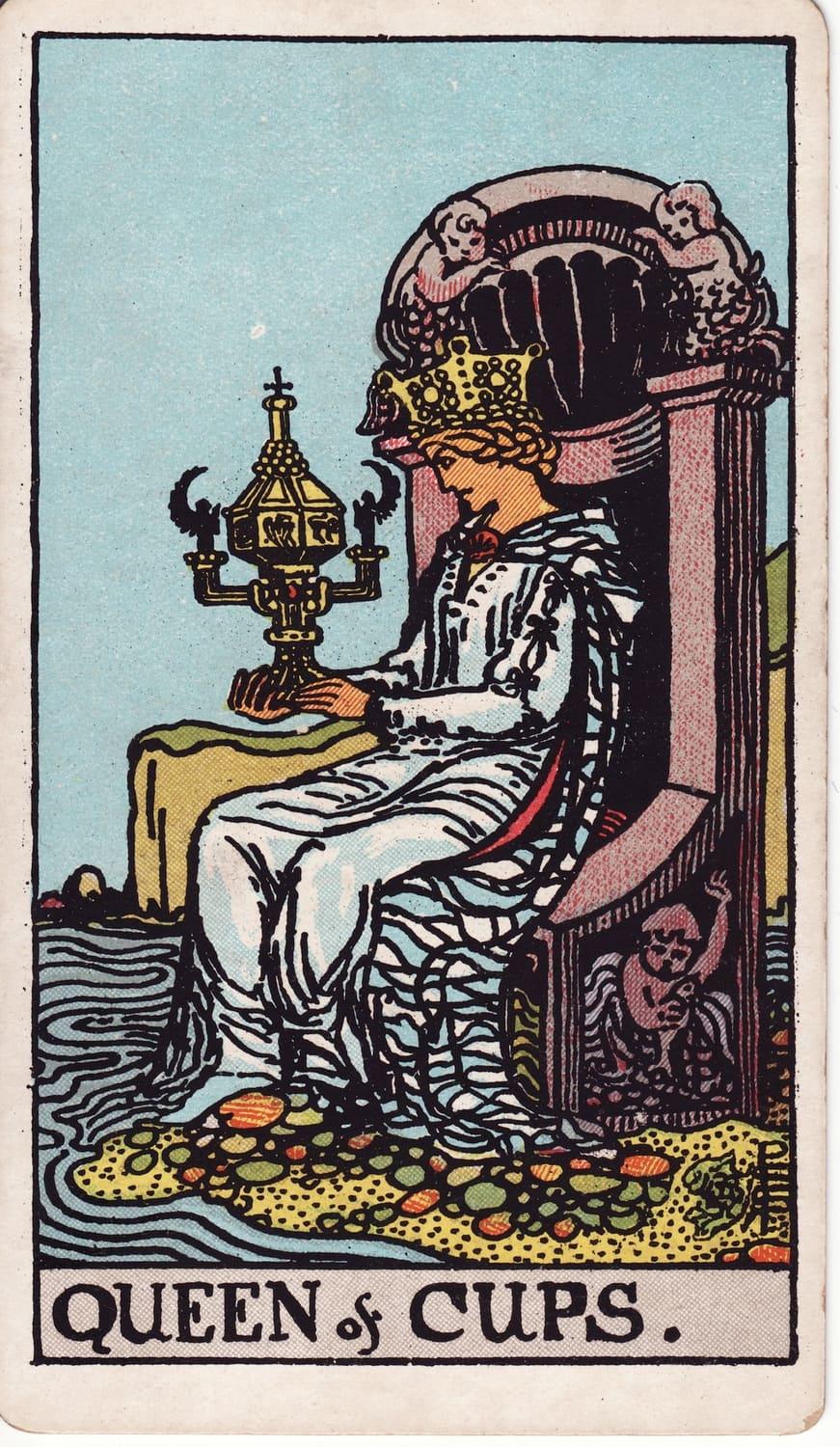
Queen of Cups
The Holding Heart
Queen of Cups holds feeling without drowning in it. In a one-card reading, it often leans yes to compassion, intuitive knowing, and emotional maturity. The cup is closed for a reason: she feels deeply and still chooses what to share. Trust the quiet read—then act with care, not leakage.
Reversed: Reversed Queen of Cups often means emotional overwhelm, codependence, or intuition clouded by projection. In a one-card reading, lean wait—stabilize your shoreline before you counsel anyone else or trust every feeling as fact.
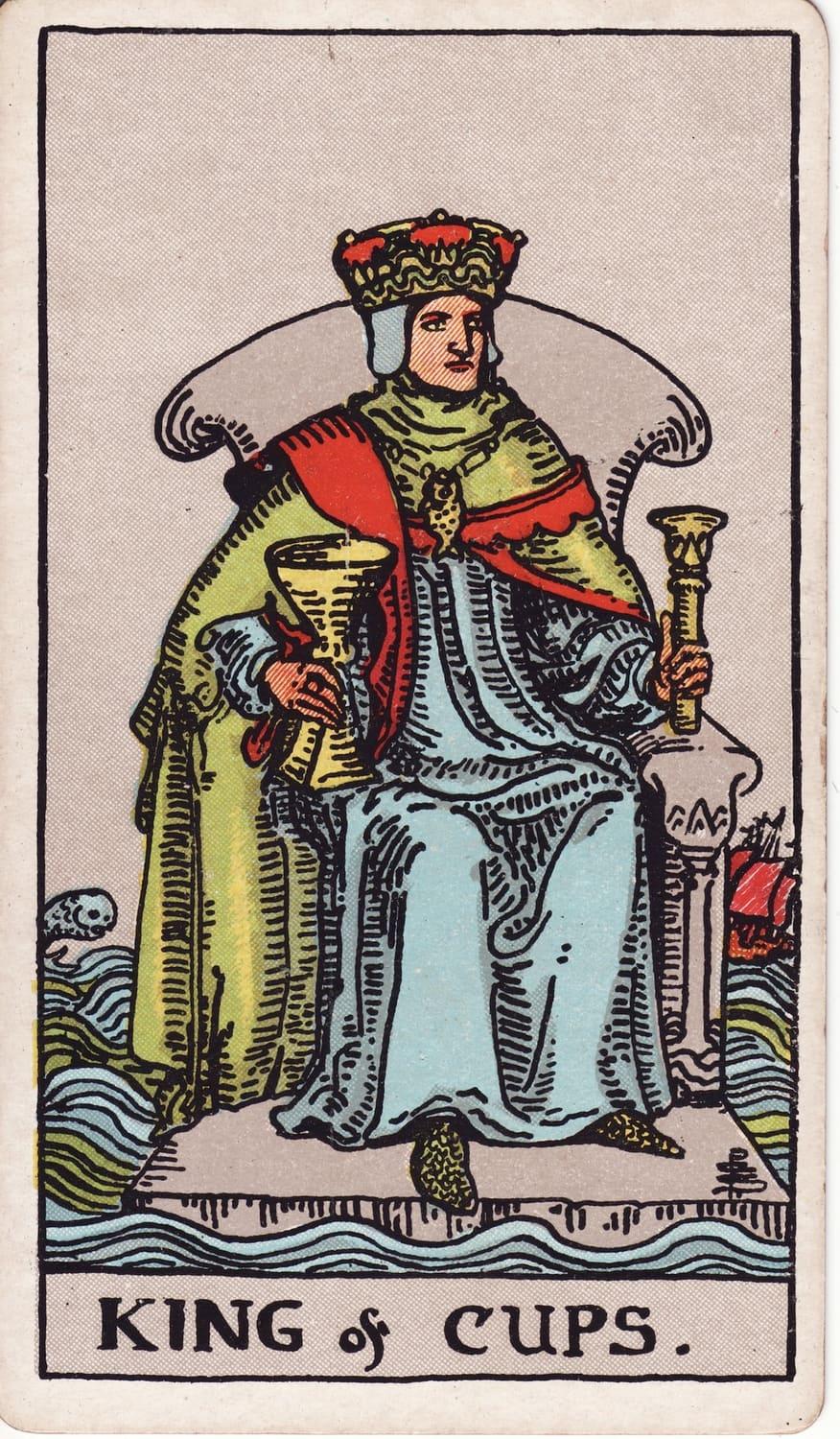
King of Cups
The Steady Emotion
King of Cups masters feeling without suppressing it. In a one-card reading, it often leans yes to mature emotional leadership, diplomacy, and calm care under pressure. The throne sits on water on purpose: he stays composed while the tide moves. Choose the response that keeps dignity for everyone involved.
Reversed: Reversed King of Cups often shows emotional control gone wrong: repression, manipulation, moodiness behind a calm mask, or advice that serves ego. In a one-card reading, lean wait—or no if the question trusts someone who uses care as a bargaining chip. Clean the motive before you call it maturity.
Swords
Batch 2 — fourteen Swords meanings for mind, conflict, and clear decisions. Meaning pages only; not dealt by the free Major shuffle.
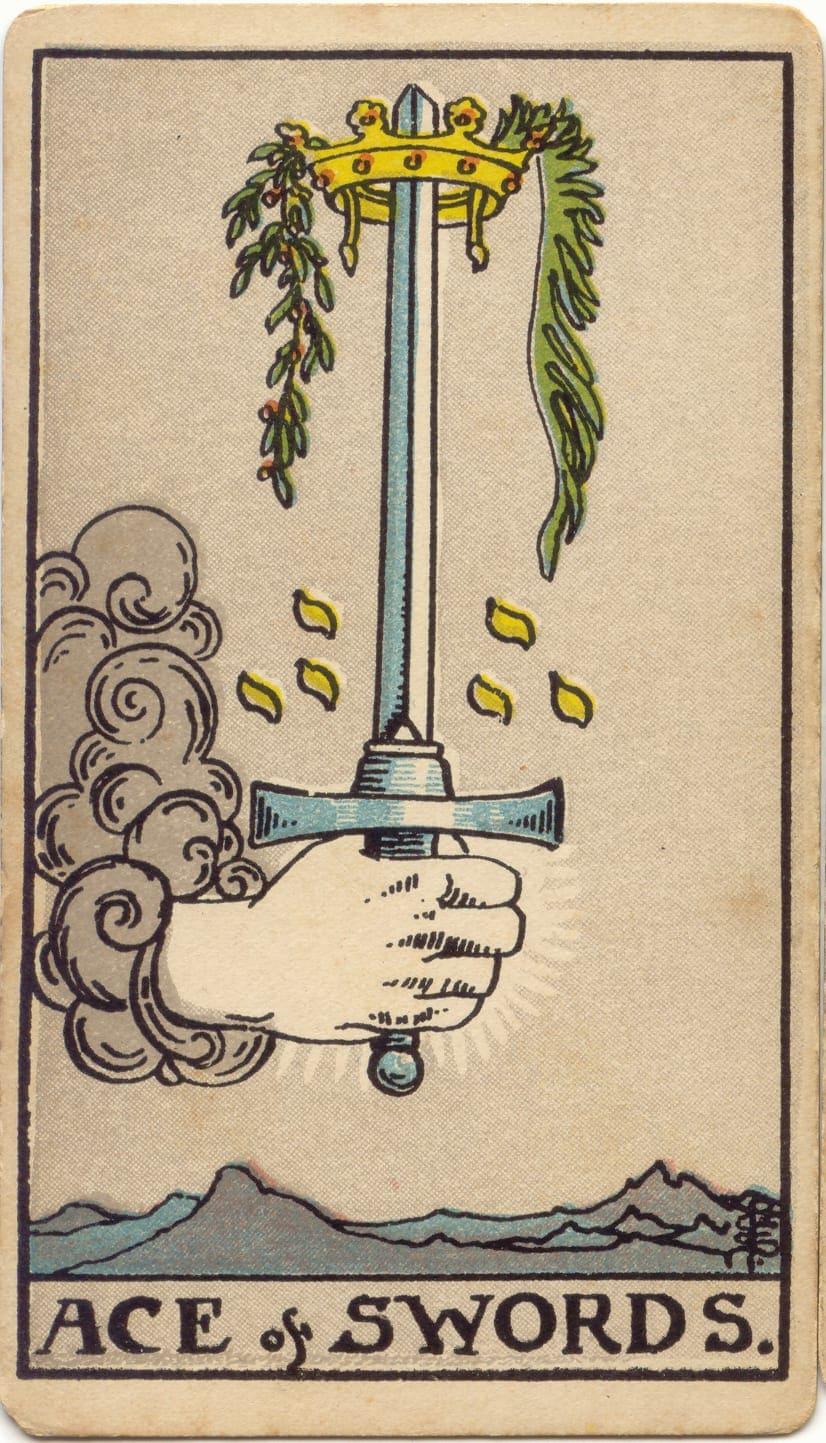
Ace of Swords
The Clean Cut
Ace of Swords is a clean mental breakthrough. In a one-card reading, it often means truth cuts through fog—a decision, diagnosis, or sharp yes that ends guessing. The mind is ready to name what is real. You do not need every detail yet; you need the sentence that makes the rest of the map usable.
Reversed: Reversed Ace of Swords often means clarity is blocked, delayed, or misused—confusion, half-truths, or a sharp idea turned into cruelty. In a one-card reading, treat it as wait rather than a hard no: something needs facts, tempering, or honest language before a clean mental yes can land.
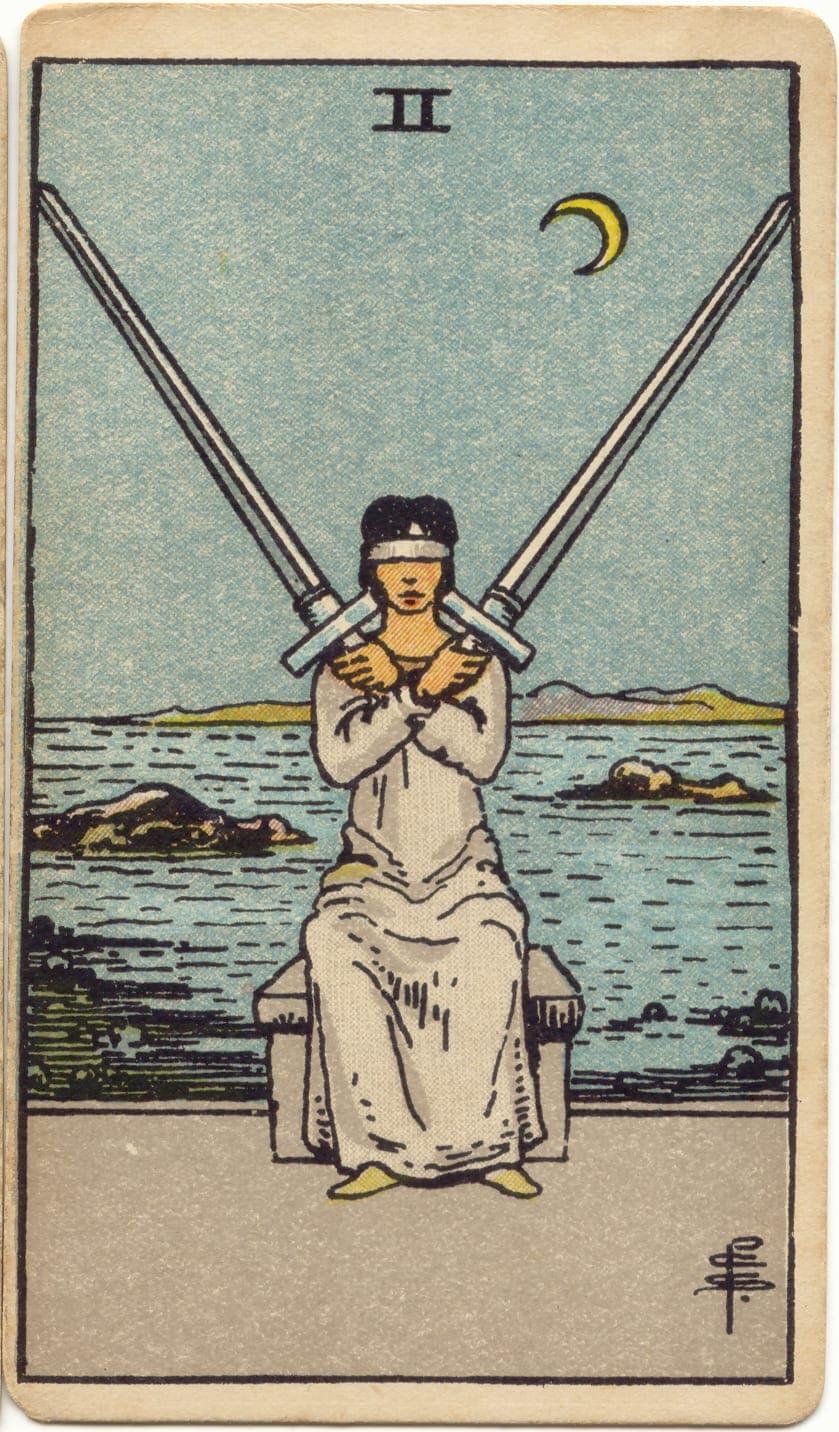
Two of Swords
The Blindfold Stalemate
Two of Swords is a held stalemate. In a one-card reading, it often means a choice is delayed on purpose—blindfold, crossed defense, or refusing to look at the water beneath. The lean is maybe: peace of a kind, but not resolution. You cannot stay cross-armed forever without cost. The card is honest about why the pause exists: fear of hurting someone, fear of being wrong, or a habit of calling avoidance “fairness.” Name the real reason for the truce before you congratulate yourself for patience.
Reversed: Reversed Two of Swords often means the blindfold slips: information arrives, a decision can no longer wait, or the false truce breaks. In a one-card reading, it can lean yes when the question is about finally choosing—or maybe if the reveal is messy and still needs care. Either way, the card asks you to stop rebuilding the blindfold for comfort once you have seen enough.
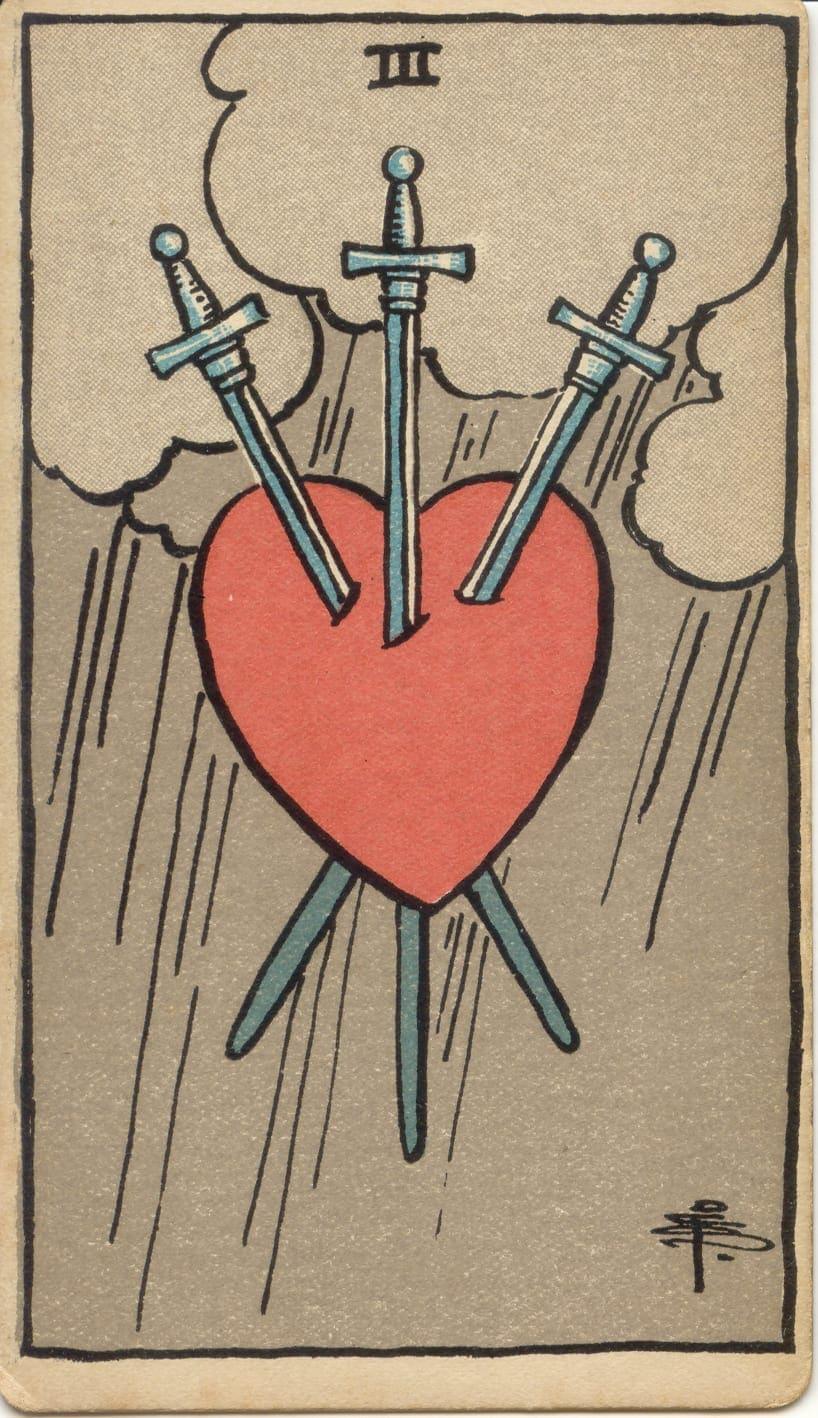
Three of Swords
The Pierced Heart
Three of Swords names sorrow that is real and visible. In a one-card reading, it often leans no or not yet for outcomes that need an unbroken heart today. Something hurts—breakup, betrayal, or a truth that cuts. The card does not ask you to pretend otherwise. It asks you to let the rain do its work without turning pain into a permanent identity.
Reversed: Reversed Three of Swords often marks recovery after heartbreak: the storm easing, forgiveness starting, or pain loosening its grip. In a one-card reading, lean wait rather than a sudden yes—healing is underway, but rushing past the last of the ache can reopen it.
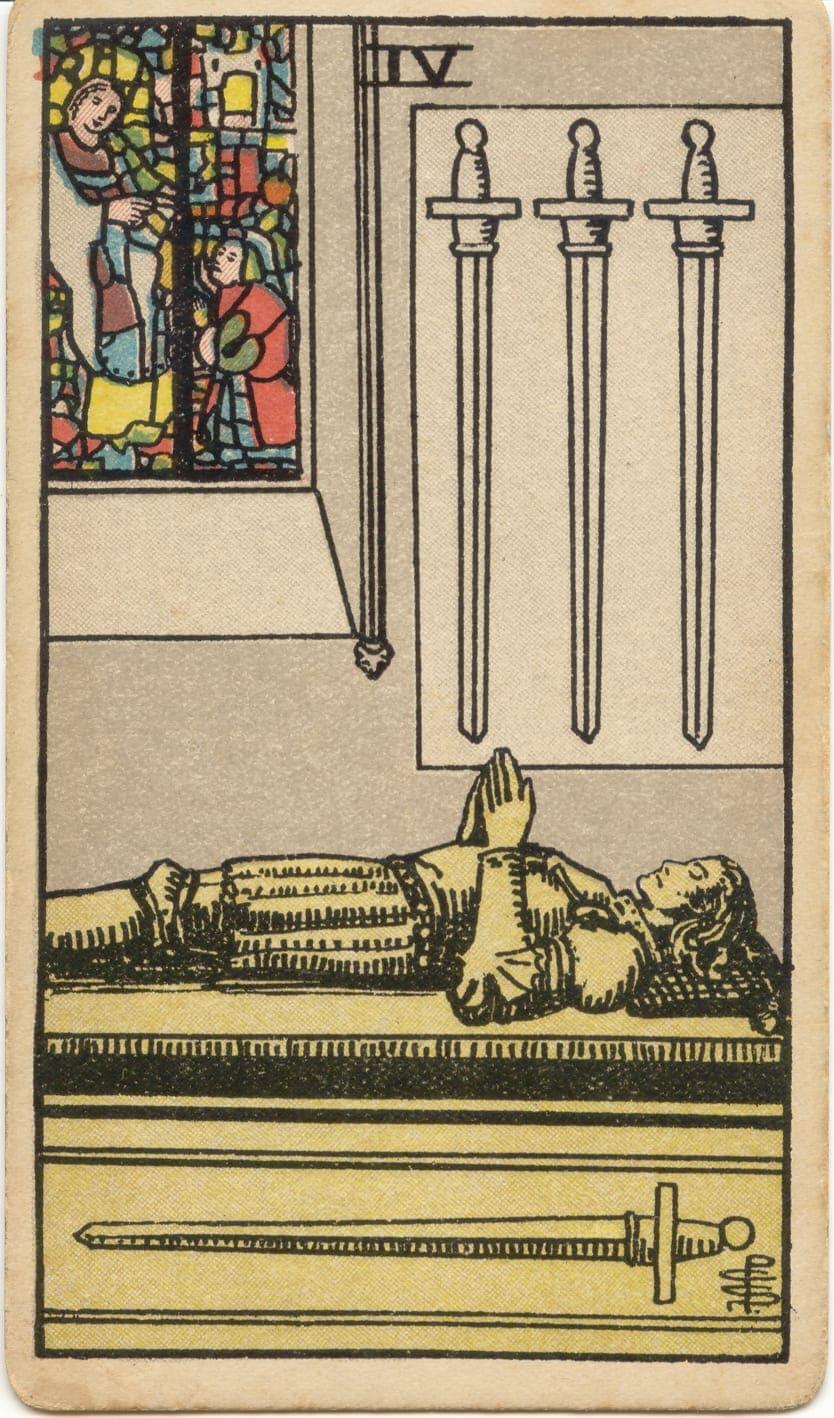
Four of Swords
The Mental Pause
Four of Swords is sanctioned rest for the mind. In a one-card reading, it often leans maybe: not a hard no, but a pause before the next campaign. Recovery is the work. Pushing through exhaustion will not produce clearer answers—only sharper mistakes. The knight on the tomb is not defeat; it is strategy that refuses to mistake urgency for wisdom. Treat sleep, silence, and a closed calendar as part of the decision process.
Reversed: Reversed Four of Swords often means rest is ending—or was refused too long. In a one-card reading, it can lean yes when the question is about re-engaging, returning to action, or ending isolation after recovery. If burnout was ignored, it can also warn that the body is forcing the pause. Tell the truth about which story you are in before you call the motion a breakthrough.
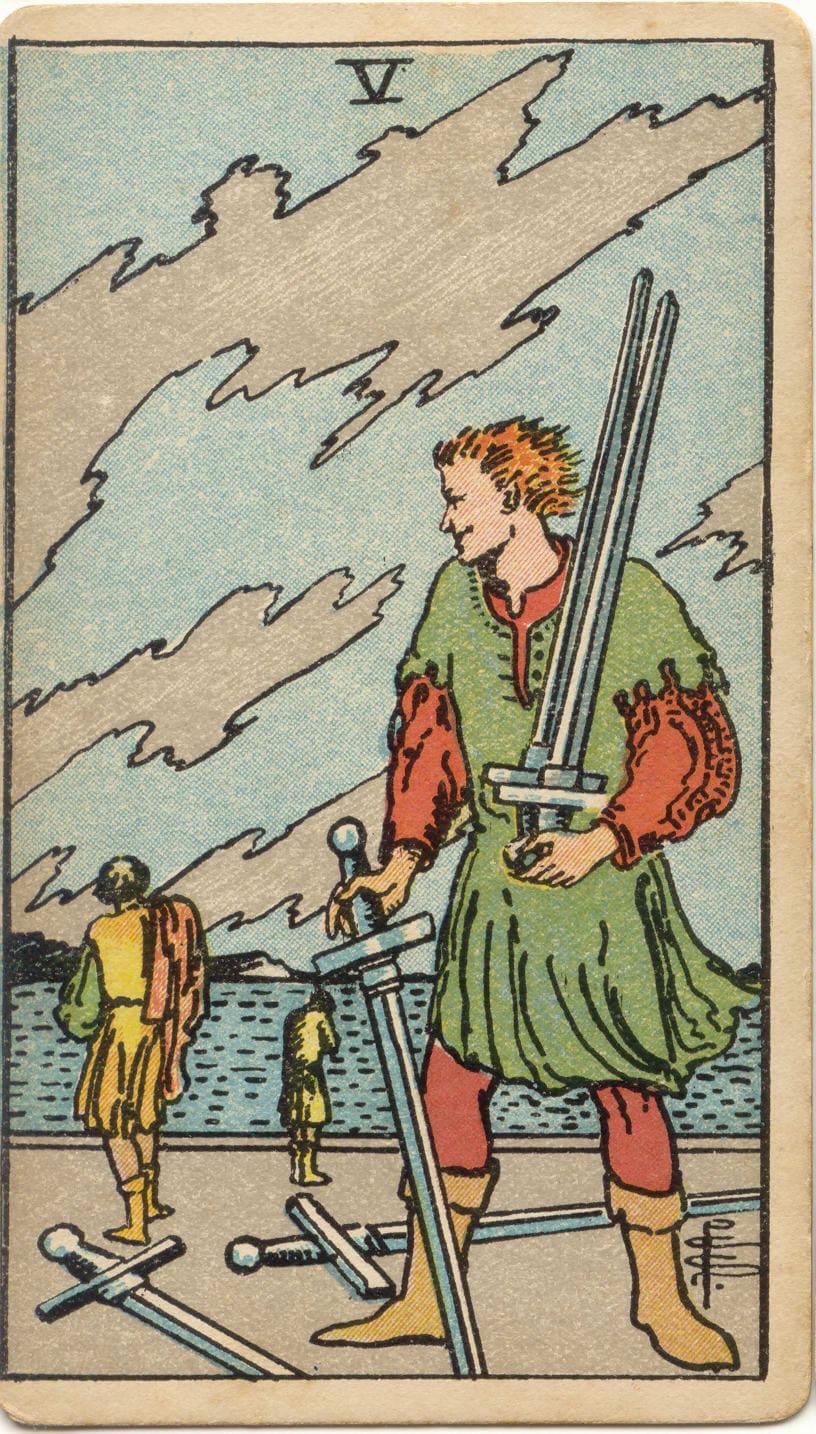
Five of Swords
The Hollow Victory
Five of Swords is winning that costs too much. In a one-card reading, it often leans no—especially for questions about fair outcomes, clean relationships, or fights worth having. Someone may be collecting swords while others walk away. Ask whether the victory is usable or only loud.
Reversed: Reversed Five of Swords often means releasing the fight: apology energy, ending a toxic contest, or refusing to win ugly. In a one-card reading, lean wait—peace is possible, but only if pride loosens and amends are real.
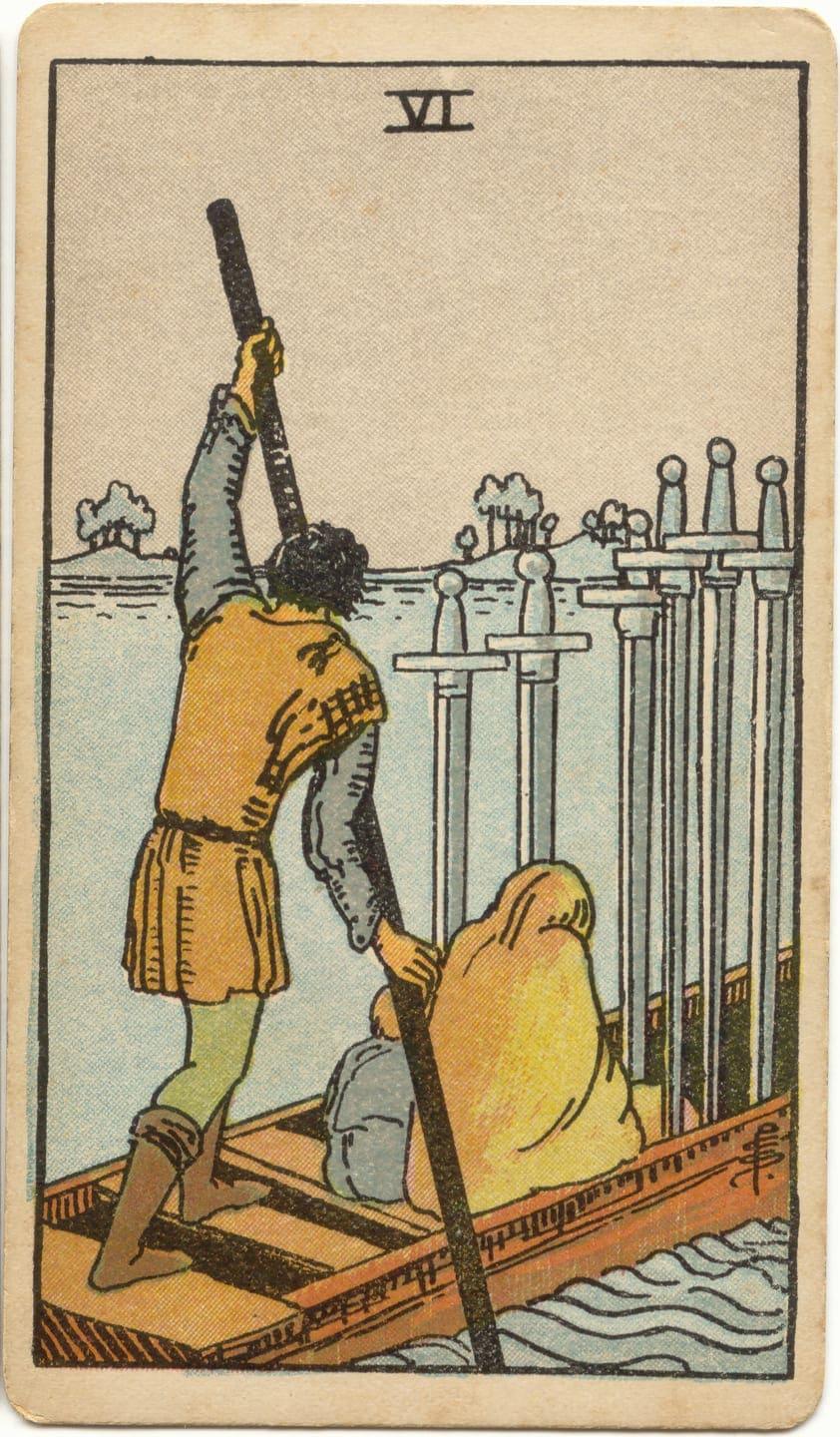
Six of Swords
The Quiet Crossing
Six of Swords is leaving troubled water for a calmer shore. In a one-card reading, it often leans yes to transition, relocation of energy, or moving on after strain—even when the ride is quiet and a little sad. Progress here is passage, not fireworks. Bring what you learned; leave the storm behind. The six upright swords in the boat are lessons, not trophies—you carry insight so you do not need to re-litigate every wave mid-crossing.
Reversed: Reversed Six of Swords often means delayed departure, returning to troubled water, or resistance to necessary change. In a one-card reading, lean wait—name what is blocking the crossing before you force a false calm. Familiar conflict can feel safer than unfamiliar peace; that preference is data, not destiny.
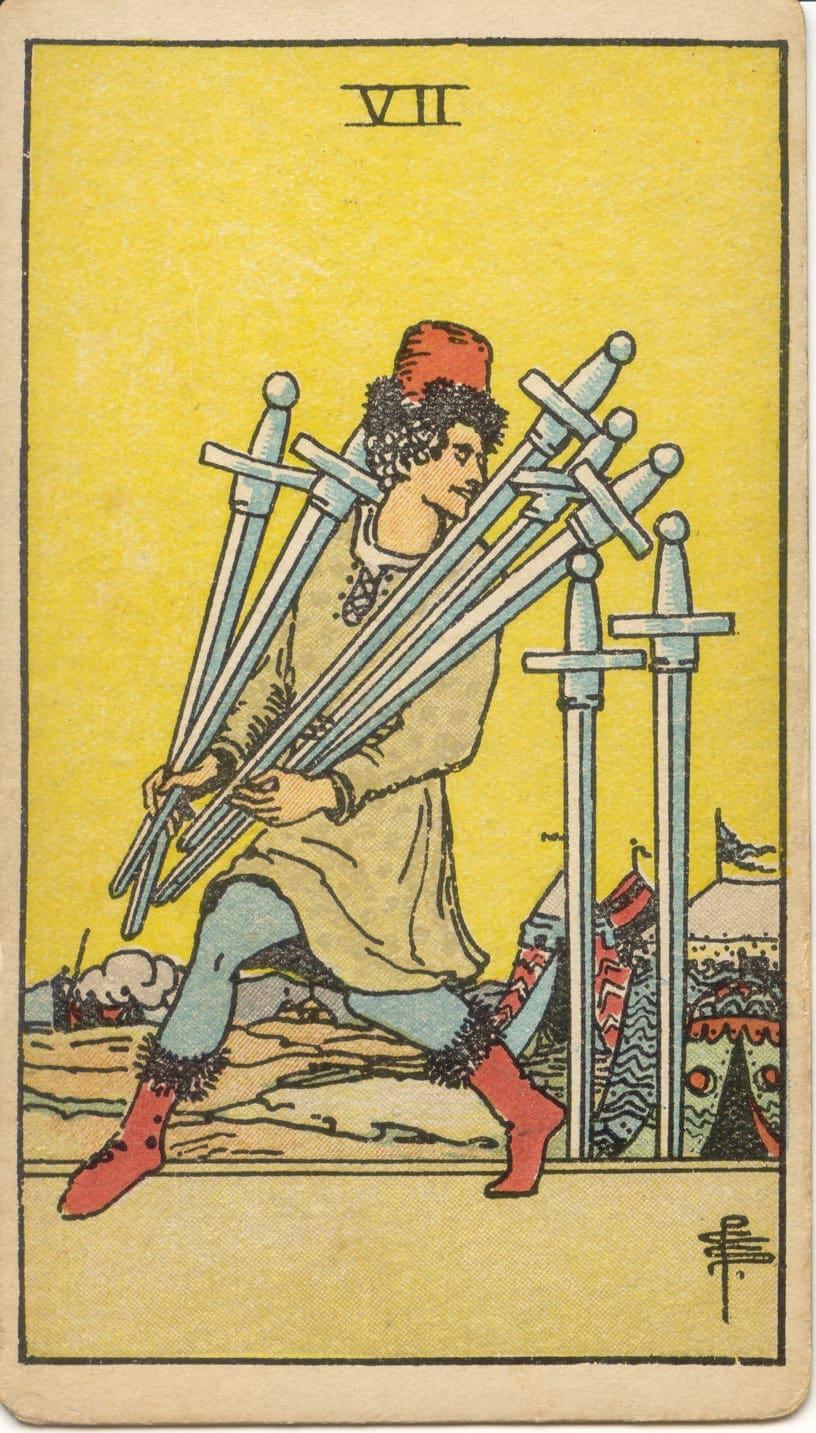
Seven of Swords
The Strategic Exit
Seven of Swords is strategy with a shadow edge. In a one-card reading, it often leans maybe: clever exit, quiet plan, or something not being said in full. Sometimes stealth is wise. Sometimes it is self-deceit. Ask which swords you are taking—and which honesty you are leaving behind. The two swords left in the ground are the card’s quiet quiz: incomplete theft, incomplete confession, or a plan that still needs one ethical check before you call it smart.
Reversed: Reversed Seven of Swords often means the scheme unravels: exposure, confession, or refusal to keep living in half-truths. In a one-card reading, it often leans no to continuing deception—or wait until honesty is restored before you trust the next move. Relief can arrive with the reveal; so can mess. Prefer the hard clean story over another clever patch.
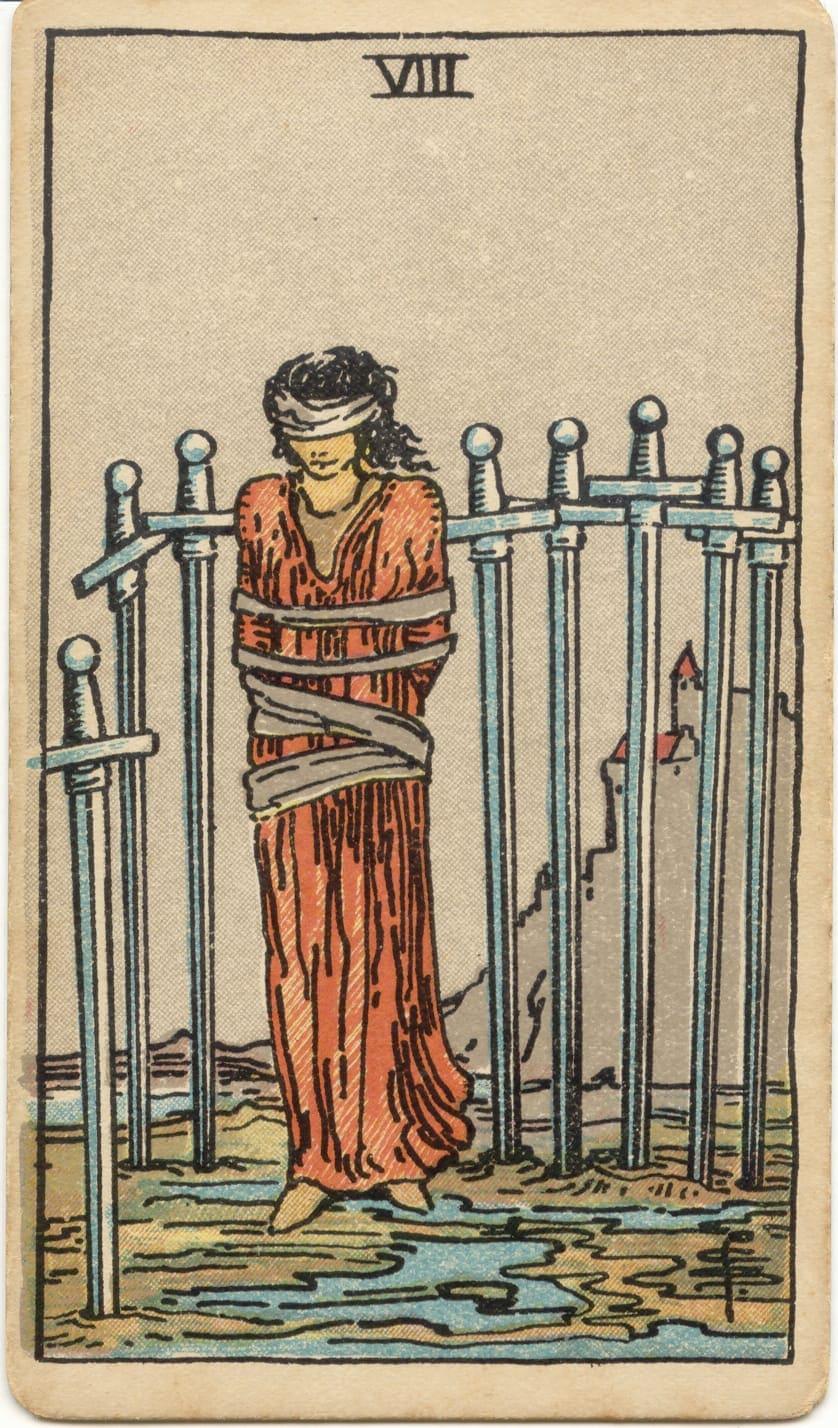
Eight of Swords
The Bound Mind
Eight of Swords is restriction that lives largely in the mind. In a one-card reading, it often leans no to “nothing can change”—or wait until you test one exit. The bindings may be real constraints mixed with fear stories. Look for the gap between the swords. Helplessness is rarely the whole picture.
Reversed: Reversed Eight of Swords often means the bindings loosen: a way out appears, clarity returns, or you refuse the victim story. In a one-card reading, lean wait-to-yes—freedom is opening, but you still have to walk through the gap.
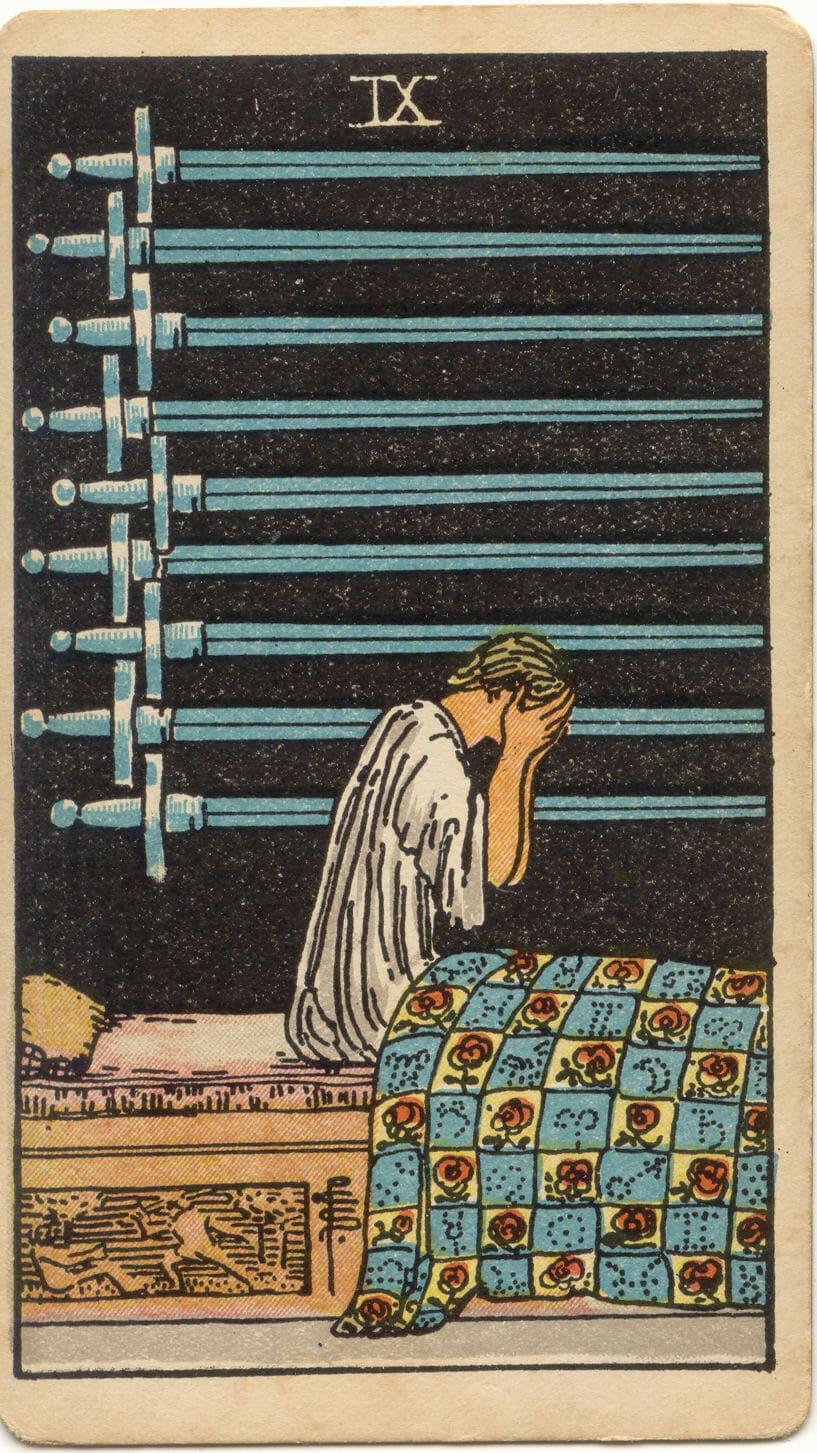
Nine of Swords
The Night Worry
Nine of Swords is anxiety that thrives in the dark. In a one-card reading, it often leans no or not yet for decisions made at 3 a.m. The fear may point to something real—and still exaggerate it. Rumination is not the same as insight. Get the worry into daylight before you treat it as prophecy.
Reversed: Reversed Nine of Swords often means the spiral loosens: help arrives, perspective returns, or you refuse to live inside night worry. In a one-card reading, lean wait—relief is starting, but recovery still needs daylight habits and support.
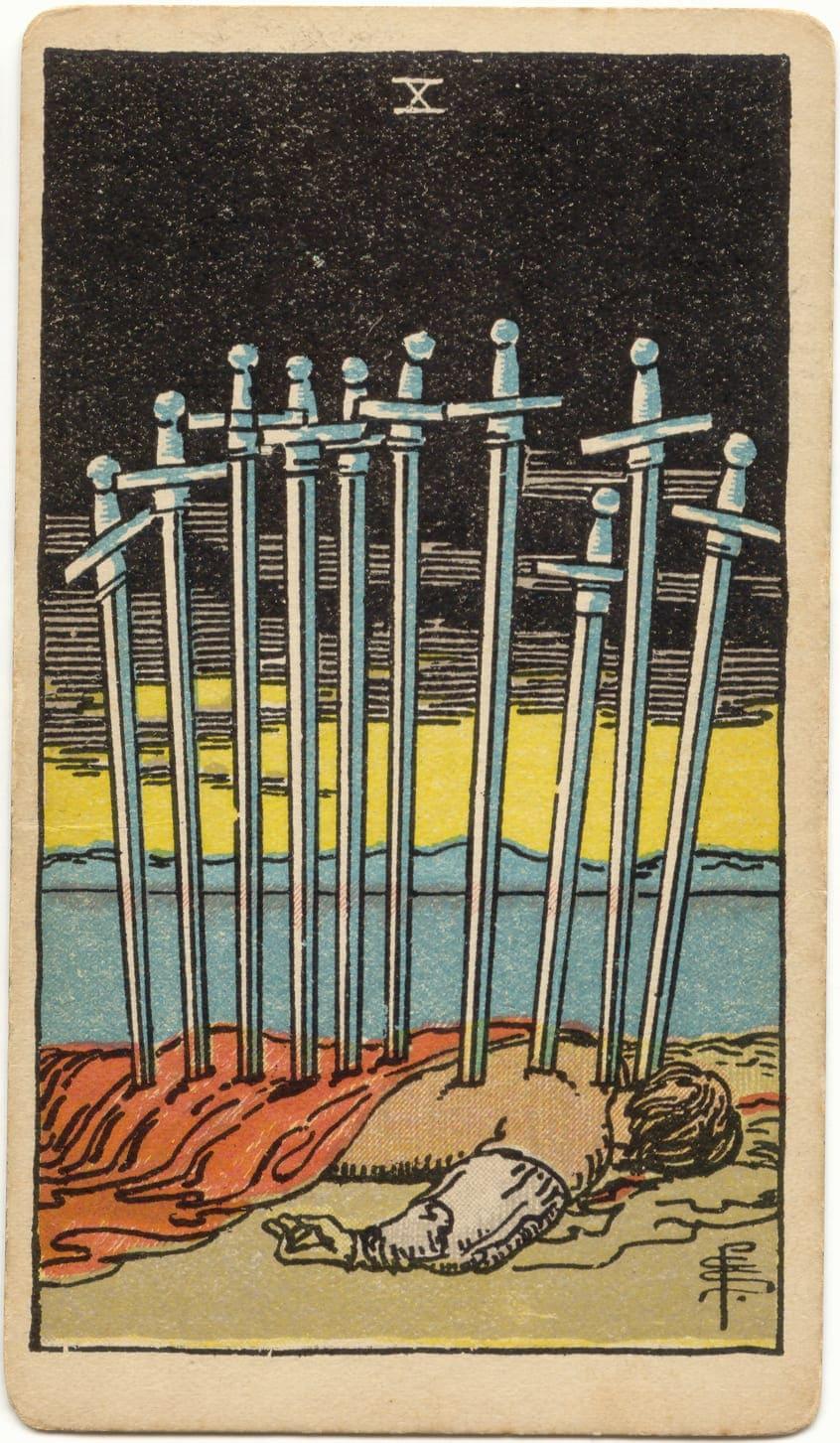
Ten of Swords
The Rock Bottom Dawn
Ten of Swords marks an ending that feels total. In a one-card reading, it often leans no to continuing the old form—the chapter is done. Rock bottom is honest weather. The card also holds a thin band of dawn: after ruin, you stop fighting a corpse of a plan. Grieve the end; do not rebuild the same swords.
Reversed: Reversed Ten of Swords often means recovery after ruin: surviving the worst, refusing to stay face-down, or a slow rise after the final blow. In a one-card reading, lean wait—healing has begun, but rushing a shiny new chapter can skip necessary repair.
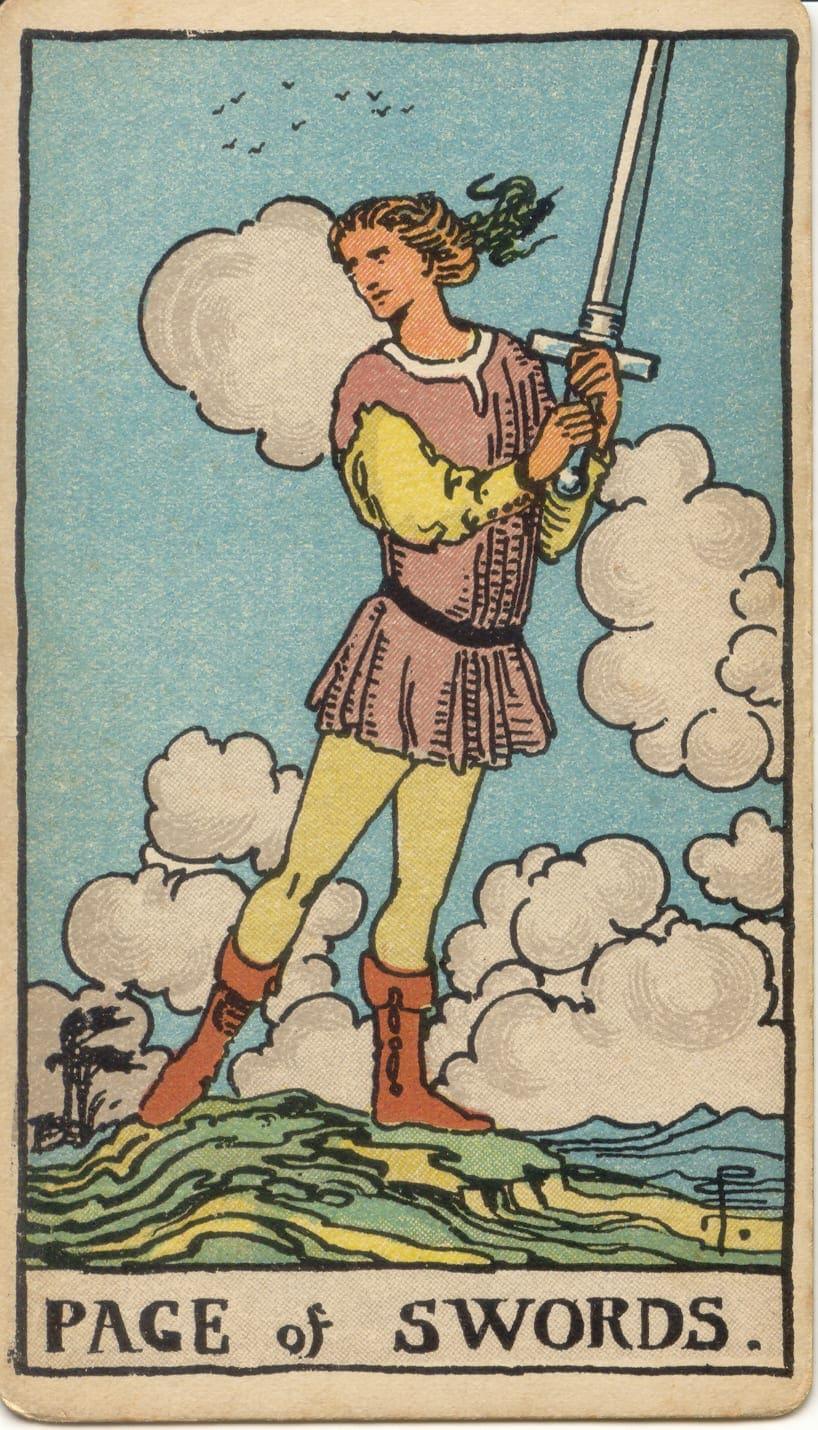
Page of Swords
The Watchful Mind
Page of Swords is a curious, watchful mind. In a one-card reading, it often leans maybe: news incoming, questions rising, or a beginner’s sharp interest that still needs seasoning. Stay alert. Do not mistake vigilance for a finished verdict. The raised sword is for noticing—winds and rumors move fast, and the Page’s gift is catching signal before it becomes a false certainty.
Reversed: Reversed Page of Swords often means gossip, spying energy, scattered ideas, or immature sharpness. In a one-card reading, lean maybe or wait—information is noisy, and the messenger may not be ready. Slow down before you trust the news. Fragments feel like power until they cost you a relationship or a reputation you cannot buy back.
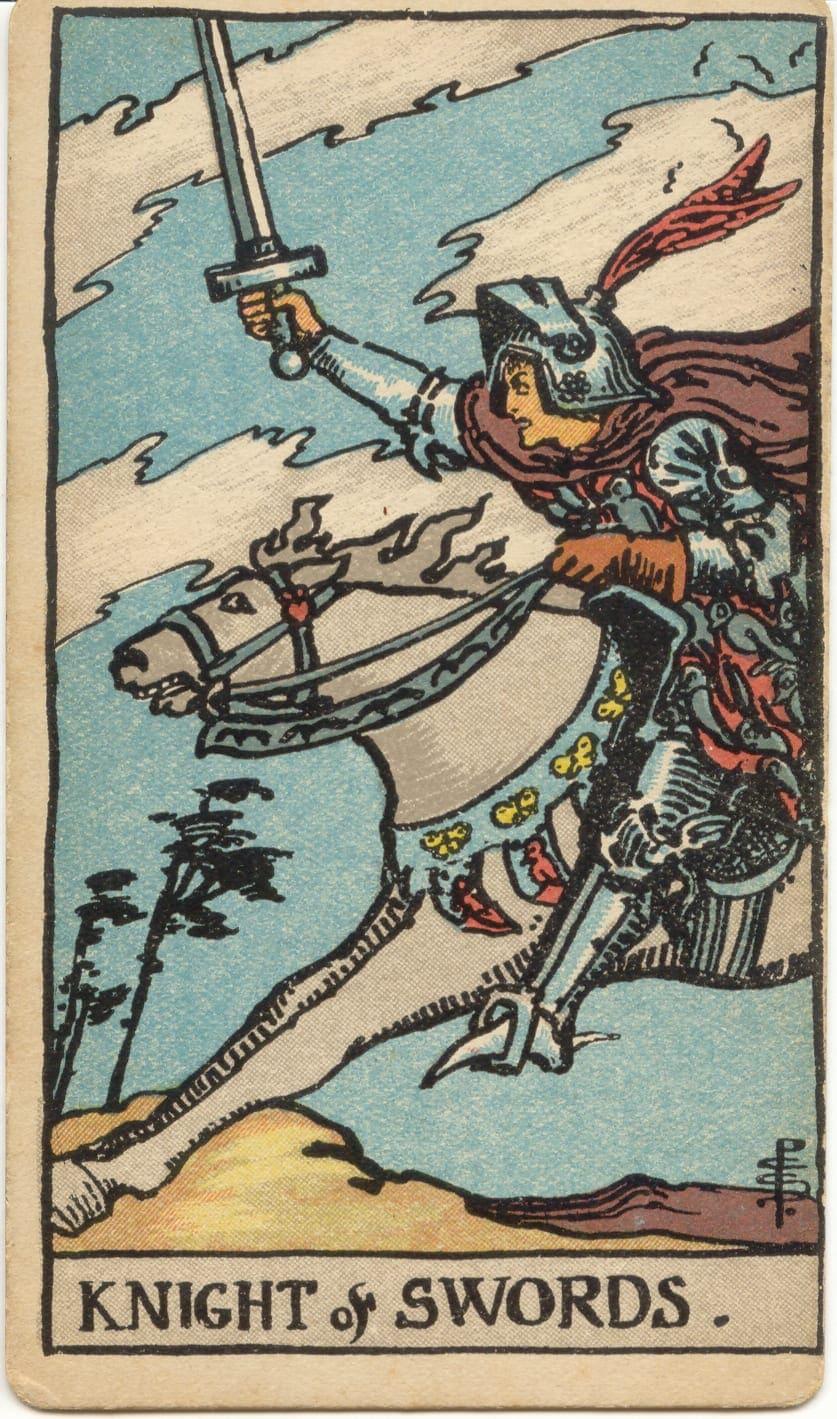
Knight of Swords
The Swift Charge
Knight of Swords charges with speed and blunt truth. In a one-card reading, it often leans maybe: act now may be right—or haste may outrun wisdom. The energy is decisive and sharp. Attach a destination and a courtesy check before you ride full tilt.
Reversed: Reversed Knight of Swords often means reckless haste, cruel bluntness, or charge without direction. In a one-card reading, it often leans no to charging ahead—slow the horse until truth and timing match.
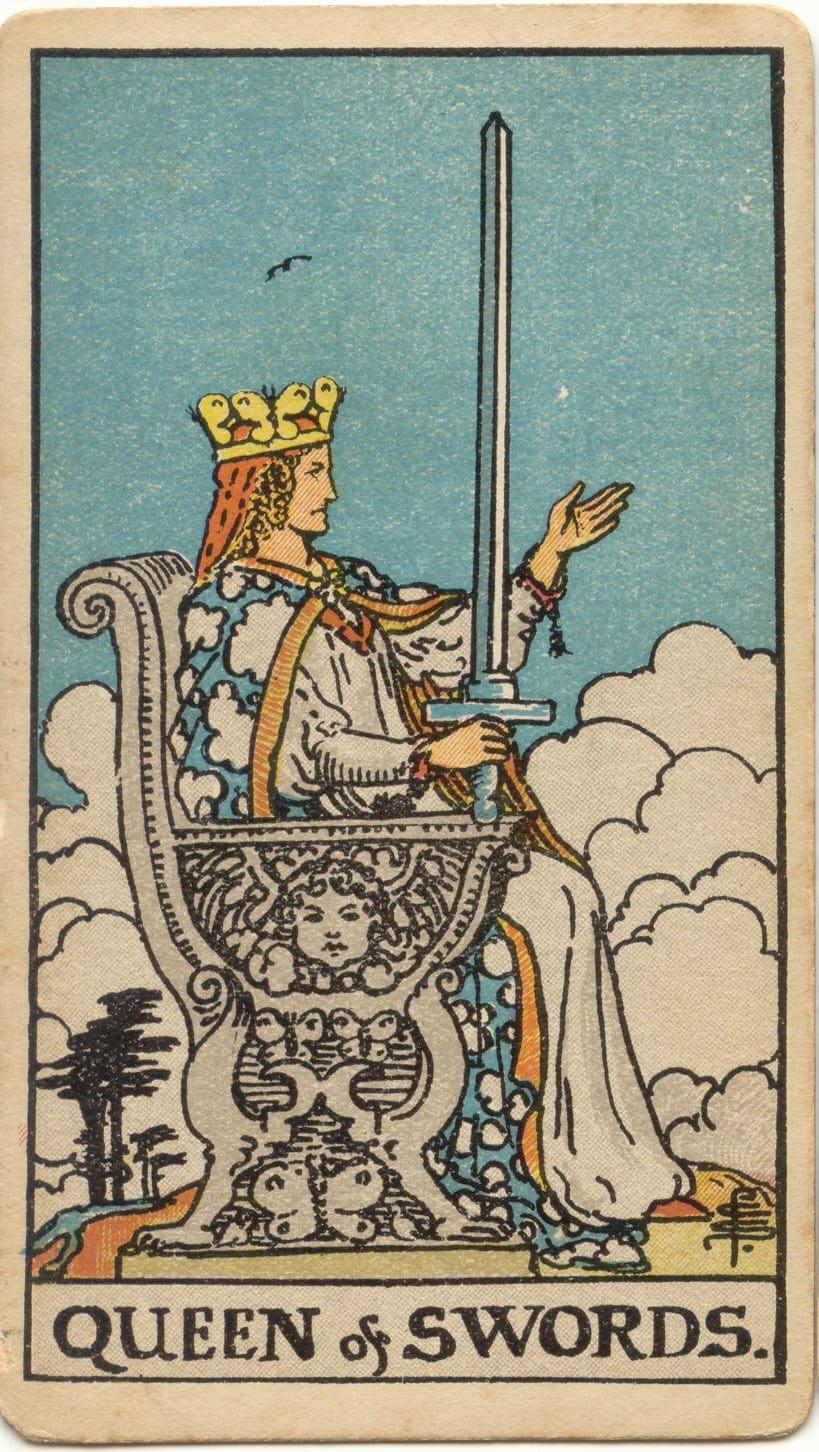
Queen of Swords
The Clear Boundary
Queen of Swords is honest speech with discernment. In a one-card reading, it often leans yes for clarity, boundaries, and decisions made without self-betrayal. Feeling still matters here—she simply refuses fog. Cut what is false; keep what is fair. The raised hand greets and limits at once: truth that still acknowledges the other person is in the room.
Reversed: Reversed Queen of Swords often means coldness, bitterness, overly harsh speech, or boundaries that become walls. In a one-card reading, lean wait—clarity is still the theme, but tone and heart need repair before the cut can be trusted. “I’m just honest” can be a costume for contempt; check which one you are wearing.
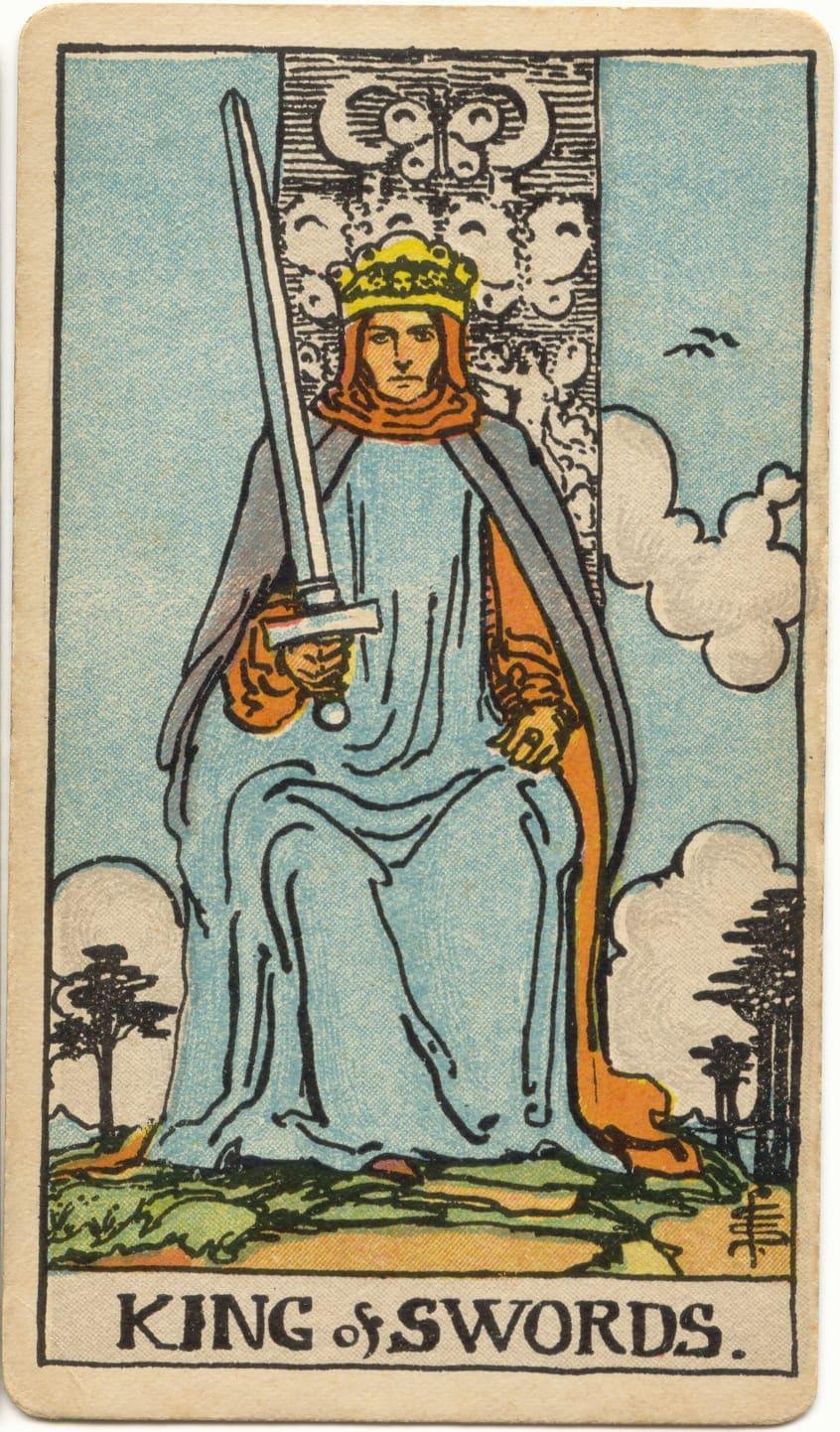
King of Swords
The Fair Judgment
King of Swords is fair judgment with ethical intellect. In a one-card reading, it often leans yes for decisions that need structure, law, expertise, or a clear head. Authority here is mental and accountable—not merely loud. Seek the ruling that would still look fair tomorrow.
Reversed: Reversed King of Swords often means misuse of authority: cold control, rigid dogma, unfair rulings, or intellect without ethics. In a one-card reading, lean wait—do not trust the verdict until motive and method are clean.
Pentacles
Batch 3 — fourteen Pentacles (coins) meanings for work, money, and material roots. Meaning pages only; not dealt by the free Major shuffle.
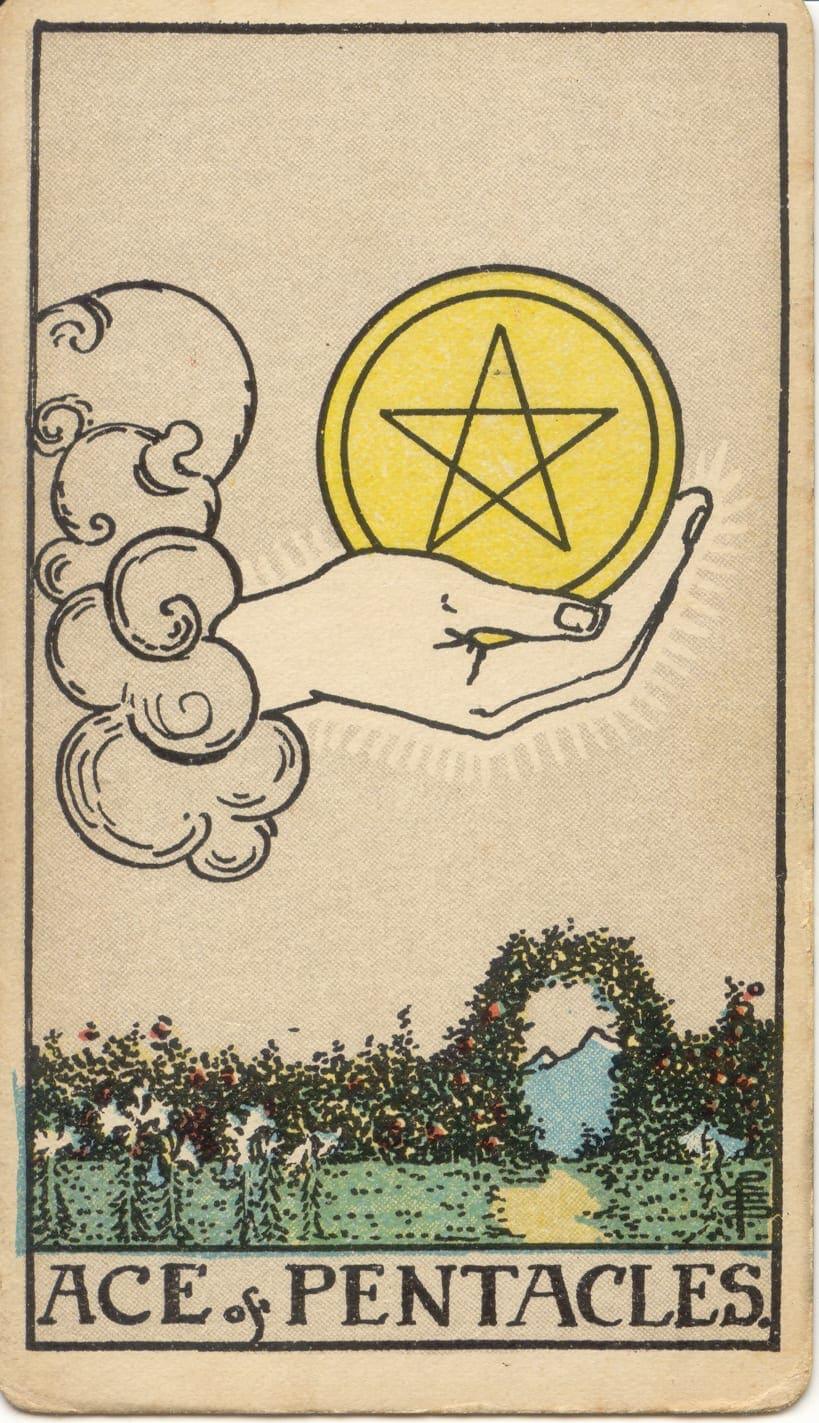
Ace of Pentacles
The Seed Opportunity
Ace of Pentacles (also searched as Ace of Coins) is a tangible new opening. In a one-card reading, it often leans yes for work, money, health, housing, or a practical seed that can grow if you plant it. The coin is offered; the orchard is not finished. Treat the chance as real soil work—budget, schedule, body, craft—not as a finished harvest. Prosperity here starts as a deposit, a signed first step, or a habit that can compound. Receive the opening without demanding instant proof that the whole garden will bloom this week.
Reversed: Reversed Ace of Pentacles often means a shaky start, missed timing, or resources mismanaged at the root. In a one-card reading, lean maybe: inspect the ground before you expand. The offer may be less solid than it looks, or fear may block you from planting what is real. Repair leaks in money, health, or basics first. If you delayed, restart with a smaller practical commitment instead of chasing a flashier seed.
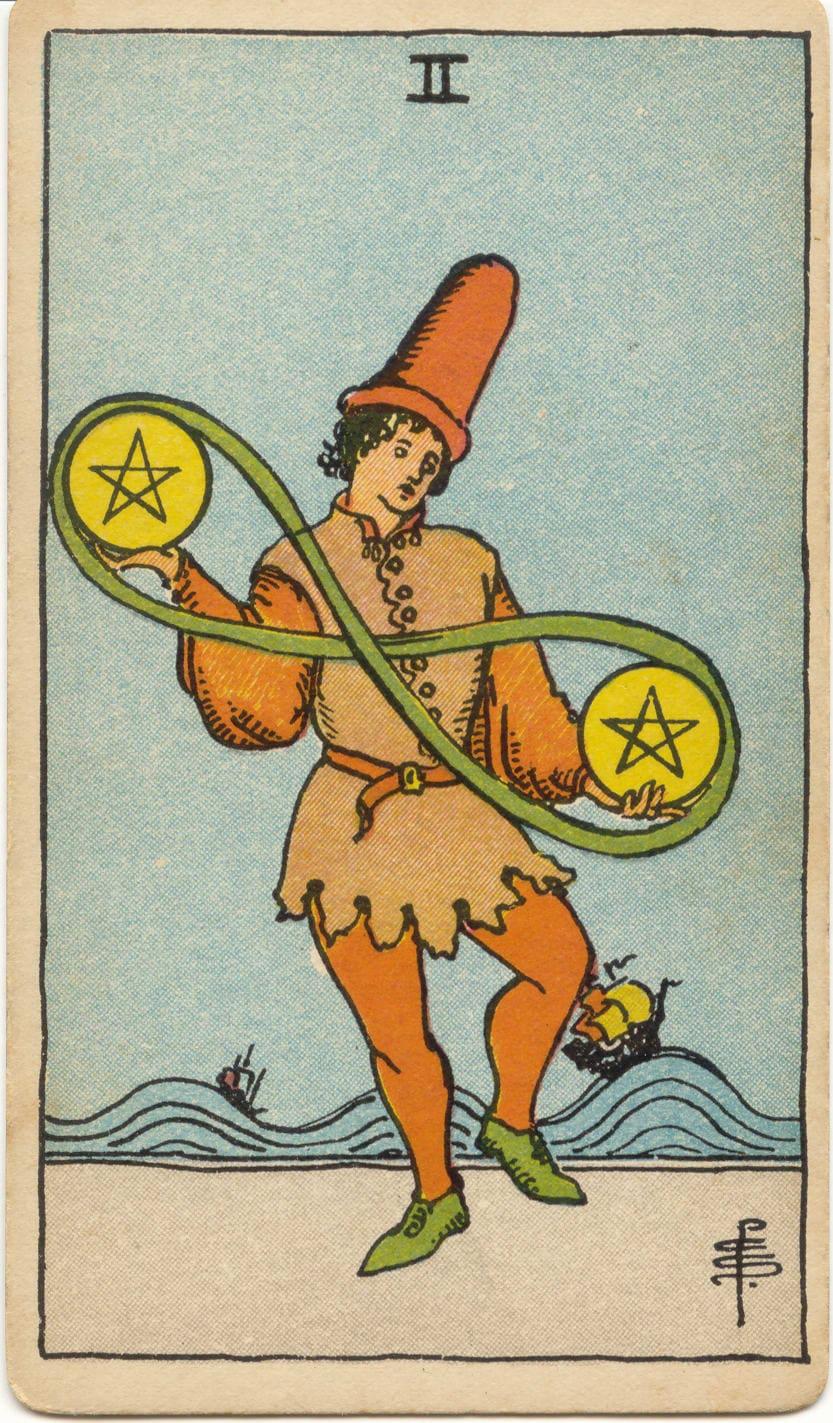
Two of Pentacles
The Adaptive Juggle
Two of Pentacles (often called Two of Coins) is juggling priorities with adaptable rhythm. In a one-card reading, it often leans maybe: you can handle flux if you stop pretending every demand deserves equal weight forever. The infinity loop is conscious dance, not chaos worship. Keep work and rest, money in and money out, or two obligations moving—then drop what breaks the beat. Humor helps. So does ranking. The ships on the waves remind you that outer conditions move; your job is rhythm, not freezing the sea.
Reversed: Reversed Two of Pentacles shows overwhelm from poor pacing, dropped commitments, or refusal to choose. In a one-card reading, lean maybe: simplify before you force a bigger yes. Coins fall when everything is treated as urgent. Rank tasks. Fix cash-flow swings with a clearer plan. Pick the two things that actually matter this week and let the rest wait without drama.
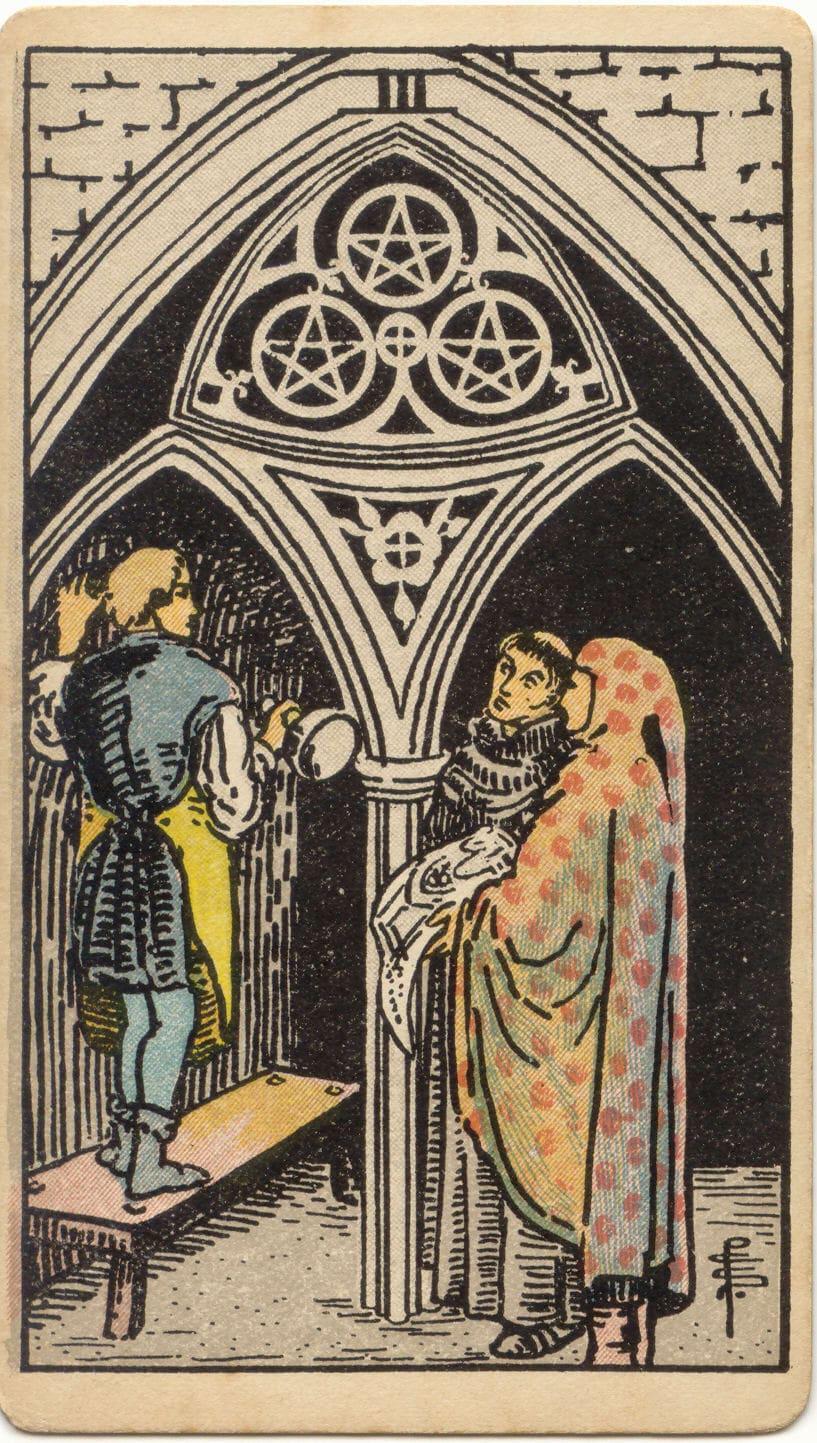
Three of Pentacles
The Craft Collaboration
Three of Pentacles is skilled work recognized in collaboration. In a one-card reading, it often leans yes for teamwork, apprenticeship, and quality that earns respect. Show the work. Improve the work. Let feedback raise the ceiling of what you can make alone. Pride here is earned through practice integrated into a larger structure—not through solo performance that refuses standards.
Reversed: Reversed Three of Pentacles can show sloppy standards, poor teamwork, or talent ignored in a bad system. In a one-card reading, lean maybe: realign roles and quality bars before you force a yes. Ask for clear expectations. If the environment cannot respect craft, move skill where it can grow.
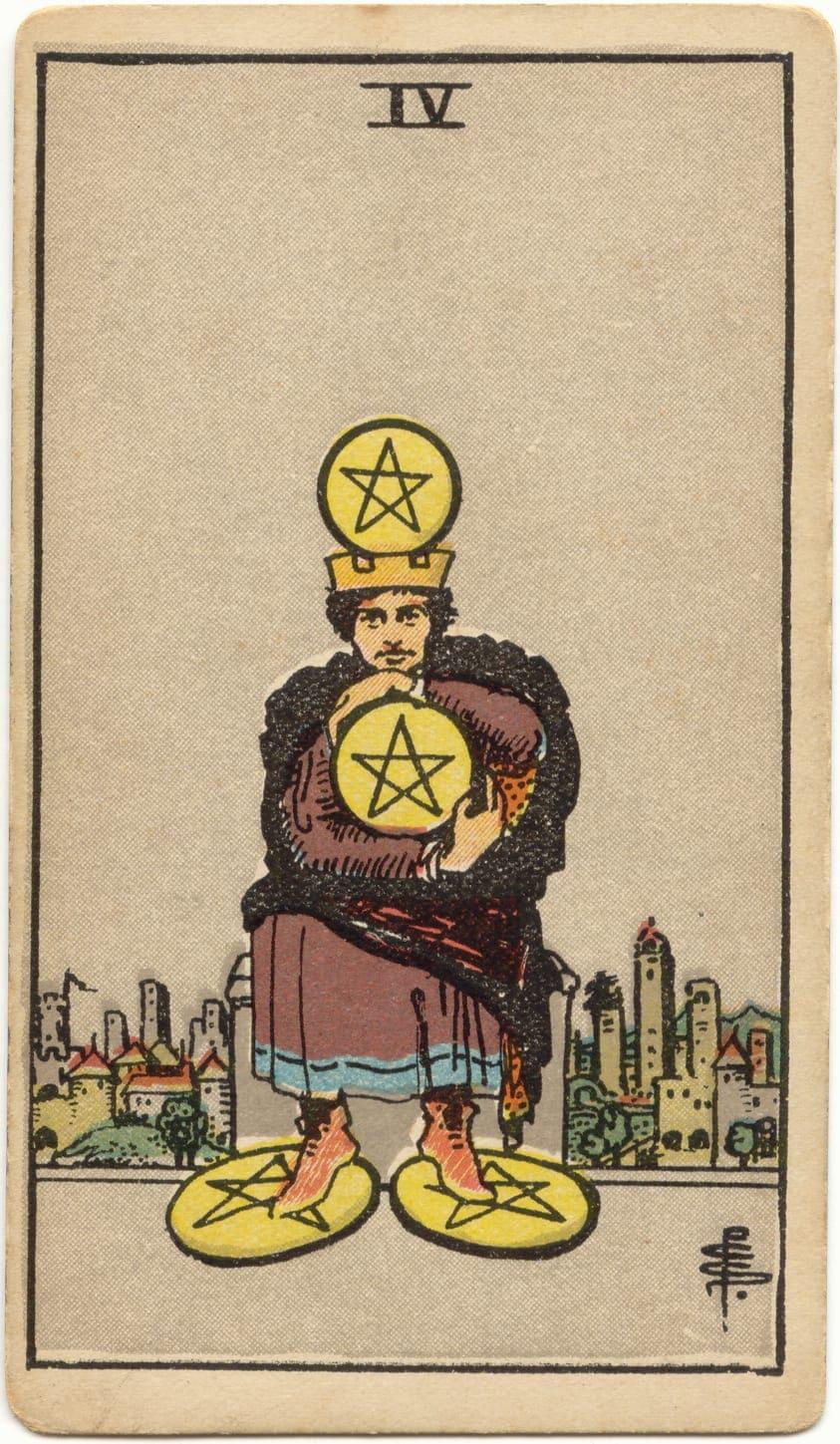
Four of Pentacles
The Tight Hold
Four of Pentacles (Four of Coins in many decks) is holding resources tightly for security. In a one-card reading, it often leans maybe: tend the foundation, but notice where control has become a cage. Saving, money boundaries, and protecting what you built can stabilize life. The same grip becomes costly when it blocks generosity, change, or trust. Inventory what you are guarding and why. Keep what protects life. Loosen what only protects fear. The coins at crown, heart, and feet show control that can crown you—or freeze motion from head to ground.
Reversed: Reversed Four of Pentacles can show release of tight control, healthier sharing—or a swing into careless spending after restriction. In a one-card reading, it can lean yes when the question is about release, trust, or opening the hands with stewardship. It leans maybe if the pendulum is swinging into loss. Balanced stewardship is the skill: share appropriately, invest wisely, stop hoarding experiences and affection as if scarcity were the only truth. If finances are chaotic, rebuild simple structures before you call freedom a virtue.
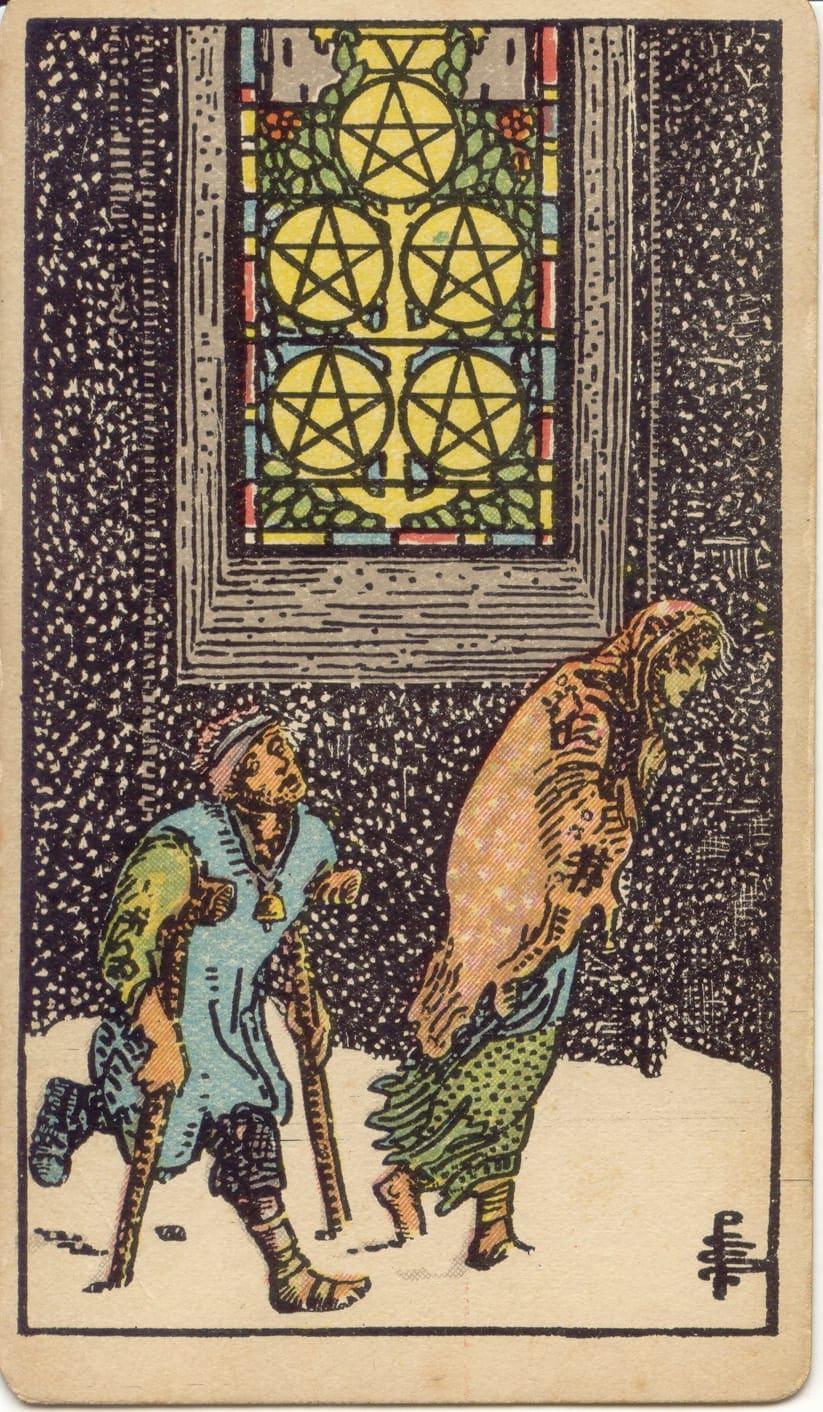
Five of Pentacles
The Cold Outside
Five of Pentacles (Five of Coins) names material or belonging hardship. In a one-card reading, it often leans no—or not yet—for outcomes that need stability today. Lack can be money, health, housing, or community. The card does not ask you to perform shame. It asks you to name the need and look for the lit window you have been walking past—aid, friendship, practical systems. Isolation makes a lean season heavier. You are not required to freeze alone outside the door. Surviving requires grit and willingness to receive.
Reversed: Reversed Five of Pentacles can show recovery from hardship, accepting help, or a poverty fear that still drives behavior after conditions improve. In a one-card reading, lean maybe: relief may be starting, but dignity and support still need to meet. Take the help. Rebuild slowly. If scarcity mindset remains after the crisis, update the story with present evidence. Leave the cold through one practical step toward warmth—not through pretending the snow never happened.
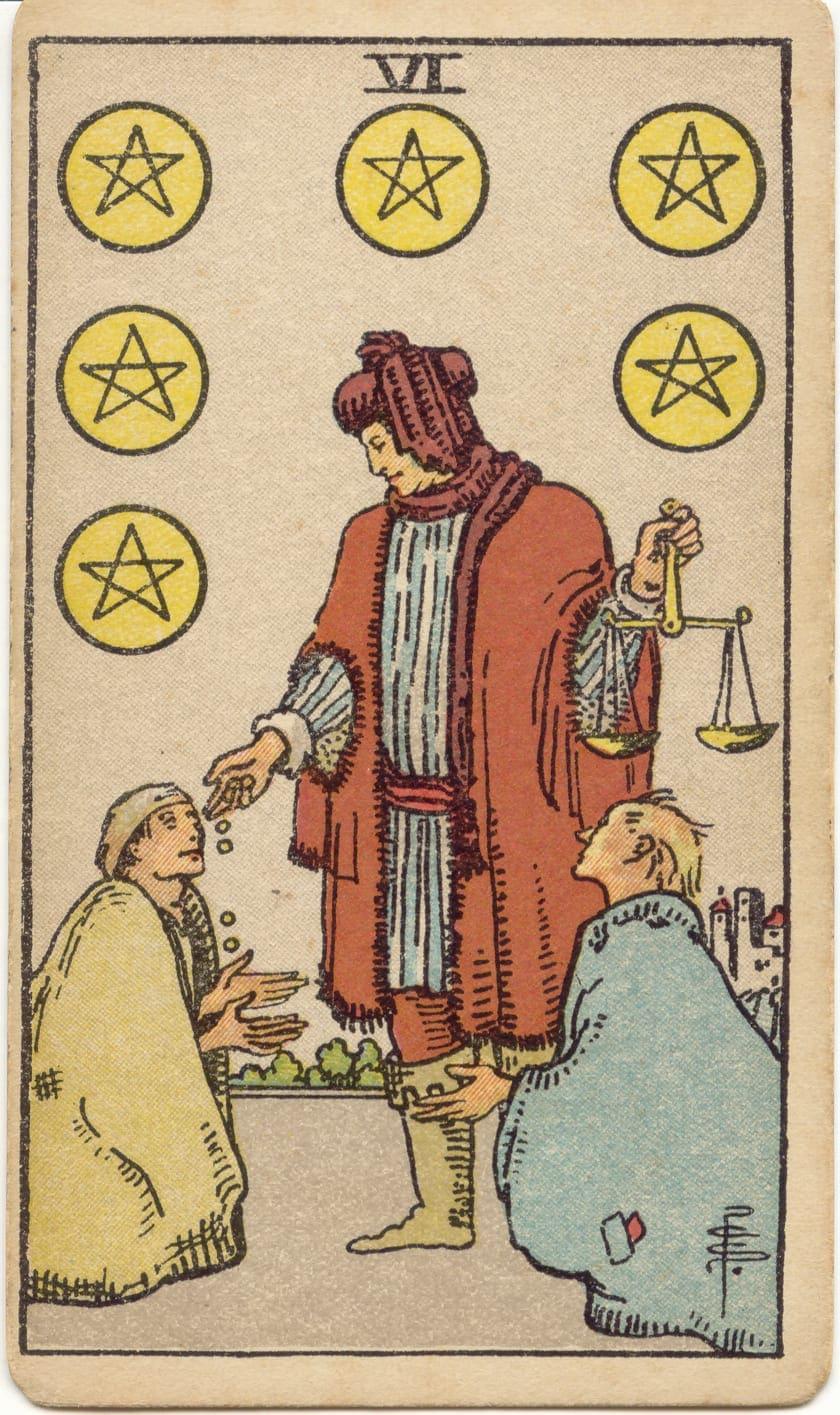
Six of Pentacles
The Fair Exchange
Six of Pentacles is generosity and fair exchange. In a one-card reading, it often leans yes to sharing surplus—or to accepting help without shrinking. Resources circulate. Power dynamics matter: gifts should not become control. Fairness includes wages, favors, and support that can be reciprocated over time. Be a good steward of surplus. Be a gracious receiver when you are short. Circulation keeps the system human.
Reversed: Reversed Six of Pentacles can show strings attached, unequal giving, debt stress, or charity that humiliates. In a one-card reading, lean maybe until dignity returns to the exchange. Restore terms. Repay what you owe. Give without buying loyalty. Ask for help without performing helplessness.
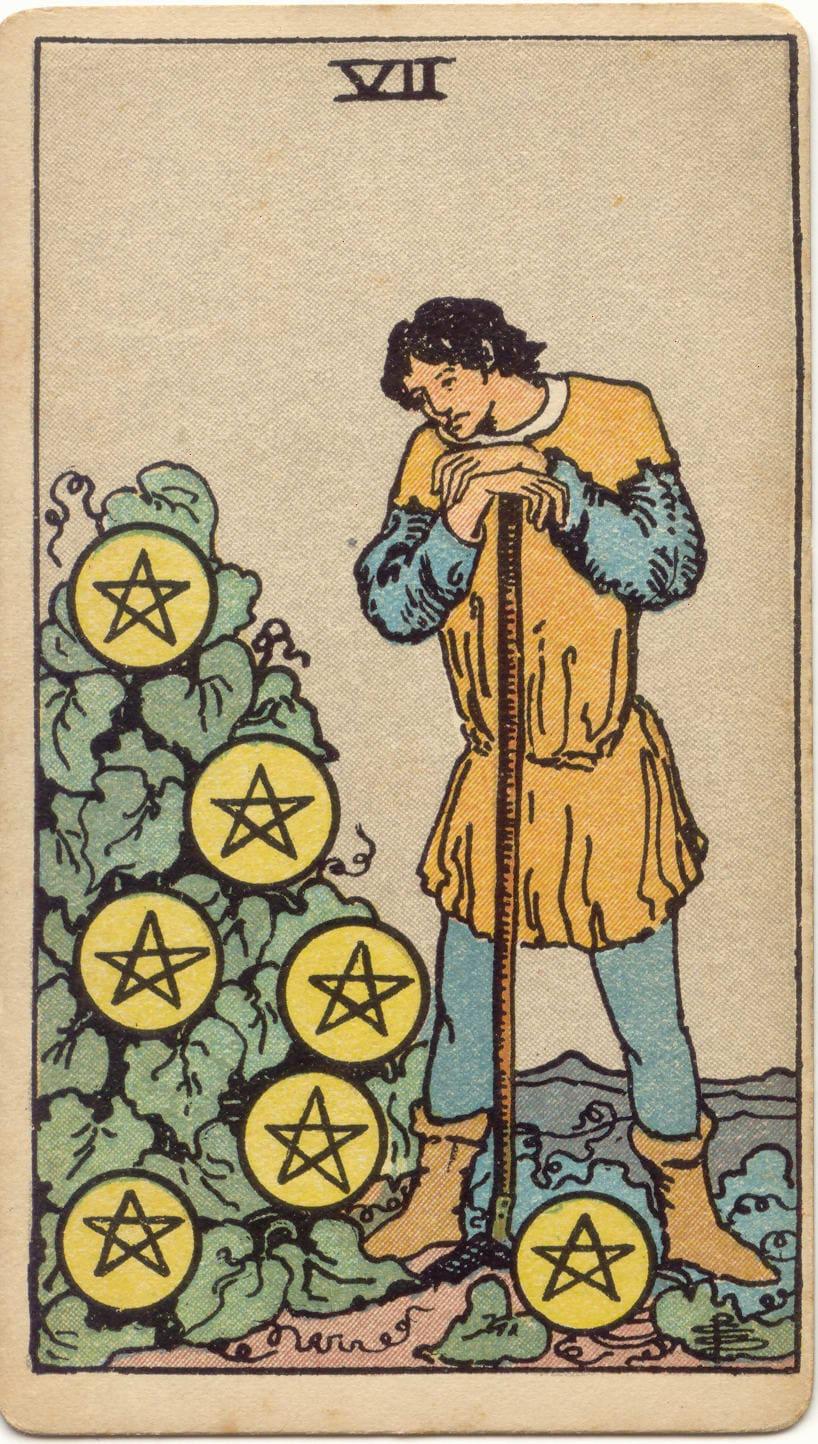
Seven of Pentacles
The Patient Assessment
Seven of Pentacles is a pause to assess long-term investment. In a one-card reading, it often leans maybe: check progress before doubling effort. You have put work in. Growth takes time—and so does honest appraisal. Do not rip up the plant from anxiety, and do not ignore a barren patch. Tend what is working. Redirect what is not. Patience with discernment is the skill.
Reversed: Reversed Seven of Pentacles can show impatience, poor returns, or sunk-cost clinging. In a one-card reading, it often leans no to pouring more into what will not fruit—or maybe if metrics are simply missing. Get clear numbers. Change method or change field. Rest if you are depleted from endless tending without reward.
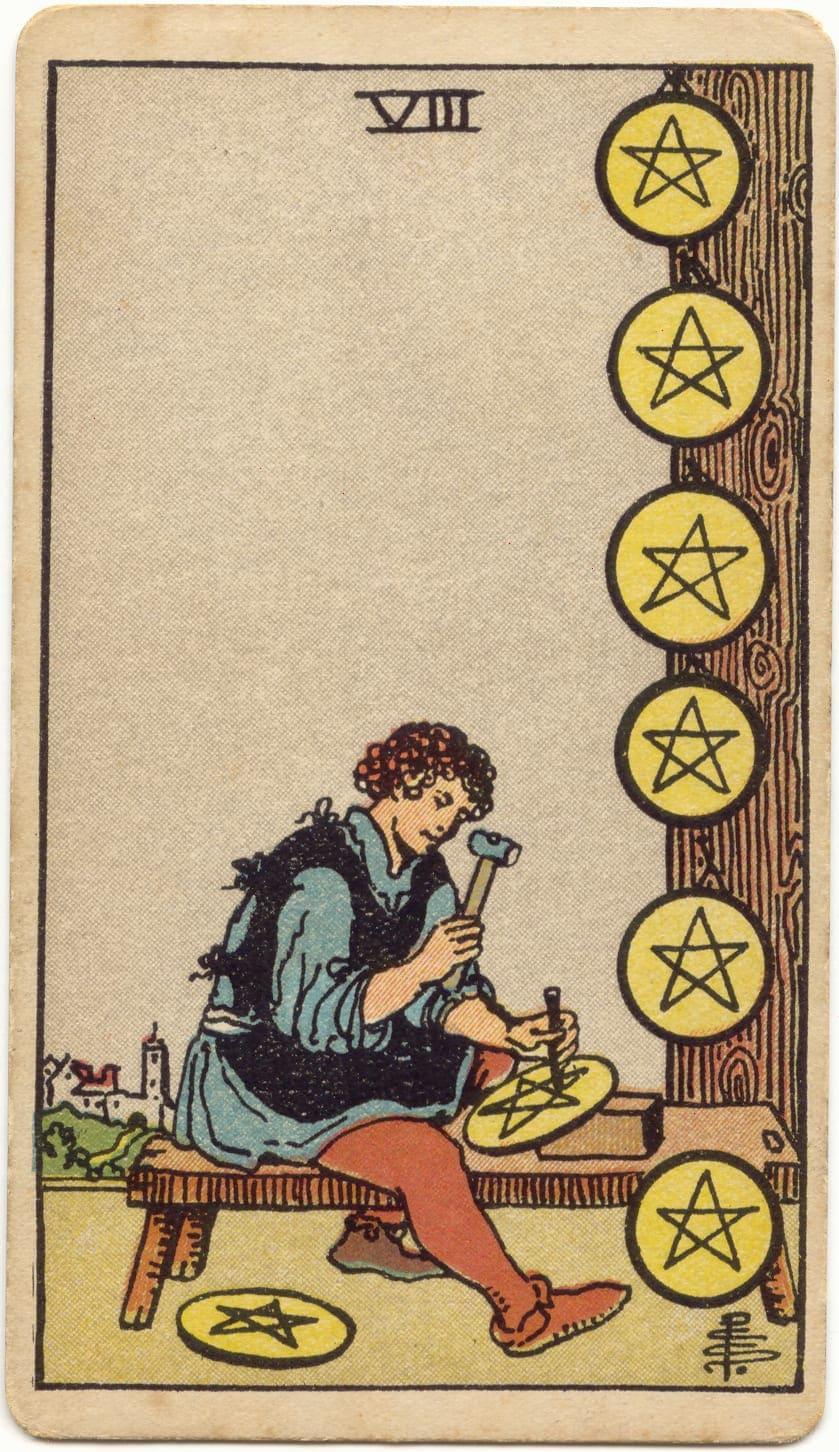
Eight of Pentacles
The Diligent Craft
Eight of Pentacles is diligent skill-building. In a one-card reading, it often leans yes to practice, study, and focused craft. Mastery grows through repetition. Put in the reps. Refine the details. Distraction is the enemy; deep work is the path. Excellence is mostly attention repeated. Stay humble enough to keep improving.
Reversed: Reversed Eight of Pentacles can show boredom, cut corners, perfectionism that blocks output, or misaligned work draining skill. In a one-card reading, lean maybe: reconnect craft with purpose. Fix quality where it matters. Ship where perfectionism is fear. Change projects if the labor no longer grows you.
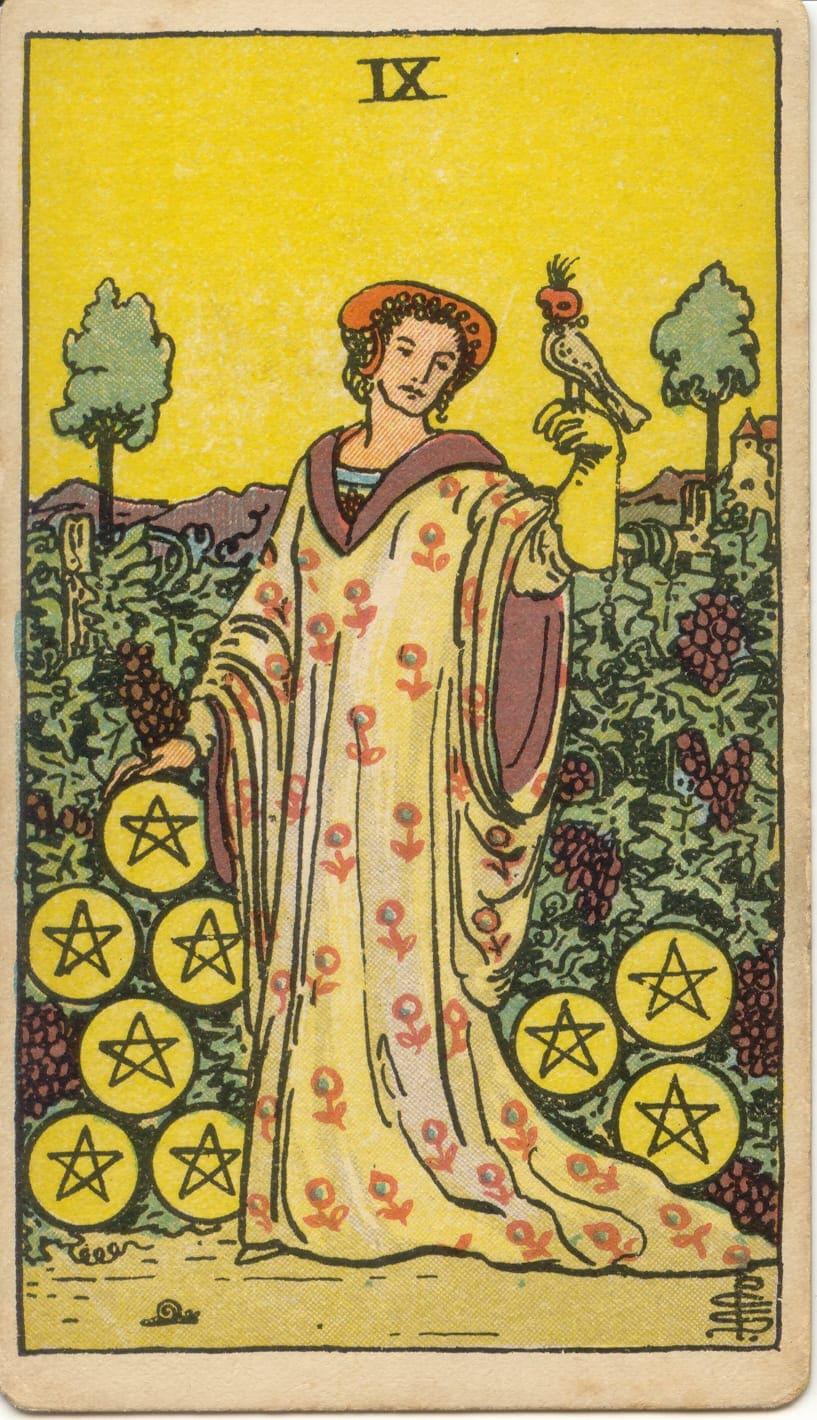
Nine of Pentacles
The Self-Sufficient Garden
Nine of Pentacles is self-sufficient enjoyment of what you built. In a one-card reading, it often leans yes to savoring competence and the life it funds. Boundaries protect your peace. Discipline made the garden possible; pleasure completes it. Prosperity includes time, body, and beauty—not only income. Walk your grounds with quiet pride. Share if you want—do not abandon self-respect to keep others comfortable.
Reversed: Reversed Nine of Pentacles can show financial dependence issues, isolation dressed as independence, or success without enjoyment. In a one-card reading, lean maybe: reconnect achievement with actual pleasure and healthy interdependence. Spend on what restores you. Ask for company if solitude has hardened.
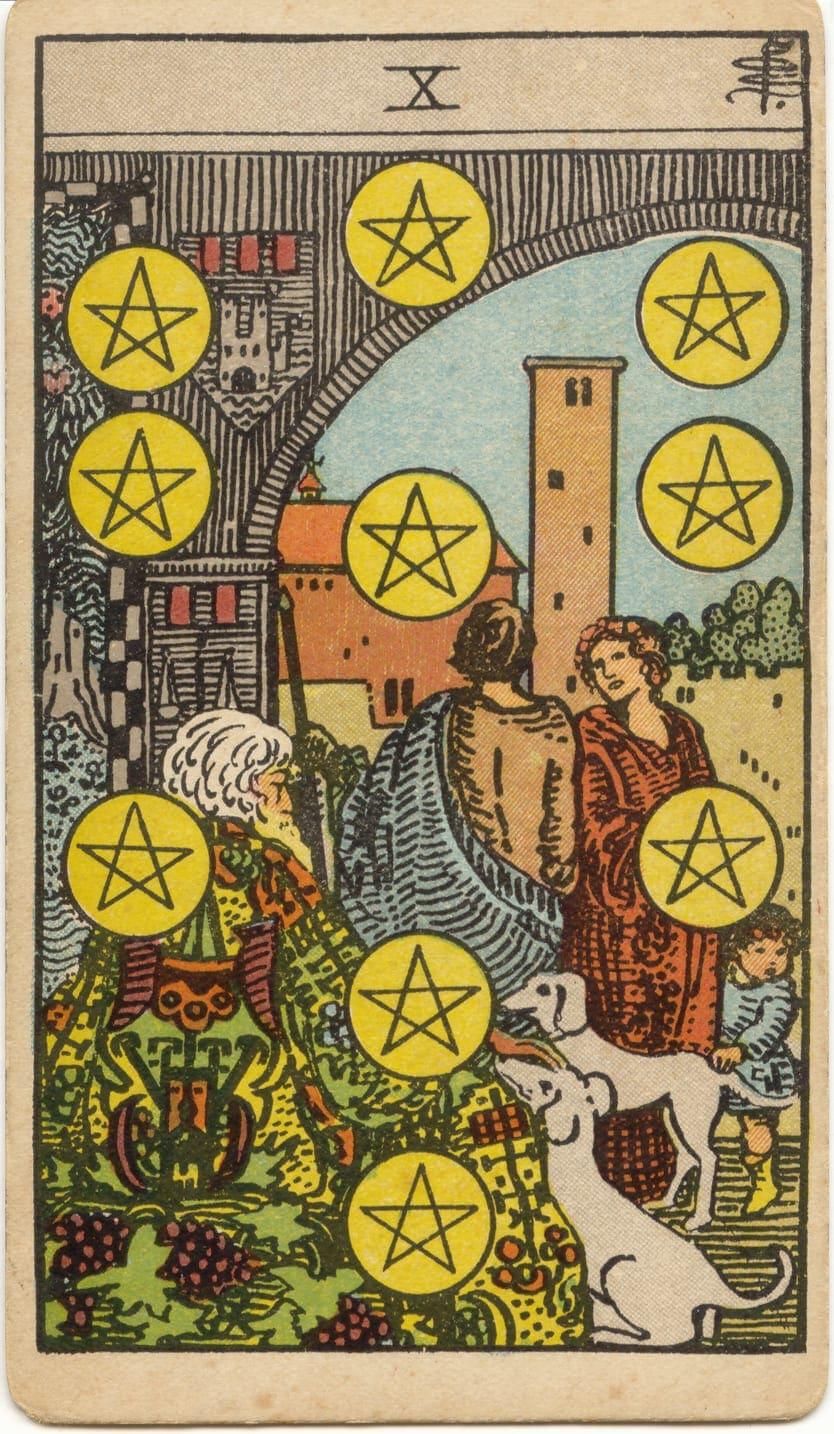
Ten of Pentacles
The Lasting Legacy
Ten of Pentacles is lasting material security and legacy. In a one-card reading, it often leans yes to long-term building: home, business foundations, family systems, and wealth that outlasts one paycheck. Success here is shared and structural. Invest in what future selves—and others—can inhabit. Belonging and resources reinforce each other when managed with care.
Reversed: Reversed Ten of Pentacles can show family money conflict, unstable foundations, or legacy burdens. In a one-card reading, lean maybe: repair agreements and values around resources. Update wills, roles, and expectations. Do not confuse inheritance with love, or image with security.
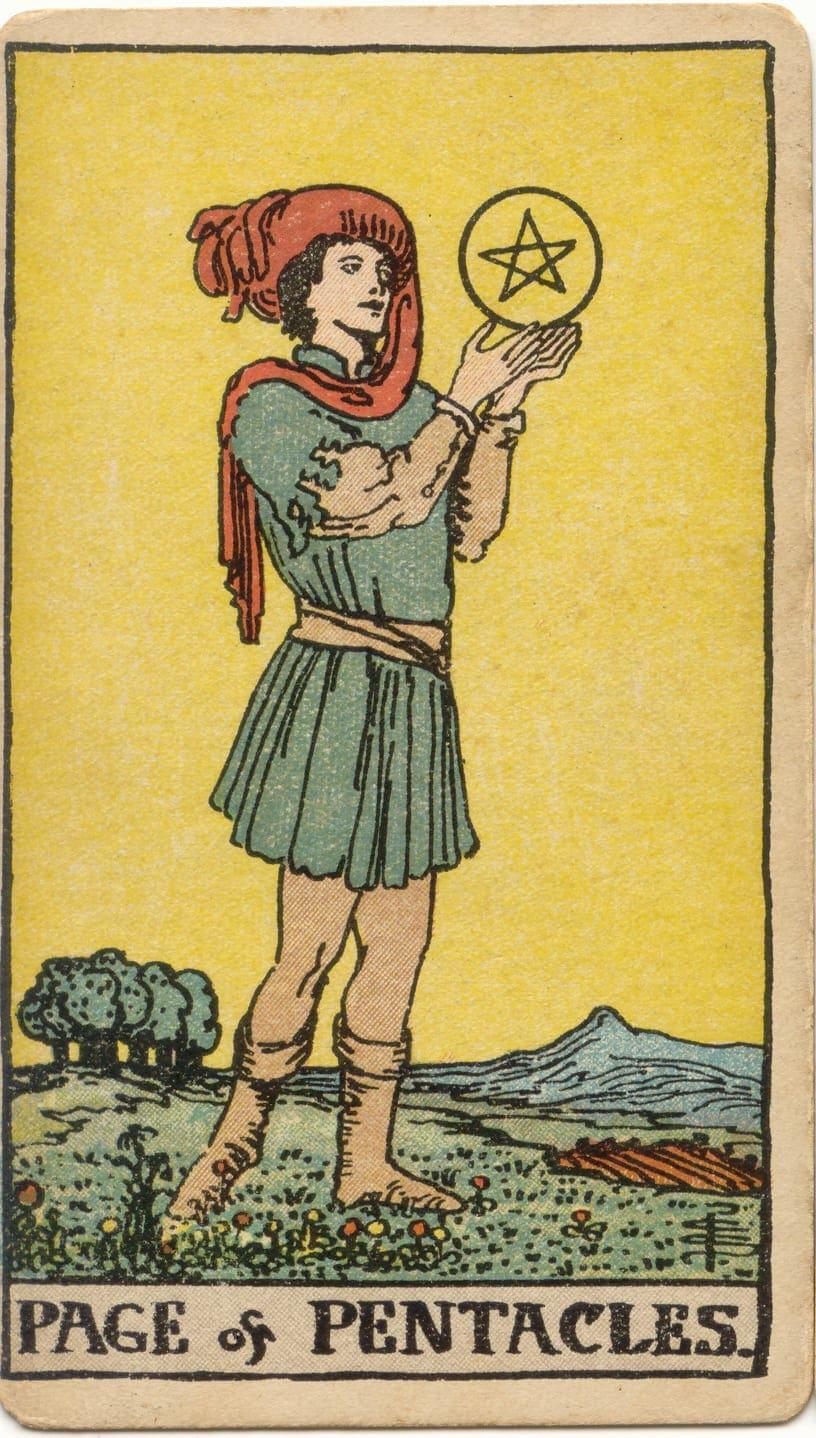
Page of Pentacles
The Practical Student
Page of Pentacles is practical learning and a studious beginning. In a one-card reading, it often leans maybe: start the course, practice the skill, treat a material opportunity as something to study well. Be methodical. Dream with a notebook. Manifestation here looks like homework and small consistent deposits. Promise less; practice more.
Reversed: Reversed Page of Pentacles can show procrastination, poor study habits, or unrealistic material plans. In a one-card reading, lean maybe: rebuild a simple practice schedule. Define one skill metric. If an opportunity is unsound, walk away early.
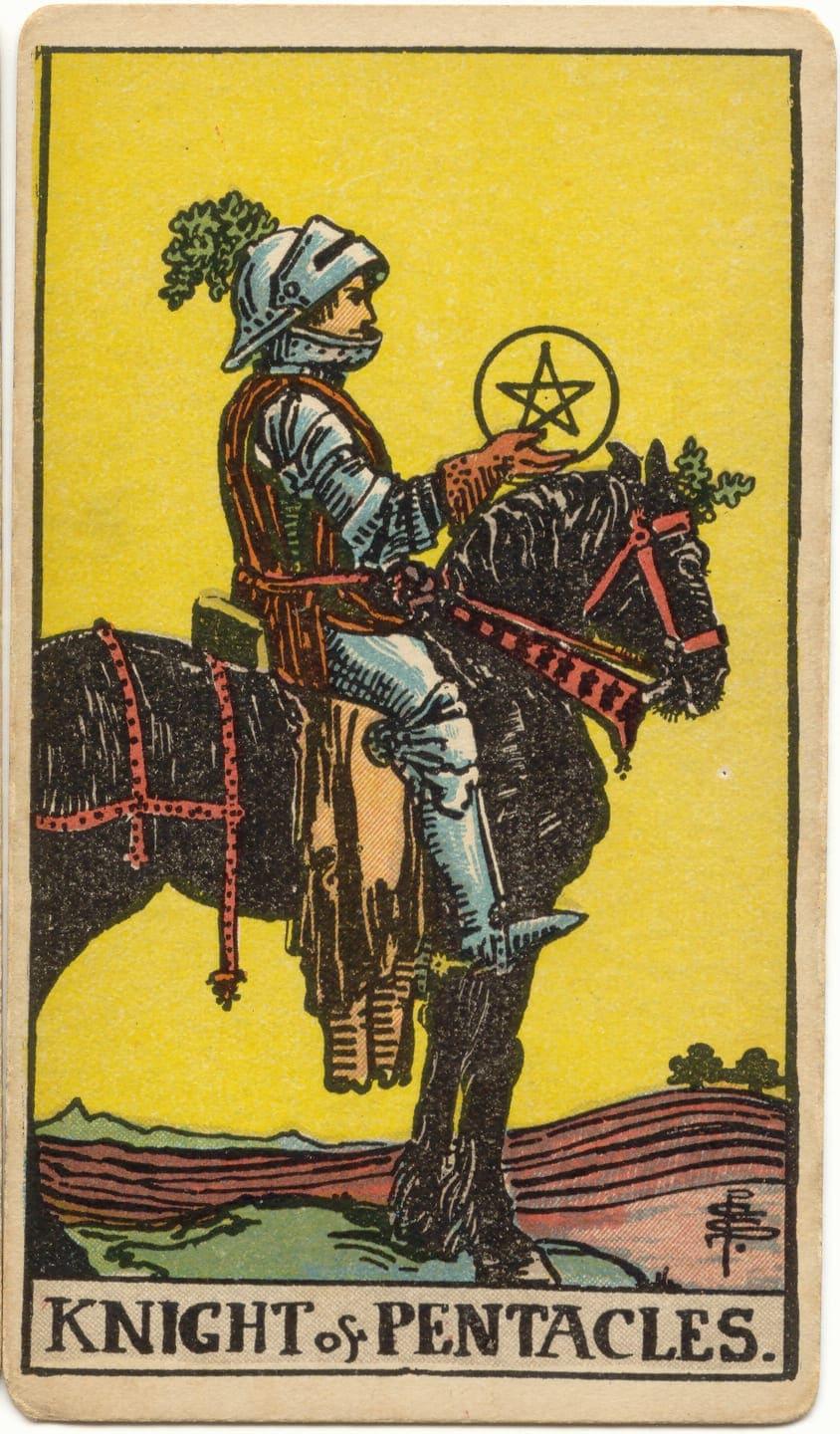
Knight of Pentacles
The Steady Progress
Knight of Pentacles is steady, reliable progress. In a one-card reading, it often leans yes to routines, duty, and results that accumulate slowly. He is not flashy. He is dependable. Keep the unglamorous next task. Stick to the plan long enough for compounding to matter. Caution can be wisdom when it protects quality. Move at the pace of craft, not adrenaline. Finish what you start. Reliability is attractive here because it is usable—calendars kept, deposits made, work that still stands next month.
Reversed: Reversed Knight of Pentacles can show stubborn stagnation, perfectionist delay, or workaholic grind without joy. In a one-card reading, lean maybe: adjust pace and purpose. Break monotony with smarter systems. Rest if duty has become identity. If you have been flaky, restore one kept promise. Persistence should build something worth inhabiting—not a rut that only proves you can suffer.
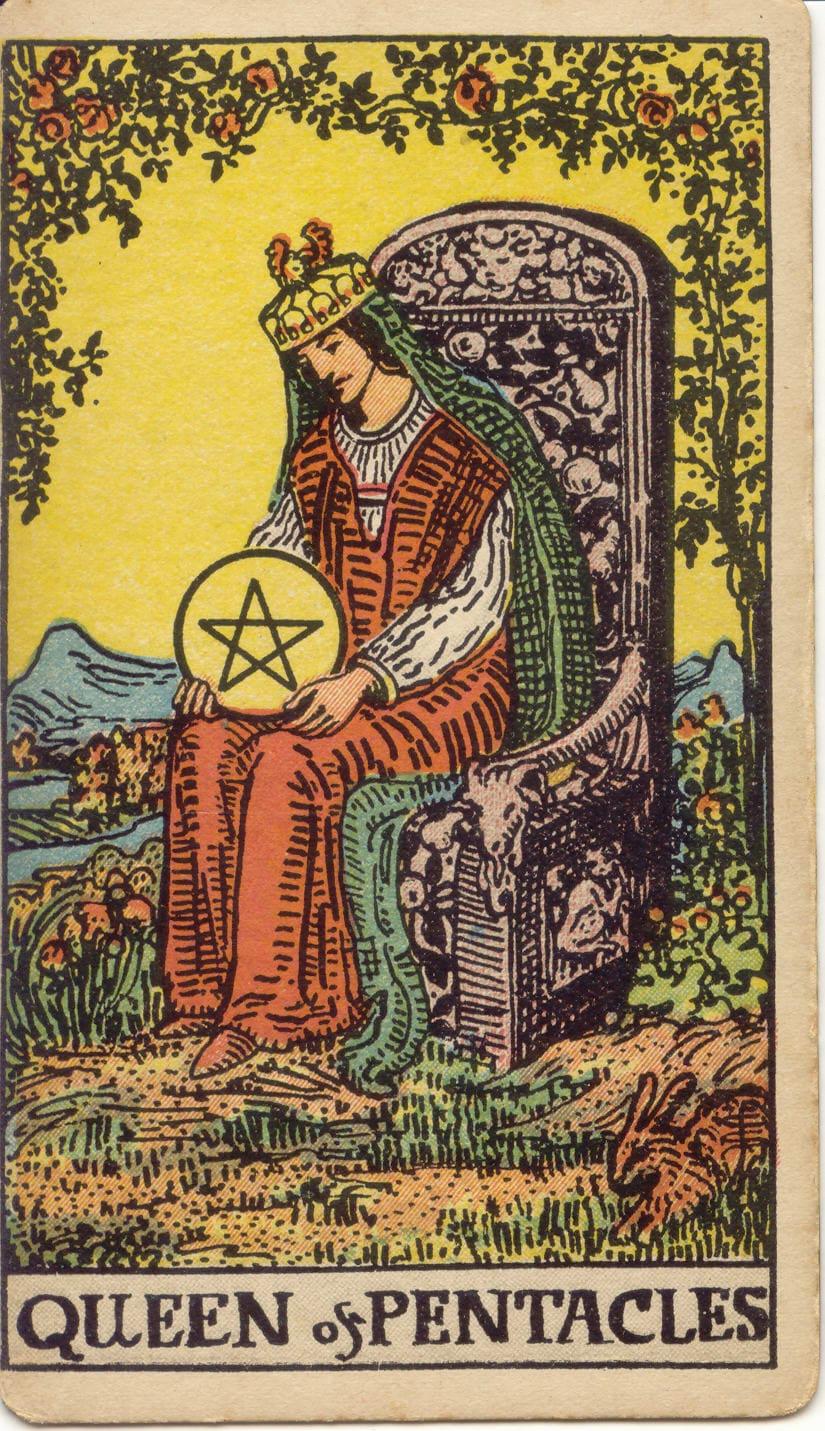
Queen of Pentacles
The Grounded Care
Queen of Pentacles is grounded care that creates real comfort. In a one-card reading, it often leans yes to nurturing what sustains: body, home, livelihood, and competent generosity. She makes life work. Practical love is her magic—meals, schedules, healing routines, and money handled as a tool for wellbeing. Abundance grows when care is skilled. Be generous without self-erasure. Keep the garden productive and kind. This is not soft fantasy; it is the intelligence of a household and a body that can keep going.
Reversed: Reversed Queen of Pentacles can show self-neglect while caretaking, money anxiety, or smothering control through material care. In a one-card reading, lean maybe: put your own basics back on the list. Rest. Rebalance giving. Untangle love from overmanaging other people’s lives. Security feels warmer when it is shared with yourself. A hearth that burns only for others eventually burns the caretaker out—and then nobody is warm.
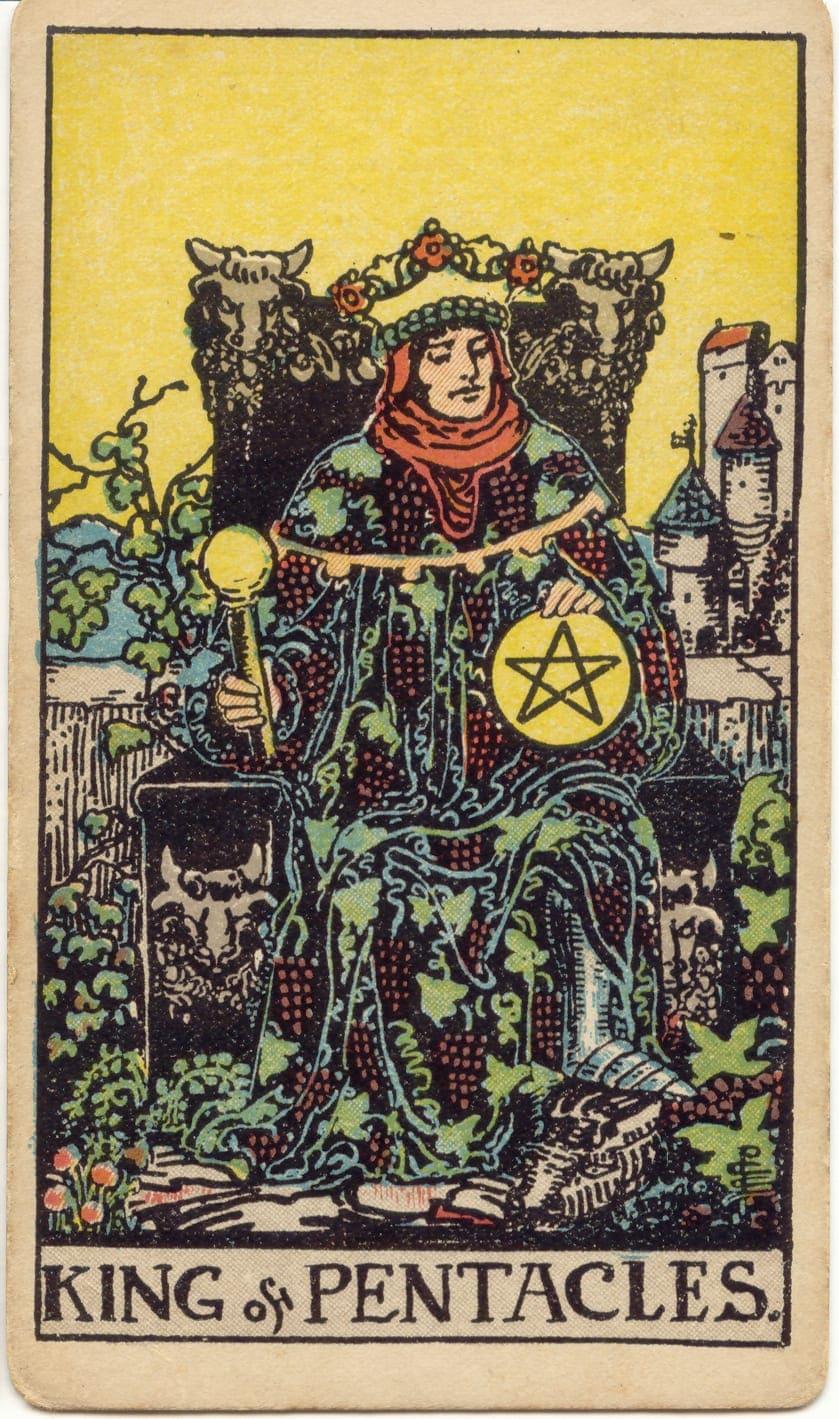
King of Pentacles
The Material Leader
King of Pentacles is mature material leadership. In a one-card reading, it often leans yes for responsible ownership of resources—business, household, or a plan built for durability. He builds things that last. Lead with steadiness and generosity. Success is measured in stability and the wellbeing of those affected by your decisions. Be ambitious and ethical. Invest for durability. Competence can become a throne others trust—use it to create security, not only status. The vines and castle are not decoration; they are the proof that systems were tended long enough to house people.
Reversed: Reversed King of Pentacles can show greed, stubborn materialism, or shaky management dressed as success. In a one-card reading, lean maybe: realign wealth with values. Fix mismanagement. Stop equating worth with net worth. If you have underplayed your capacity to provide structure, step up cleanly. Abundance improves when it serves life. Lead resources so they stabilize more than they impress. A heavy throne without ethics is just expensive control.