Upright
- upheaval
- revelation
- collapse
- truth
- destruction
You may be here because this card stayed with you after a draw. Start with the central message, then move deeper into the symbolism, upright and reversed meaning, and the next step it may be asking of you.
This card is one of the strongest search anchors in the deck. If you landed here from a one-card reading, treat it as the main lens first, then read the love, career, money, feelings, actions, and reversed sections as supporting layers.
Use these as a quick scan before the full reading—not as a substitute for the image.
In the Rider-Waite-Smith deck, The Tower is not meant to be read as a floating keyword. Waite's scene and Pamela Colman Smith's composition usually pull the eye toward lightning strike, falling crown, flames first. Those details tell you what kind of emotional weather you are standing in before you decide whether the card feels hopeful, tense, protective, exposed, or transitional.
Waite-lineage interpretation treats the collapse as revelatory, not merely catastrophic.
This is one of the cards most likely to show up in a one-card reading when a question is already emotionally active. Use it as a lens for the present situation, then connect it back to the page's love, career, and money sections.
The lightning strike is the truth event of the card. It breaks through suddenly and does not wait for permission.
The falling crown matters because what collapses is often false certainty, status, or a structure that claimed more stability than it really had.
The flames keep the scene active and raw. This is not a quiet adjustment; it is a rupture that forces reality to be seen clearly.
You can feel the crack—the story you have been holding is not holding you back. Do not waste the afternoon taping it together. Face the one truth you already know, then rebuild from what is still real.
A truth is breaking through, and it may shake what cannot stand. Though it feels difficult, this card often arrives when false stability must fall so that something more authentic can finally be built.
Do not waste energy protecting false structures. Face the truth quickly, and rebuild from what is still real.
The Breaker of False Structures. This is the quickest way to remember the card's center of gravity without flattening the whole page into a single label.
XVI (16). 16 breaks old architecture so reality can reassert itself without disguise.
When The Tower is the only card on the table, read the core climate first—then open the one-card interpretation below for the full next-step framing.
Mars and Peh correspondences belong to the Waite and Golden Dawn study line. They can deepen the card, but the main reading still begins with the image and the situation in front of you.
The Tower usually points to sudden revelation, upheaval, or the collapse of a false structure. In a one-card reading, treat it as truth breaking through—something unstable can no longer be held together by denial or habit.
In a one-card draw, stay with the core message first, then use love, career, feelings, or actions only if they sharpen the next step—not to collect more meanings. If the card came up reversed, jump to the The Tower reversed meaning.
The Tower scares people into freezing. Our one-card read treats it as rupture toward clarity—not as a curse you must sit under.
Misread: Hearing Tower as “total doom forever.”
Instead: It names a structure that will not hold as fantasized. The next step is usually honesty and damage control—not decorating the collapse.
Misread: Using Tower to justify hurting someone “because fate said so.”
Instead: House rule: you still choose the cleanest action. Truth-telling and safety planning are valid; cruelty is not the card’s instruction.
Misread: Ignoring reversed Tower’s early crack.
Instead: Reversed often means the fault line is already visible. Address the patch job now; waiting for the lightning is usually costlier.
For how we treat reversals and Waite boundaries site-wide, see tarot methodology.
Upright The Tower often leans no when the question depends on a structure that will not hold. Reversed, it more often leans Wait or Reframe—address the crack early before life forces a sharper collapse.
Upright The Tower usually leans blocked or cautionary. Read the scene and your question before you lock the verdict.
Reversed The Tower usually leans wait, refine, or ask differently. Let the card meaning and timing outrank a rigid flip from orientation alone.
These are applications of the same card, not separate meanings pasted together. Read them after the general meaning—and compare with the reversed meaning when the draw came upside down.
In love, it can mark a sudden truth, dramatic shift in a relationship, or the collapse of an unsustainable fantasy.
In work, it points to system failure, strategic shock, or a structure that must break because it was never built on sound ground.
In money, The Tower can show a sudden expense, market shock, job loss, business disruption, or the collapse of a financial story that was never truly stable. Its purpose is brutal clarity.
Reversed Tower suggests the cracks have formed even if the full collapse is not yet visible. There may be tension, concealment, or desperate attempts to keep something already unstable together. When this card appears, controlled honesty is far kinder than continuing to preserve what everyone can feel is no longer sound.
The cracks are already there, even if no one is fully saying it out loud. Honest change now is kinder than waiting for life to force the collapse in its own way. Compare with the upright meaning when you need the same card without the dimmer switch.
In love, it may reflect tension building beneath the surface, truth being hidden until it explodes, or fear of change keeping everyone stuck in instability.
In work, it warns against patching structural problems rather than addressing them, making later collapse sharper than necessary.
Reversed, The Tower in money often points to a crack that is already there: something unsound being patched, delayed, or denied. Addressing it early is usually kinder than waiting.
Avoid spending energy protecting something already exposed as unstable by the truth. Face what is real quickly, then rebuild from what still has solid ground. Reversed cards usually read best as blocked, delayed, internalized, excessive, or misdirected forms of the same core pattern.
The Tower usually points to sudden revelation, upheaval, or the collapse of a false structure. In a one-card reading, treat it as truth breaking through—something unstable can no longer be held together by denial or habit.
Upright The Tower often leans no when the question depends on a structure that will not hold. Reversed, it more often leans Wait or Reframe—address the crack early before life forces a sharper collapse.
Reversed The Tower usually means the cracks are already visible even if the full break has not landed. Controlled honesty now is kinder than anxious preservation of what everyone can feel is unsound.
Avoid spending energy protecting something already exposed as unstable by the truth. Face what is real quickly, then rebuild from what still has solid ground.
In love, The Tower can mark a sudden truth, a dramatic shift, or the collapse of an unsustainable fantasy. In career, it points to system failure, strategic shock, or a role/plan that must break because it was never built on sound ground.
The easiest mistake with The Tower is to rush to the takeaway and miss the feeling of the scene. The image usually tells you whether the card is opening, warning, steadying, or softening the situation before the keywords ever do.
Love, career, and money help you ground the card in real life. They should deepen the main message, not replace it.
This card is one of the clearest anchors for one-card tarot search intent. If it appears in a reading, use its meaning as the main lens, then move into the practical next step you need most.
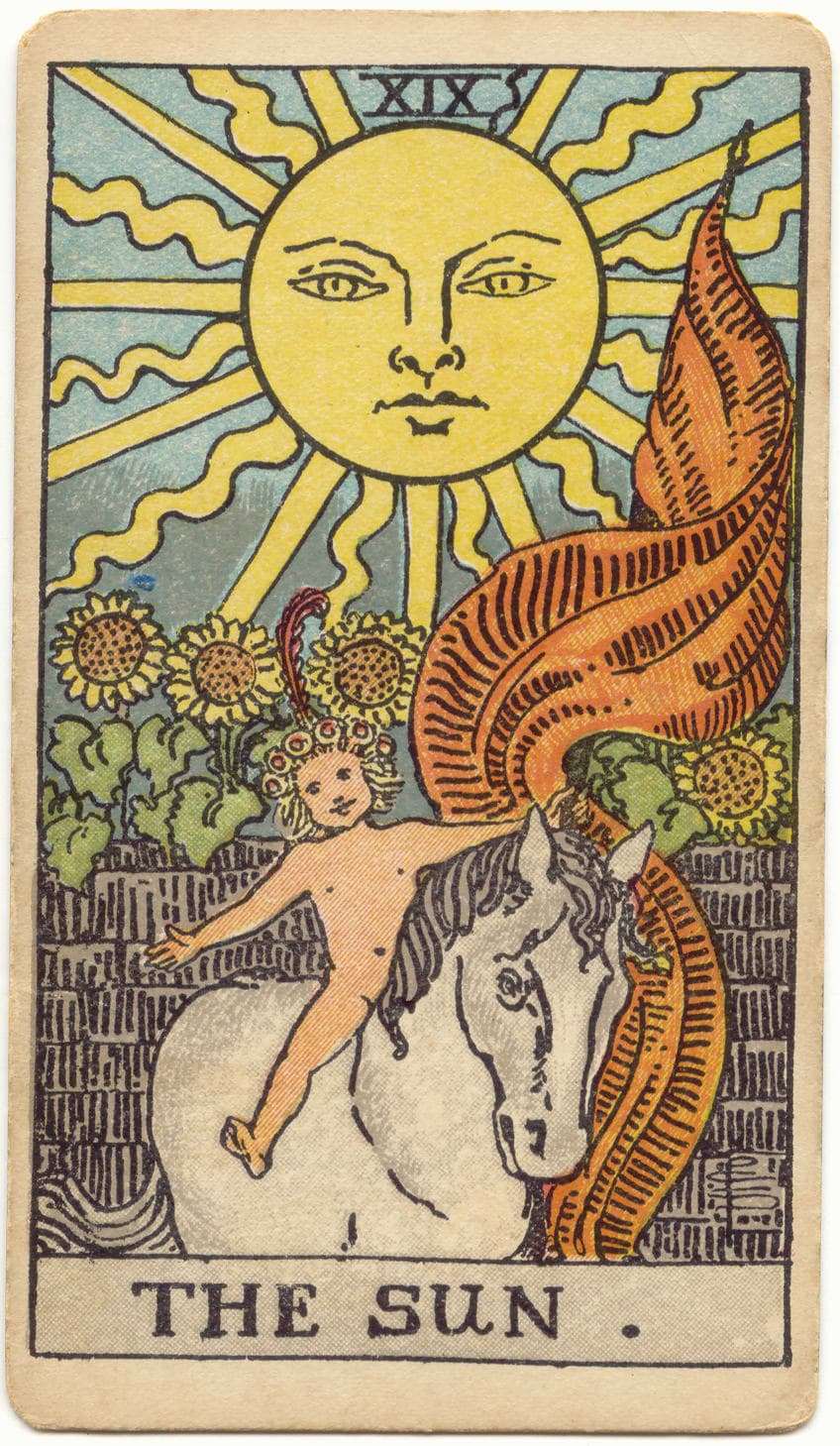
For a clearer contrast with delayed or self-dimmed joy, compare this card with The Sun and its reversed meaning.