With Nova · Three cards

Let’s sit with the full arc

Choose how we’re reading, ask the question you’d say out loud, then draw three cards.

By . Published , updated .

  1. Question
  2. ·Draw
  3. ·Reading

How should we read?

Pick the seat that matches your question — then tell me what’s on your mind.

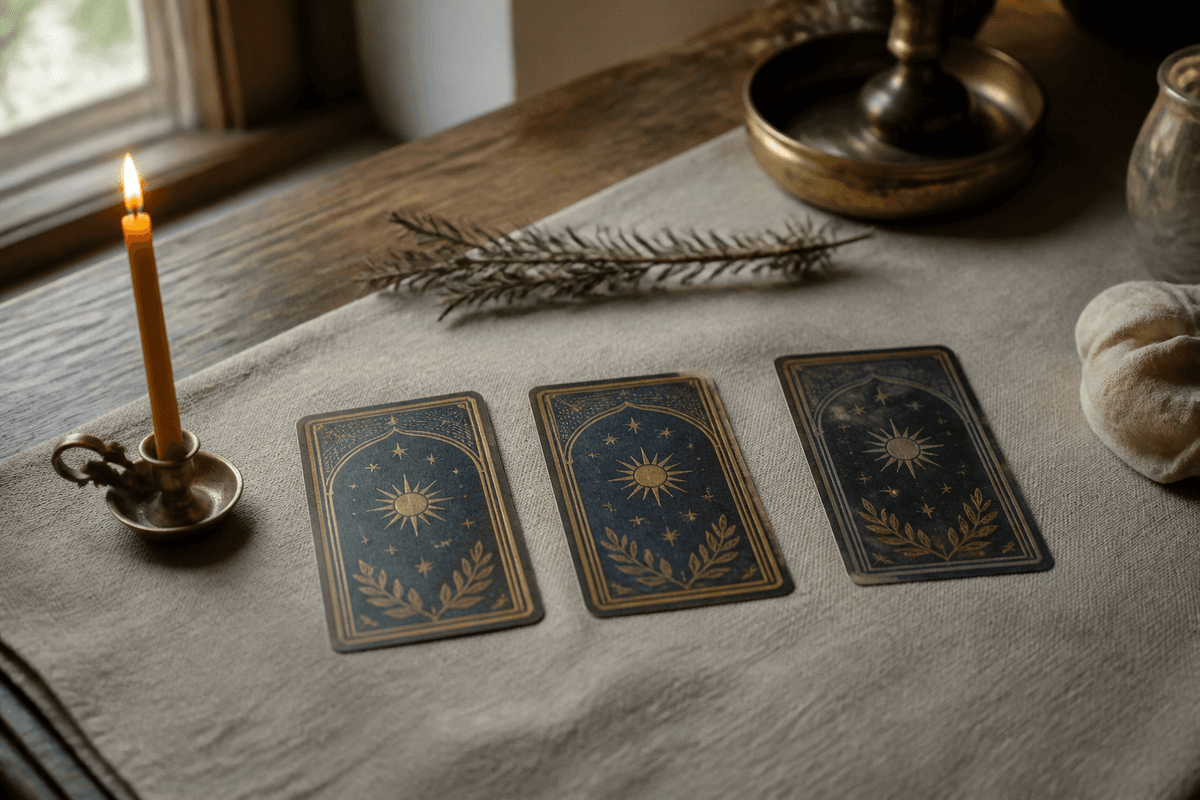
Three tarot cards laid in a quiet row on linen — a timeline reading atmosphere.

Why three cards, when one often works?

One card can name the weather. Three cards show the weather moving. If your question already has a before, a now, and a lean — or two people in the room — don’t squash it into a single answer. Sit with the arc. Leave with one next step you can actually do tomorrow.

  • 78 cards in the Rider–Waite deck I read from — 22 Major, 56 Minor.
  • 3 lenses, so we don’t force every ask into Past · Present · Future.
  • About 5 quiet minutes when your question is already honest.
  • Guidance, not prophecy — if it doesn’t feel usable, we missed something.

By Nova··

How I sit with a three-card draw

Same rhythm I’d use across a real table — no theatre, no fishing for a prettier answer.

  1. Step 1

    Tell me what kind of conversation this is

    Pick Timeline if you need the arc, Guidance if you need a next move, or Relationship if two people are in the room with you.

  2. Step 2

    Ask the question you’d say out loud

    One real question. Specific enough that three positions can answer without stacking five wishes into one sentence.

  3. Step 3

    Draw three cards, one position at a time

    Don’t rush the fan. Let each card belong to its seat — Past, Advice, Them, whichever lens you chose.

  4. Step 4

    Read the arc, then do one thing

    Weave the three cards into one story for your question. Then take one grounded step before you ask again.

Three ways we can read — pick the conversation you need

Past · Present · Future is beloved for a reason. It just isn’t the only honest three-seat layout. Match the lens to the question, and the cards have somewhere to land.

Three tarot cards in a quiet row on linen under soft daylight.

When you need the story across time

Here’s the thing about Timeline: it doesn’t promise a movie ending. It shows what built this moment, what’s true now, and what wants room next. Use it when the question is “How did we get here — and where does this lean?”
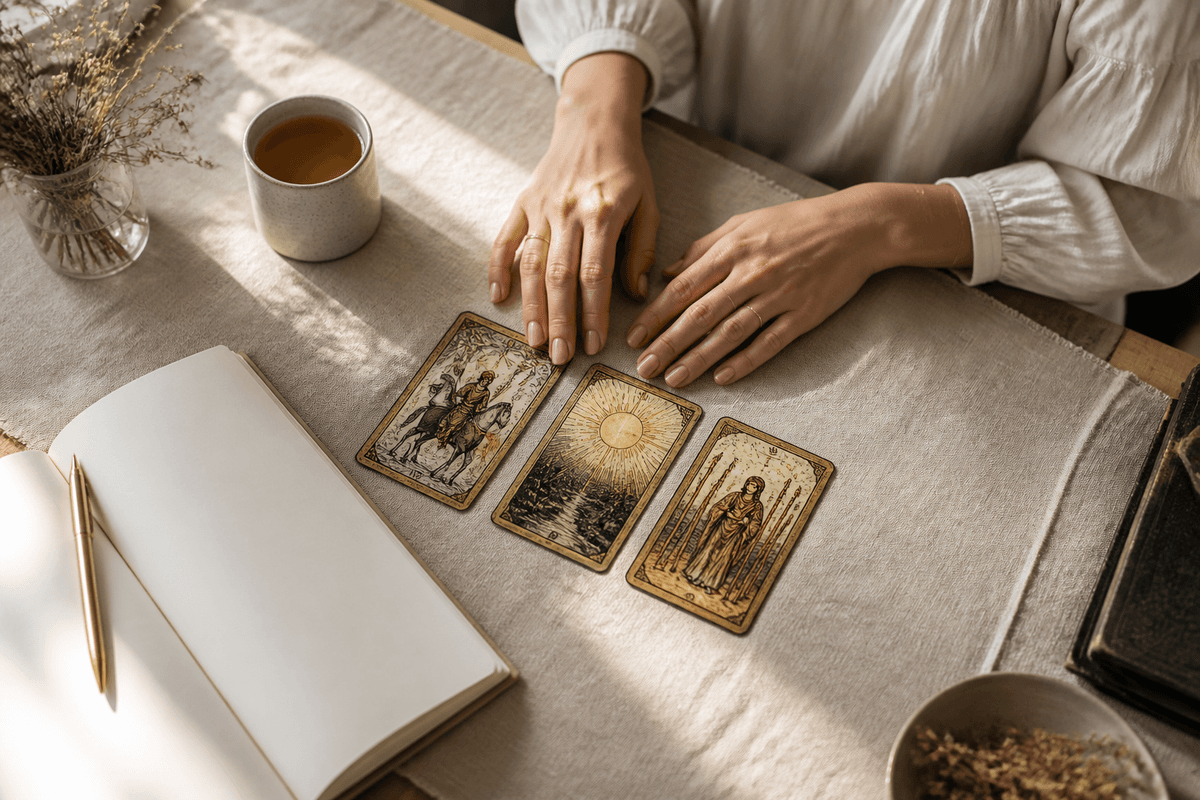
Hands near three tarot cards with tea and a notebook in soft daylight.

When you need one clear next move

Guidance is for the knot in your stomach before a decision. Situation names the weather. Advice is the one move I’d actually ask you to try. Outcome is a leaning — not a guarantee — so you can act without freezing.

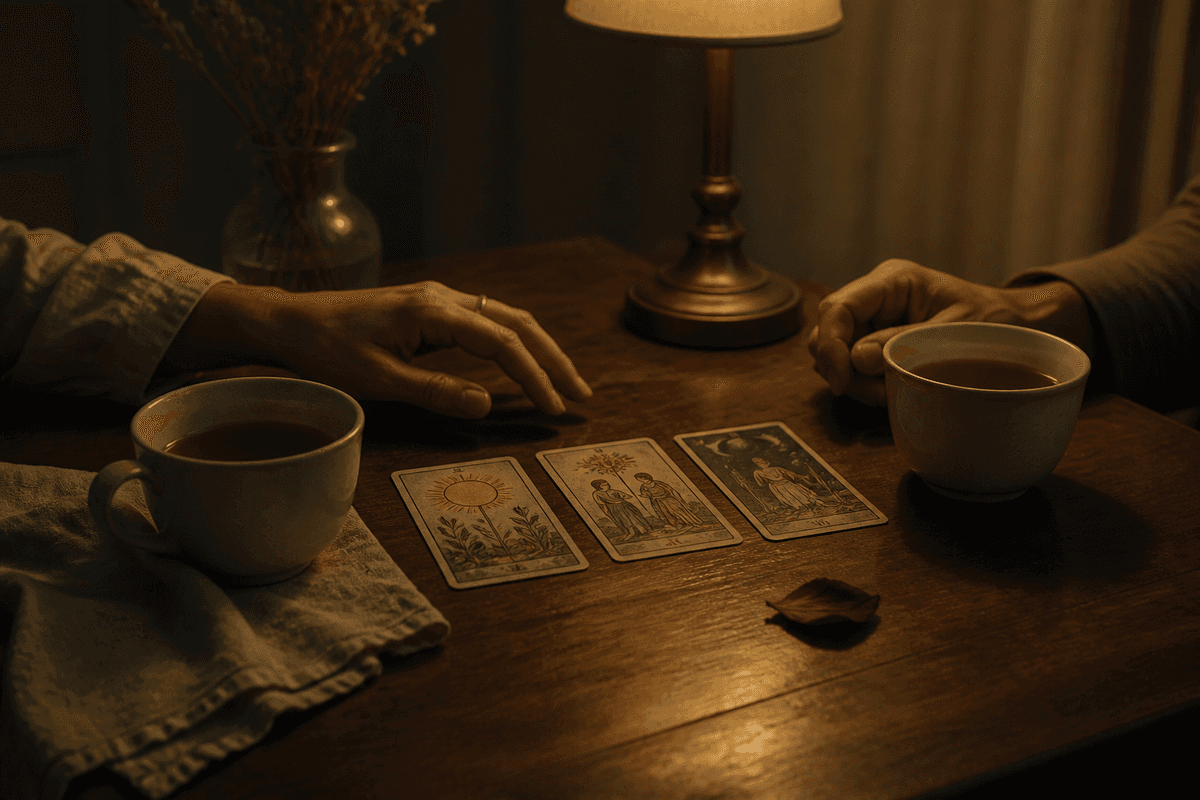
Two teacups with three tarot cards between them in warm evening light.

When two people are in the question

Relationship spreads fail when we only stare at the other person. You · Them · Between you keeps it honest: your side, their side, and the living dynamic in the middle — the part you can actually tend.

What Rider–Waite still teaches me

I don’t read three cards as a vending machine for destiny. In The Pictorial Key to the Tarot (1910), A.E. Waite keeps pointing us back to symbolism — a language for what you’re living, not a printout of what “must” happen. That’s the standard I hold: name the position, tell the truth about your situation, end with one move you can make with your own two hands.

“The true Tarot is symbolism; it speaks no other language and offers no other signs.”
— A.E. Waite, The Pictorial Key to the Tarot (1910)

If you want to go deeper

These are the shelves behind the table — not homework, just the trail if you’re curious.

  • The Pictorial Key to the Tarot — A.E. Waite (1910)The symbolic language I still lean on when three positions need to speak plainly.
  • Tarot methodologyHow I keep readings reflective — guidance, not certainty.
  • About NovaWho’s reading with you, and why the voice stays plainspoken.

Questions people ask me before we draw

What is a three-card tarot reading?

Look — one card can name the weather. Three cards show the weather moving. A three-card reading answers one clear question through three positions. Here you choose Timeline, Guidance, or Relationship first, then draw three cards and, if you want, sit with a combined reading afterward.

Is Past · Present · Future the only three-card spread?

No, and please don’t force every question into a timeline. Past · Present · Future is classic when you need the arc of how something built. If you’re asking what to do, use Situation · Advice · Outcome. If you’re asking about two people, use You · Them · Between you. The positions should fit the question — not the other way around.

How should I ask a question for a three-card spread?

Talk to me like we’re sitting at a table. Name the real situation, the person if there is one, and a near window of time when it helps. “What is actually happening between us this month?” works. “Will everything be fine forever?” usually muddies all three cards.

How many cards are in a Rider–Waite deck for this spread?

Seventy-eight: twenty-two Major Arcana and fifty-six Minor. You’ll draw three unique cards from that full deck. Each one may land upright or reversed — that’s part of the conversation, not a glitch.

Should I redraw if I dislike the three cards?

Usually, no. The first draw is the honest one. Stay with it long enough to hear each position, then take one small step in real life. Come back when something has actually changed — or when you’ve cleaned up the question.

Is a three-card reading prediction or reflection?

Reflection. I read Rider–Waite as a way to name what you already feel but haven’t said clearly yet — not as a court verdict about your future. If a reading doesn’t leave you with one usable next step, we missed the point.

When three cards aren’t the right seat

Sometimes the kinder move is a simpler tool. No shame in that — clarity beats ceremony.